I think they should stick to it so the rest of us who understand the implications of holding onto money can continue to invest while the ignorant ones continue to be used by the government until they learn.
Mmm maybe not finishing to a proficiency level all the languages and areas I started. For example I studied Chinese, German, Italian and Greek just to a basic level I don't use anymore. Same with a first programming course I took. I finished the most useless of them all lol, my degree in arts. To this day I have no idea what was I think chosing that career.
my degree in arts. To this day I have no idea what was I think chosing that career.
Then there had to be something that made you want a degree in arts.
If you were one of us, as in, a Nigerian, I would have said, it was probably because your peer were all in the university and you wanted to feel among.
But judging by the discussion we had days ago, I believe you don't care about what anyone thinks of you so I am also curious, what made you take the course?
I think it is because I have never felt a strong passion for anything, I never wanted a specific career bad enough, and I had something good that is also a problem, I had grades of 19.85/20 which allows me to enter any career I wanted, and I was at least decent at everything I tried.
It's a problem because I with no strong passion and not a clue of what I was particularly good at, or limit by notes, I chose career based on a hobby I had just picked up the year I had to choose career.
I don't even draw anymore, it was just a hobby and should have stayed that way.
Currently I'm working towards changing career towards a more digital one. I don't know exactly what it looks like but I'm tasting different things to see on which one I'm better and I also like
Yes, like you, reading a lot set me further than my peers in terms of knowledge and public representation. But, economically, many who never visited the four walls of a higher learning institutions are well off.
That's the only way to get more upvotes. The more you interact with people the more upvotes you earn. Another thing that may make people not to like to upvote you could be because you don't have a profile picture.
Yes it was impressive but also intimidating! :D There were all these signs so early in my life that I should become a professional musician, but somehow I didn´t listen....
Una muestra de lo que es capaz de crear la inteligencia artificial, mucho ha avanzado en los últimos años, todavía queda mucho por crear, pero vamos por buen camino.
This one isn't a movie but a video game: 13 Sentinels: Aegis Rim
It tells the story from the perspecitve of various characters, and it uses Time Travel in a really interesting way. The less you know about it before experiencing it the better, though.
Understanding emotions can be tough sometimes and we might often require to do that and we need others to do it for us as well because it's always a good state to be in when there's someone who understands our emotions and more.
It feels very difficult to survive a situation when we have people around us who perceive a wrong meaning of something we say or do and it gets even more complex when we are not able to explain it to them or they are not ready toget
Who forced those three unfortunates ;-) to use Leodex? Anyway, let's be happy for their choice. Even more important are the fees. If they were like this every day, LEO would skyrocket...
Real fast, I remember, I got busy for the last five months with my father's health issues. So couldn't keep much track of it. I hope you are climbing the ladder, successfully.
The person who thinks they are right about a wrong thing about them until in the end knows the reality about that person, so today we discuss that and take some incidents.
One of the most famous Flim Stars existing in the Bollywood and name is Salman Khan in the '90s Salman Khan doing some wrong things but as nowadays we know about that this incidents will be not be created by them
For three months, a calm assertion was made about "DEFAI" being groundbreaking, despite no one offering a rebuttal or noting its flaws—much like code-only frameworks that simply won't gain traction. $AVA
Splinterlands no doubt has always been an evolving project, and with the upcoming and heavily hyped Land 1.75 update, we are about to witness one of the biggest changes in the Land section yet.
One of the major additions in this game via ongoing 1.75 land update is the introduction of three new resources in Land economy - Wood, Stone, and Iron. These newly launched materials will play a significant role in land development.
En este video muestro mi teoría de por qué el personaje plungerman de la serie web skibidi toilet es diferente a su versión de el videojuego fortnite, aquí muestro los datos más interesantes que recopile.
Success! @terra.sinkhole You mined 🟧 HBIT. If you replied to someone else, you received 0.9 and they received 0.1 HBIT on your behalf. You can receive 100% of the HBIT by replying to one of your own posts or comments. When you mine HBIT, you're also playing the Wusang: Isle of Blaq game. 🏴☠️
Máximo riesgo (1993) Dirigida por Renny Harlin y con Stallone como protagonista, es una gran película de acción. Con la montaña como ptotagonista es una película muy entretenida. Una versión moderna del camino del héroe: desde el desafío hasta la redención.
Cliffhanger (1993) Directed by Renny Harlin and starring Stallone, this is a great action movie. With the mountain as ptotagonist it is a very entertaining movie. A modern version of the hero's journey: from defiance to redemption.
First, there were never 130+ places (it was 20-30 at most) in Portsmouth that took crypto.
Second, to my knowledge, Bruce himself has never once (or very rarely) used crypto himself when he had the chance. If he wants to know why people didn't use it, he should ask himself.
Third, since 2017 Bitcoin hasn't been consistently usable for payments. Anyone who used it can tell you. I closed my bank to live all on Bitcoin, had to stop after a year. I ran a Lightning node, not workable for payments.
Fourth, let's be frank: lots of early Bitcoiners made a ton of money and just retired. No need to grind for adoption anymore, they made their bags.
Fifth, crypto tribalism caused BTC vs. Dash vs. BCH vs. Monero vs. BSV to prevent working together (the ones who onboarded all the Portsmouth merchants became BSV maxis and kind of screwed up adoption for everyone).
Finally, I'm still living on crypto, onboarding merchants, holding meetups, etc. I'm not asking what happened, I'm making things happen. Anyone want to live on crypto and onboard their local merchants, hit me up.
Is it safe to say that 2017 is the year when holders of Bitcoin stopped using Bitcoin as money? It looks to me as if 2017 is the year people began treating Bitcoin like a share of Berkshire Hathaway stock.
That's when it started, because fees got too high. Some people still tried, and when Lightning came around people started trying again, but that didn't last.
Exploring Magnetic Fields and Eddy Currents with Paul
In this fascinating experiment, Paul delves into the intriguing world of magnetic fields and their interaction with conductive materials, specifically copper. Using a six-foot long copper tube, he aims to demonstrate the phenomenon of eddy currents and how they generate opposing magnetic fields, a concept that is beautifully illustrated through Lenz's Law.
At the outset, Paul introduces the main components of the experiment, which includes a six-foot copper tube and various magnets of distinct sizes and specifications. The inner diameter (ID) of the tube measures 0.686 inches, while the outer diameter (OD) is 0.715 inches. Paul drops a magnet that measures 0.625 inches in diameter and 0.125 inches thick into the tube, setting the stage for demonstrating magnetic interactions.
As he prepares to conduct the experiment, Paul makes sure to position himself far enough from the tube to ensure no interference from external magnetic fields could affect the results. This attention to detail exemplifies the scientific method that he follows throughout the presentation.
Paul drops the first magnet into the copper tube, facing north. As it descends, he observes a peculiar behavior: the magnet appears to wobble and sway as it interacts with the copper. This behavior draws attention to the idea of Lenz’s Law, whereby a moving magnetic field induces currents in the conductor, which in turn creates an opposing magnetic field that resists the magnet's motion.
The experiment becomes even more dynamic as Paul introduces a second magnet, which is slightly different in thickness. Observers notice that the magnet, now facing south, drags and alters its trajectory slightly as it travels down the tube. This phenomenon highlights the subtle yet fascinating dynamics at play when different magnetic orientations are tested.
In continuing his exploration, Paul conducts further tests with different types and sizes of magnets. A half-inch diameter sphere magnet falls through the tube much quicker than the other types, illustrating that the shape and mass of the magnet significantly affect its fall rate. Paul also notes intriguing observations regarding how the magnets' rotations continue uninterrupted as they descend, a behavior reminiscent of anti-gravity effects.
To provide a clearer visualization, Paul discusses utilizing fluorescent dots to track the orientation and rotation of the magnets. His enthusiasm for understanding magnetism is evident as he describes the various experimental setups he's undertaken, sharing insights from over 100 experiments that he has meticulously conducted.
Interestingly, Paul transitions to discussing the effects of using different types of materials. He briefly mentions that eddy currents are still present in aluminum tubes but that the results are not as pronounced as those observed in copper. This observation leads him to conclude that the choice of material plays a crucial role in the effectiveness of the experiment.
The Journey of Discovery
Throughout his demonstration, Paul expresses his passion for experimental science and the quest for knowledge. His excitement peaks when he notes that magnets can take substantially longer to travel through the tube than expected, with times extending from 20 seconds to 50 seconds with further experimentation.
Paul encourages viewers to join him for subsequent videos to explore these concepts in greater depth, suggesting that the journey of discovery regarding magnetic fields and eddy currents has just begun.
Conclusion
Paul's engaging experiment not only illustrates the principles of magnetism and conductivity but also serves as a reminder of the wonders of scientific exploration. By visually showcasing the intricacies of magnetic interactions, he paves the way for a deeper understanding of fundamental physical laws. This experiment encapsulates the thrill of engaging with science, encouraging viewers to continue their own explorations into magnetic phenomena.
Constructing a financial system based on real estate is an incredibly flawed idea. This basis is practically worthless. More of it can always be created.
Basing finance on property means that housing values continually rise, making it increasingly difficult to cover basic living expenses. House values are determined subjectively.
The price of a property in a neighborhood can fluctuate based on various factors, including the evaluator's perspective. Governments have the power to upend the housing market overnight by increasing property taxes.
The housing market operates at the discretion of government decisions. Authorities favor rising house prices because higher property values generate more tax revenue.
Once property taxes are no longer essential for government survival, their strategies for city expansion and attracting new residents will likely shift. Bitcoin will serve as the foundational element of the future financial system.
No alternative possesses the same level of fungibility, divisibility, portability, scarcity, immutability, resistance to censorship, durability, and verifiability. Nothing can replace Bitcoin.
Once banking institutions and governments recognize this, they will adjust their interactions with Bitcoin. Rather than trying to eliminate it, they will come to embrace Bitcoin. Such a change will be essential for their survival.
Operations and development teams were significantly outmaneuvered by some sharp cursor and vibe coding—an experience that brought back memories of transformative software migrations. The git repository hasn't looked this fresh in years.
A replacement for an established monitoring tool was engineered in less than a week, thanks to the efforts of two exceptionally skilled developers and a powerhouse code editor.
This enterprise-grade production system for an airline advanced to review, QC, and audit swiftly, underscoring that traditional SaaS solutions might be nearing their end.
Analysis of Gavin Newsom’s Podcast and its Implications
In a recent episode featuring Charlie Kirk as the inaugural guest on Gavin Newsom’s podcast, a spirited discussion unfolded that has raised key questions about the future of political dialogue in America, particularly as it pertains to the impending presidential elections in 2028.
The Podcast Dynamics
Kirk’s appearance was notable for its straightforward exchange of ideas, particularly surrounding the contentious issue of transgender athletes competing in women's sports. Kirk asserted that it is indeed unfair to allow biological males to compete against females, a sentiment that resonates with a significant portion of the population, including over 70% of Democrats, despite the reluctance of lawmakers to act on it.
Those involved in the political dialogue, reflecting on Kirk’s participation, have expressed concern that by engaging with Newsom, they may inadvertently be aiding his preparation for a future run for presidency. Speculation suggests that Newsom is training for a potential showdown against candidates like J.D. Vance from Ohio, and that his performance in these discussions is pivotal for his political development.
Criticisms and Concerns
Opponents of featuring Newsom in discussions like these argue that it provides him with the practice needed to refine his skills and appeal to more right-leaning constituents. Critics contend that rather than honing his abilities for the campaign trail, such podcasts reveal Newsom's vulnerabilities—especially as his favorability ratings continue to drop.
In fact, it has been suggested that Kirk's engagement ultimately exposes Newsom as a "synthetic fraud," as he struggles to gain traction with his party base. Kirk himself articulated that while he saw the discussion as a valuable opportunity to challenge Newsom's positions and engage a vast audience, he also recognized that this engagement could backfire on Newsom, diminishing his hopes for a presidential run.
The Value of Dialogue
Kirk defended the decision to engage, citing the substantial viewership that the podcast garnered, which included a diverse array of audience members who may not be typically politically active. He maintained that the exposure was beneficial, allowing for the presentation of conservative ideas against the backdrop of Newsom’s policies and rhetoric.
In discussing the responsibility of conservatives engaging with prominent Democratic figures, Kirk advised that any future conversations should maintain a firm and disagreeable stance, pressing for real policy commitments and accountability. He urged conservatives to pose critical questions, ensuring that politicians are held to their public statements, particularly regarding controversial subjects like transgender sports.
The conversation around Gavin Newsom’s podcast and Charlie Kirk’s notable guest appearance reflects broader themes in American political discourse. As potential candidates gear up for the 2028 elections, the manner in which these dialogues are conducted will be pivotal. While Kirk and others see dialogue as an opportunity for exposure and debate, critics warn that it might also serve to polish the images of politicians who lack substantive accomplishments.
Moving forward, the challenge will lie in striking a balance between engaging in necessary conversations and not unwittingly bolstering the platforms of those whose policies may not align with the values of the audience. The political landscape is evolving, and how figures from opposing sides of the aisle interact will shape the narrative leading into future elections.
"Israel will, from now on, act against Hamas with increasing military strength," Netanyahu's office said.
The White House sought to blame Hamas for the renewed fighting. National Security Council spokesman Brian Hughes said the militant group "could have released hostages to extend the ceasefire but instead chose refusal and war."
Bill Maher Reflects on Politics and Predictions for the Future
On a recent episode of his podcast Club Random, Bill Maher delved into the political landscape of the United States, revisiting significant figures and events from recent history. In particular, Maher discussed the 2020 presidential election, the aftermath of Joe Biden's victory, and the future of the Democratic Party.
During his conversation, Maher pointed to Joe Biden's election win as a pivotal moment in American politics. He noted that, despite the controversies and allegations surrounding the election—particularly from Trump supporters like Kid Rock—Biden undeniably won the presidency. Maher's commentary underscored a common theme in political discourse: the debate over election integrity versus acceptance of the outcomes.
Maher suggested that the narrative surrounding Trump's loss is enhanced when viewed as a "trilogy," wherein his defeat leads to a more dramatic comeback story. He noted the importance of maintaining a storyline that involves struggle and perseverance, positioning Trump’s eventual return as a testament to his legendary status in American political culture.
Transitioning to the Democratic Party's dynamics, Maher expressed skepticism about their immediate future. He lamented the party's apparent inability to connect with voters and predicted a difficult road ahead. Maher highlighted the lack of charisma among Democratic leaders, particularly in comparison to figures like Donald Trump. He provocatively stated, “I don’t think we’ll ever see a Democrat president again,” reflecting on a perceived shift in the political landscape.
As the discussion continued, Maher critiqued figures such as Kamala Harris, remarking on their public handling of electoral defeats. He implied that Democrats tend to withdraw from the spotlight quickly after losses, contrasting their behavior with the more resilient presentations often displayed by Republicans.
Predictions for Future Elections
Despite his critiques, Maher maintained a glimmer of optimism regarding the potential for a Democratic comeback, opining that the political tides could rally in favor of the party as Americans become increasingly dissatisfied with current leadership. He argued that while Democrats may struggle, they still have a chance to reclaim the House of Representatives in upcoming elections.
Maher pointed out that part of the issue lies with the Democratic National Committee (DNC), which he believes has historically suppressed dissenting voices within the party. He cited this suppression as detrimental to the Democratic ethos and called for a reevaluation of how candidates are presented and supported across the board.
Conclusion: A Call for New Voices
As the conversation wound down, Maher reflected on potential leadership changes, mentioning Harris's aspirations for future positions while advocating for a more inclusive approach to candidate selection within the Democratic Party. He emphasized the need for new voices to emerge, suggesting that a rejuvenated party would better serve the American populace.
In his commentary, Maher not only encapsulated the current political strife but also laid out a roadmap for potential recovery and renewal in Democratic politics, asserting a critical need for reform to adapt to shifting public sentiments. As the episode concluded, Maher hinted at addressing broader themes such as "technofascism," promising continued exploration of these integral issues on his podcast.
As the United States navigates these defining moments, the discourse Maher promotes continues to challenge the established political norms and invites a rethinking of what lies ahead for both major parties.
Poland's Defence Minister Wladyslaw Kosiniak-Kamysz hailed the move as "a very strong political declaration showing how determined we are to defend our homeland."
"Finland is also considering such a decision, so I think that soon all the countries... in the northeastern region of NATO's flank will make a similar decision," Kosiniak-Kamysz told reporters.
The Latvian government on Tuesday officially launched the process of pulling out from the convention.
"This would be the first time when Latvia would step out of any international convention we've ever signed," Prime Minister Evika Silina said Tuesday after the cabinet meeting.
More than 160 countries and territories are signatories to the Ottawa Convention, including Ukraine but not the United States or Russia.
The Decline of Democratic Support: A Polling Perspective
The overarching sentiment captured in recent media coverage is one of astonishment and dismay regarding the apparent collapse in support for the Democratic Party. Two significant polling data, one from CNN and another from NBC, highlight this trend, revealing a record-low favorability rating of just 29% for Democrats—an unprecedented low that hasn't been observed since these metrics have been tracked. This decline, especially dramatic from a previous high of 60% favorability in 2008, provides compelling evidence of the current political landscape and the challenges facing Democrats.
An exploration of public sentiment presents additional layers of complexity, particularly concerning perceptions of the direction of the country. A noticeable increase—44% of respondents believe the country is heading in the right direction—contrasts sharply with previous years, with the last time this figure surpassed 40% dating back to 2012. Though there are significant contributing factors through Republican endorsements, the uptick is also present among independent voters, indicating a nuanced shift in the electorate's mood.
While it's easy to dismiss these numbers as merely political positioning, tangible improvements in everyday realities, such as falling inflation rates and declining food prices, are contributing to a somewhat positive outlook for many citizens.
The media, particularly outlets like MSNBC, struggles to reconcile these polling numbers with their expectations. For them, these ratings represent not just a challenge for the Democratic Party but also a perplexity around their failure to retain support from middle America. The dialogue among commentators reveals a sense of urgency to find a unifying figure or an articulate spokesperson who can effectively communicate Democratic values and restore faith in the party.
Several commentators express dissatisfaction with current Democratic leadership and the party's communication strategies. There is a call for a shift toward fact-based dialogue over emotional expressions, with critics denouncing flamboyant displays of emotion as counterproductive to securing understanding and loyalty from the electorate. This, notably, raises eyebrows given the irony of these critiques often emerging from emotional discussions themselves.
Ezra Klein’s sentiment—that the media and self-important figures should reclaim credibility as authoritative voices—mirrors the broader frustration within the Democratic Party regarding who can reliably advocate for their policies and frame their messaging amidst internal discord and external criticism.
The conversation brings attention to the void within the party, suggesting that figures like Gavin Newsom, currently facing backlash for engaging with opposing viewpoints, might possess the qualities necessary for effective leadership. Yet, the overall sentiment is one of exasperation; the expectation of a Democratic savior prior to primary elections feels unrealistic to many.
The commentary highlights that the Democratic Party seems out of touch with everyday American issues, struggling to convey empathy and clarity amidst ongoing national crises. This disconnect is intensifying as inflation concerns still loom large in everyday discussions, despite recent improvements.
As the Democratic Party grapples with its plummeting favorability, the urgent need for recalibration and reinvigoration is more apparent than ever. The underlying message showcases a party in distress, caught between striving for emotional identification with voters and maintaining the credibility necessary for effective advocacy.
In light of these developments, it remains to be seen how the party will adapt and engage with its base moving forward. For now, the polling data acts as a critical lens through which the current political climate can be examined, indicating a potential inflection point for the Democratic Party that requires rapid and strategic action to revive its fortunes among frustrated voters. The outcome of this introspection will be vital as both the party and its representatives look to rebuild their standing before the next electoral cycle.
The Current Economic Landscape: Tariffs, Recession Fears, and National Security
In the ongoing discussion about the American economy, concerns over a potential recession and the implications of tariffs are at the forefront. Key figures, including Vice President J.D. Vance and notable commentators, emphasize the necessity of tariffs to protect American jobs and industries against foreign competition. This conversation extends into broader debates about fiscal policy and the long-term economic vision for the United States.
Vice President J.D. Vance has articulated a staunch defense of tariffs, arguing that they are essential for safeguarding American jobs and empowering industries that have been adversely affected by international trade dynamics. He asserts that tariffs are a tool to renegotiate America's trade relationships, thereby revitalizing domestic manufacturing and making the economy fairer for working Americans. This sentiment echoes the Trump administration's efforts to recalibrate the economic landscape through what they consider a necessary long-term strategy.
However, this perspective faces significant pushback, particularly from Democratic leaders like Senate Majority Leader Chuck Schumer. Schumer's critique highlights a pervasive attitude among certain lawmakers who believe that individuals and businesses should not only benefit from their efforts without undue government interference but also resist policies perceived as burdensome. He argues that a lack of government oversight leads to adverse consequences for citizens and businesses alike. The rhetoric suggests a deep-seated ideological divide regarding the role of government in economic activity.
The sense of frustration expressed by small business owners becomes apparent as they recall instances where trade policies have directly impacted their livelihood. Many assert that the offshoring of jobs to countries like China has decimated local industries, further complicating their struggle to remain viable in an increasingly competitive market. These narratives underscore a broader sentiment that resonates across various sectors of the economy, emphasizing the need for thoughtful and strategic economic policies.
As the dialogue unfolds, it surfaces an essential truth: American entrepreneurship often thrives independently of government intervention. Commentators argue that the real success stories in business come from innovation and risk-taking—qualities that flourish in a minimal regulatory environment. Supporting this notion, business leaders often highlight their commitment to building companies from the ground up, directly attributing their success to their initiatives rather than government support.
Conversations about the government's role in the economy point towards the notion that the public sector can serve as both a facilitator and a barrier. There exists a consensus among some commentators that government regulations often stymie growth, especially in areas like education and healthcare, where productivity rates exhibit marked declines when influenced by public policy.
As this debate evolves, the emphasis on “deleveraging” government influence while enhancing the private sector's capacity becomes paramount. This perspective is articulated through the lens of notable economists and investors emphasizing the significance of shifting focus from globalization back to a more localized economic model, anchored in manufacturing and domestic investment.
Amid these discussions, there are stark warnings regarding national debt and economic sustainability. An alarming recognition is emerging about the staggering levels of public debt and fiscal policy, prompting calls for an urgent reevaluation of spending practices. Analysts like Scott Bessent caution against the impending crisis that an unsustainable debt-to-GDP ratio may precipitate if not addressed. With a projected economic downturn looming, the fear of entering an "interest rate death spiral" emphasizes the need for immediate policy reform.
In the realm of public sentiment, the notion of a “silent rage” regarding taxation underscores a palpable consciousness among citizens that they deserve better returns on their financial contributions to the state. This feeling has been aggravated by repetitive cycles of deficit spending, generating widespread dismay and disenfranchisement, particularly among the middle and lower economic classes.
Turning the conversation towards innovation, participants emphasize the importance of investing in technological advancements, particularly in artificial intelligence and semiconductor manufacturing—a critical point of national security. The commitment illustrated by firms such as Taiwan Semiconductor, which is investing heavily in U.S. production capabilities, signals a shift towards self-reliance and strategic economic positioning amidst global tensions.
Underlying this argument is the recognition that America’s economic future must pivot towards cutting-edge technologies, encouraging investment in domestic infrastructures capable of propelling the nation forward in a rapidly evolving digital landscape.
The current dialogue surrounding tariffs, recession fears, taxation, and national security paints a complex picture of the American economy. Navigating through these issues will require a consensus on the government’s role in fostering an environment where innovation can flourish unencumbered. The commentary surrounding these topics underscores a critical need for reflective policymaking that prioritizes sustainable economic growth, emphasizes private-sector strengths, and balances individual liberties with broader societal needs. As the nation grapples with these multifaceted challenges, it remains to be seen how policies will adapt to secure a resilient economic future.
The Unraveling of the Democratic Party: An Analysis of Internal Struggles
As the political landscape continues to evolve, the Democratic Party finds itself embroiled in an internal battle for identity and leadership. The recent discourse surrounding prominent party figures has revealed a growing divide within the ranks, reminiscent of a dramatic soap opera rather than a cohesive political organization. This article examines the characters in this unfolding drama, the dynamics at play, and predicts the potential ramifications of this struggle.
The Contestants: AFC Bracket of Democratic Leaders
In a tongue-in-cheek manner, the need for a 'woke bracket' has been proposed to assess the most radical members within the party—those likely to steer the Democratic agenda into unchartered territories. Figures like Jasmine Crockett, Alexandria Ocasio-Cortez (AOC), and Ilhan Omar are front and center, with speculation around Chris Murphy entering the fray due to his recent assertiveness.
Critics suggest that this quest for radical leadership could drive the party's approval ratings lower than their current standing, which hovers around a dismal 29%. The essence of this internal strife seems not merely about ideology, but about a fundamental clash of wills among those who wish to fight and those who are accused of capitulating.
Leadership Challenges and Calls for Accountability
The current Democratic leadership, including Chuck Schumer and Hakeem Jeffries, faces immense pressure from both constituents and party ranks. The ongoing government shutdown saga has become a focal point for frustration, with many party members questioning Schumer's ability to effectively lead. This reflects a broader sentiment: a yearning within the party for a leader who can advocate fiercely against the Republican agenda, rather than one who compromises.
Moreover, the visible disconnect between long-standing leadership and the younger, more radical elements of the party signifies a growing demand for transformation. The calls for action are becoming louder with grassroots movements urging Democratic leaders to engage more actively with their constituencies and reflect their desires.
A notable shift in public sentiment among Democratic voters has emerged, where fewer express a willingness to work with Republicans. Polling indicates that the desire to oppose the GOP's agenda has surged, shifting from 74% in 2017 to 57% presently. This change suggests a collective rejection of compromise and collaboration, underscoring the party's lurch toward extreme opposition.
The Democratic Party's response to this transformation has been underwhelming, leading to confusion and frustration among constituents. As party figures grapple with internal strife, they still stand at a critical juncture, teetering between the radicalization of their base and the need to appeal to a wider electorate.
As tensions mount, the question arises: who will ultimately guide the Democratic Party? With numerous members openly questioning the efficacy of current leadership, especially of Schumer, the fear of a leadership vacuum grows. The prospect of a more radical left gaining control looms large, particularly with the current trajectory of party dynamics.
Experiencing a coup-like atmosphere within the party could lead to significant shifts in policy direction. Entering an era dominated by figures such as AOC and Omar may alienate moderate Democrats and independents, further complicating the party's ability to secure electoral victories.
The turmoil within the Democratic Party mirrors a reality show, rife with conflict and uncertainty. As factions vie for dominance, the outcome remains unclear—will the party lean into radical policies or find its way back to moderation?
Regardless of which path is chosen, one thing is certain: the internal struggle will have repercussions extending beyond the party itself, impacting electoral prospects and shaping America's political landscape for years to come. As the drama continues to unfold, the need for strong, cohesive leadership within the Democratic Party has never been more critical. The direction the party chooses could define its legacy—or spell its downfall.
This past weekend, a surprising incident took place involving Donald Trump, where a member of the media allegedly struck him in the face with a microphone. While many initially assumed it was a blunder, speculation now suggests a more sinister undertone, with suggestions that it may stem from "Trump Derangement Syndrome" among certain leftist activists. The individual identified as responsible for the incident is a leftist activist who, under the guise of journalism, has previously drawn harsh criticisms of Trump.
In the midst of this, comedic takes on the incident have flooded social media, with memes highlighting the absurdity surrounding it. Even Trump himself shared a humorous response, comparing the scenario to how he looks at his son when tasked with simple chores.
Bill Burr's Outrageous Commentary
In an entirely different context, comedian Bill Burr's recent comments sparked significant debate. During a comedic rant, Burr outrageously linked Elon Musk to Adolf Hitler, creating a ripple effect across social media. This punchline stood in stark contrast to Burr's earlier comedic styles, where he often lampooned the ease with which people invoke Hitler comparisons in modern discourse.
Interestingly, this intersection of humor and serious political commentary has drawn attention to the wider implications of such statements, particularly amid rising anti-Semitism. Burr's remarks seem to mirror broader cultural tensions, highlighting how extreme rhetoric can overshadow nuanced discussions.
A Closer Look at Antisemitism
In alarming incidents across the globe, visible acts of anti-Semitism have surged, predominantly among segments of the left. Videos emerged depicting disturbing scenes where young women harassed and spat upon a Jewish man in Ireland, provoking outrage and dismay. Such incidents serve as painful reminders of the ongoing prevalence of hate and ignorance, often couched within broader political grievances.
The alarming rise in anti-Semitic rhetoric among self-proclaimed anti-fascists raises critical questions about sincerity in combating these ideologies. Media representation and responsibility in addressing these incidents also come under scrutiny, especially when juxtaposed against narratives of victimization and oppression.
The Mental Strain of COVID Restrictions
As the discussion shifts to Australia, memories of strict COVID-19 restrictions still linger. Past statements from various state leaders reflected an almost absurd level of control and paranoia that at times seemed excessive. Notable quotes remind us of the overreactions surrounding pandemic measures, where playground courts were closed and social interactions outside one's household seemed frowned upon.
This relentless cycle of rules not only alienated citizens but also left many questioning the credibility of leadership during crisis moments. The void between government directives and public opinion emphasizes the friction that arose during this challenging time.
Gender Identity and Gym Accessibility
Shifting towards gender identity discussions, reactions have emerged regarding a newly established gym for biological women that excludes trans women. A non-binary personal trainer voiced criticism, asserting that such exclusion is inherently unsafe for women and fails to foster an inclusive environment. This debate underlines the complexities surrounding gender identity and safety, leading to allegations that restricting access may reinforce traditional gender norms.
Critics argue that reality cannot be overlooked in favor of individual feelings, and discussions surrounding self-identification and physicality unleash a whirlwind of emotions on both sides. The discourse continues to challenge society's understanding of gender in various facets of life, especially in spaces traditionally reserved for one gender.
Economic Insights Under Trump
Recent polls indicate a surging optimism about the direction of the United States, with the current approval levels echoing sentiments not seen for over two decades. Discussions illuminate that under Trump, there appears to be a palpable shift in American sentiment, contrasting sharply with perceptions of a grim economic reality under the Biden administration.
Economic commentary brings forth hopes that Trump's reforms will alleviate burdens on American citizens—eliminating certain taxes and fostering fair trade practices. Critics, however, question the feasibility of these ambitious plans amidst growing national debt. Yet, supporters maintain that Trump aims to empower the middle class, opposing the administration's trend toward increased economic disparity.
Interviews highlighting the aftermath of the Black Lives Matter (BLM) movement delve into its financial accountability. Notably, individuals were questioned on the tangible benefits derived from the movement amidst accusations of mismanagement and embezzlement. Critiques range from everyday citizens feeling exploited by a movement that supposedly had their interests at heart to celebrity figures echoing frustrations over perceived fiscal irresponsibility.
As BLM’s reputation continues to face scrutiny, a broader conversation about racial justice funding and accountability emerges. Many wonder whether the movement succeeded in fostering real change or merely amplified existing divides to monetize political activism.
In a contrasting narrative, the successful rescue of two astronauts who were stranded in space showcases human resilience and ingenuity. However, commentary suggests that political considerations may have influenced how this achievement was perceived in the media. The apparent reluctance to celebrate the success of private endeavors orchestrated by figures like Elon Musk underscores the tensions between private innovation and government narratives.
The dynamic between Trump, Musk, and current leadership highlights the ongoing tensions within American politics. The intersection of technology, private enterprise, and national identity seems destined to elicit further debate as society grapples with the realities of modern governance.
Overall, the interplay between humor, serious political discourse, and social tensions reflects a society in flux, grappling with multifaceted issues that shape its collective identity. Each story intertwines within a larger narrative of a nation trying to reconcile its past, assess its present, and consider future directions.
In the latest episode of Beston Tesla's Overflow show, the discussion focused on the impressive sales ramp-up of Tesla in Europe and China, amid increased production capacities. Despite some initial dips attributed to the transition in Model Y production, Tesla now showcases a remarkable recovery across its key markets.
Tesla's Return to Form in Europe
Tesla's sales in Europe saw a decline at the start of the year, primarily due to the production shift towards revamped models. However, recent reports indicate that sales are on an upswing across various European nations. A manager from Tesla's Berlin factory noted that there are no demand issues and that production continues to increase significantly.
The statistics shared during the episode portray Tesla as the best-selling electric vehicle (EV) brand in Europe, with the Model Y leading the charge as the top-selling EV. Even with the initial sales slump, Tesla's brand remains robust, and it continues to outpace competitors, with a fourfold sales advantage over the nearest rival in Spain. This resilience speaks volumes about Tesla's stronghold in the European EV market.
Turning to China, the response to Tesla's production adjustments has been similarly positive. Following the dip in sales caused by transitioning to the new Model Y series, sales figures have rebounded sharply. Recent data confirms that Tesla is tracking closely to its previous year's sales figures, suggesting that demand continues to hold strong.
Sales reached approximately 15,300 units in a week, marking a healthy resurgence. The episode emphasized that the Shanghai factory’s production rate is significantly higher, allowing Tesla to remain competitive even as it updates its flagship models. The potential for record sales in China again this year seems plausible as interest in the refreshed Model Y surges.
In addition to sales data, the episode featured insights from an industry leader, Sandy Monroe, about Tesla's upcoming Cyber Cab. Monroe highlighted that this vehicle would require less power—less than 50 kWh for a range of approximately 300 miles—positioning it as one of the most efficient EVs on the market.
Comparatively analyzed against competitors, the Cyber Cab could outperform many existing robotic taxi services in efficiency and cost-per-mile calculations. With prototypes set for production in upcoming months, the timeline for launching this innovative vehicle looks promisingly ahead to 2026.
The conversation also delved into growing competition in the autonomous driving realm, especially from Chinese manufacturers like Li Auto, which unveiled their next-generation autonomous architecture. Li Auto's autonomous technology aims for a level of driving intelligence that integrates spatial and behavioral reasoning, drawing comparisons to Tesla's technology.
Despite the advancements claimed by competitors, Tesla's full self-driving capabilities continue to prove effective through real-world performance metrics. Recent video releases from China demonstrated Tesla’s advanced capabilities, with its autonomous system navigating complex roads seamlessly. As Tesla gathers more data, the potential for regulatory approvals looms larger.
The episode also covered noteworthy developments from BYD, which showcased their new supercharging technology capable of delivering incredibly rapid charge speeds—over 1,000 kW. This leap positions BYD among the leaders in the facet of fast charging, promising significant advancements in EV charging infrastructure.
Tesla's impending entry into the Indian market was another significant highlight, with applications submitted to register the Model 3 and Model Y. As Tesla edges closer to expansion, the automotive landscape in new territories is set to evolve dramatically.
The overarching theme of the episode is clear: Tesla is not only recovering from early-year challenges but also cruising towards a stronger foothold in multiple markets around the globe. With each positive report on sales and technological advancements, Tesla's reputation as an industry leader remains intact.
As the competition intensifies—both from seasoned players and new entrants—Tesla appears well-prepared to adapt and continue innovating. The developments in full self-driving technology, upcoming product launches, and market expansion strategies encapsulate the thrilling prospects that lie ahead for Tesla enthusiasts and potential customers alike.
Rep. Gill Files Impeachment Article Against Judge in Venezuelans' Case
Rep. Brandon Gill Tuesday introduced a resolution calling for the impeachment of U.S. District Judge James Boasberg, claiming that he abused his powers by ordering the Trump administration to stop the deportations of Venezuelans it accused of being gang members.
The Texas Republican, in his article of impeachment, charges that Boasburg took action to "advance political gain while interfering with the President's constitutional prerogatives and enforcement of the rule of law," reports The Hill.
He also accused Boasburg, an appointee of former President Barack Obama serving in the District of Columbia, of having "attempted to seize power from the Executive branch and interfere with the will of the American people."
"By making a political decision outside the scope of his judicial duties, he compromised the impartiality of our judicial system and created a constitutional crisis," the article also states.
Gill's resolution came after President Donald Trump earlier Tuesday called for Boasberg's impeachment in a strongly worded post on Truth Social, where he insisted that the judge was not elected as president and slammed him as being a "Radical Left Lunatic of a Judge," as well as a "troublemaker and agitator."
Boasberg ruled Saturday, in a verbal order, against Trump's use of the Alien Enemies Act of 1793 to deport accused members of a Venezuelan gang and directed planes carrying them to return to the United States.
However, the planes arrived in El Salvador and Honduras, which raised questions about the flights' timing and handover of the deportees.
The Troubling Future of Audi and the German Automotive Industry
The German automotive industry is facing a significant crisis, highlighted by the recent job losses announced by Audi. For years, concerns have been raised about the pressures this industry faces, especially in light of increasing competition from Chinese manufacturers. As these challenges escalate, the implications for both workers and the future of automotive production in Germany become increasingly dire.
Audi recently revealed plans to cut tens of thousands of jobs as part of a larger strategy aimed at reducing expenses and stabilizing the company. Specifically, the manufacturer is set to eliminate around 7,500 positions by 2029, a response to declining sales and profits. Last year, Audi's sales plummeted, reflecting a broader downturn across the industry. The need for cost-cutting measures has never been more crucial, particularly as Volkswagen’s credit rating suffered its first-ever downgrade, signaling deep-rooted issues within the German automotive sector.
The competition from Chinese automakers, who increasingly utilize automation and artificial intelligence to streamline production, poses a serious threat to Audi and its counterparts in Germany. Chinese companies are reportedly able to manufacture vehicles in astonishingly short periods—some claim as little as 50 seconds per car—effectively leveraging technology to lower production costs dramatically. As Audi grapples with this reality, they face a pivotal moment wherein they must innovate or risk falling irretrievably behind.
Despite the proposed job cuts, Audi expresses a commitment to maintaining employee stability until 2033. However, this pledge raises questions about the sustainability of their workforce and the operational efficiency of the company. The management’s decision to maintain employment numbers until the end of the decade without firing for operational reasons may disincentivize productivity. Simultaneously, it reinforces fears that, as competition heightens, Audi may struggle to adapt to a rapidly changing market.
Interestingly, Audi plans to invest approximately €8 billion (about $9 billion) in its facilities over the next four years. Much of this funding appears targeted at modernizing production in Germany, yet skepticism surrounds whether such investments can yield returns in the face of substantial external competition. There is a palpable risk that funds allocated for modernization might not be enough, especially since they are simultaneously striving to maintain operations for their traditional combustion engine vehicles.
Audi’s approach of producing both electric and combustion-powered vehicles in the same plants may not be as effective as intended. While aiming to create a "robustly and flexibly positioned" production line, critics criticize this dual strategy as potentially inefficient. Furthermore, the increasing valuation of electric vehicles poses a challenge for companies focusing heavily on internal combustion engine models.
Pricing Strategies and Market Perception
In light of dwindling sales, Audi finds itself in a position where raising prices across its vehicle lineup seems a necessary reaction to declining profitability. However, this approach may not provide the anticipated increase in sales. The historical failure of luxury brands attempting similar tactics raises doubts about its efficacy.
The works council claims to have secured a degree of job security for its employees amid cost-cutting initiatives. Still, the underlying reality is troubling. As Audi strives to reduce bureaucracy and flatten management structures, the potential for job losses looms large, reflecting a company at a critical juncture. A reduction of workforce may lead to long-term instability, particularly as China outpaces Audi in both production capabilities and market share.
Conclusion: A Yearning for Change in the Automotive Sector
The future of Audi appears precarious, particularly as it confronts dwindling market share and profitability challenges, especially in essential markets like China. The overarching concern is whether Audi and the broader German automotive industry can adapt fast enough or whether they will find themselves at a severe disadvantage in an increasingly competitive global landscape. As discussions of innovation, restructuring, and competition continue, the path forward for Audi and its workforce remains fraught with uncertainty, with challenges likely to intensify in the coming years.
The long-standing intrigue surrounding the assassination of President John F. Kennedy may soon see new revelations as the White House prepares to potentially release thousands of previously classified documents. This conversation unfolded during an interview featuring investigative journalist Ross Colhard, highlighting both skepticism and anticipation in relation to these documents.
For decades, documents related to the assassination of JFK have been closely guarded, with various administrations citing national security concerns for their continued classification. Both former President Donald Trump and current President Joe Biden have sought extensions to keep these documents private, raising questions about what information they contain and why it remains hidden.
Ross Colhard voiced his skepticism regarding the promises made about document releases, recalling how past assurances regarding disclosures, particularly the Epstein files, left many feeling disappointed. Despite these past experiences, the impending release includes a substantial number of documents, specifically around 1,000 documents that could shed new light on the circumstances surrounding the assassination.
Colhard shared his views on the potential ramifications of the release of these documents, expressing that some in the intelligence community are likely feeling anxious about what might be unveiled. While national security is often cited as a reason for keeping information confidential, he pointed out that the aging personnel associated with 1960s events pose less of a risk for exposure compared to more contemporary cases.
Should the full 80,000 pages be released—with redactions for sensitive names and information—there is speculation about whether they would clarify previously suspected links between Lee Harvey Oswald, the accused assassin, and the CIA. Colhard indicated that there is a particular interest in the CIA’s potential knowledge of Oswald’s activities leading up to the assassination, especially during a trip he made to Mexico City.
Interestingly, the discussion surrounding JFK's assassination documents is part of a broader context involving other high-profile assassination cases, such as those of Robert F. Kennedy and Martin Luther King Jr. Colhard highlighted that these cases are also covered under Trump's executive order and warrant significant public interest for accountability.
The release of such documents is portrayed as an essential move toward transparency and public knowledge, allowing citizens to assess the history of these events firsthand. The interrogation around JFK's assassination—whether it was a coup d'état or the act of a lone gunman—may finally approach resolution, pending the details revealed in the forthcoming documents.
As the world waits in anticipation for the release of the JFK files, the call for transparency grows louder. Investigative efforts into past atrocities and controversial events by the government stand to benefit from public access to these documents. Whether the documents will reveal groundbreaking information remains to be seen, but one thing is clear: the pursuit of truth in history is vital for accountability and understanding the actions of those in power.
The hope is that in allowing sunlight to shine upon these hidden records, the narrative of history will become clearer, and new perspectives can emerge about pivotal moments that shaped the United States.
Tesla's Full Self-Driving: A Leap into New Territories
In a significant reveal, Tesla Vice President Ashak Kwami has labeled the company's Full Self-Driving (FSD) technology as a "different kind of AGI," stirring interest and excitement in the automotive and tech communities alike. As Tesla prepares to launch FSD as a monthly subscription service in China, and potentially in Europe as early as next month, the advancements and implications of the technology are becoming increasingly profound.
During a recent discussion, several captivating videos showcased the performance of FSD in diverse scenarios across China. Observers were particularly astonished by instances where FSD appeared to exhibit a consciousness-like awareness of its environment. One striking example involved the car navigating a lot without road markings, demonstrating an ability to avoid edges intelligently while executing plans to find an exit.
As discussions unfolded, there was a suggestion that FSD might have memory capabilities, recalling routes it has previously traveled. This phenomenon was showcased in videos where drivers noted improvements in the car's maneuvering on familiar paths. The potential for FSD to learn from experiences and adapt its driving style based on previous encounters could imply a future where cars can consider unique homeowner challenges, like navigating tricky driveways.
Owners are sharing incredible testimonials of how FSD has potentially saved their lives during sudden, dangerous encounters with other vehicles on the road. In multiple instances, the FSD technology exhibited rapid reaction times, avoiding collisions in scenarios that would have likely ended in disaster if handled by a human driver.
With these high-stakes narratives gaining traction on Chinese social media, the safety measures provided by FSD are further cementing the technology's reputation. Tesla's reputation in the region amplifies as FSD begins to penetrate everyday driving scenarios, effectively showcasing its competence to the masses.
Tesla's introduction of a subscription service for FSD in China is a strategic move, likely aiming to make the technology more accessible to various user groups, including the elderly. While previous skepticism existed concerning older individuals and their willingness to adopt new technology, it appears that once accustomed to the use of FSD, many older drivers find it liberating and a means to regain independence.
Simultaneously, competition in the electric vehicle market is heating up, as notable rival, Zeker, announced they would be offering their advanced driver-assistance systems free of charge. This reveals a shift in the market dynamics where Tesla's innovations are driving competitors to enhance their offerings rapidly. Despite some companies trying to position themselves as alternatives, evidence suggests that Tesla remains the benchmark in this domain.
Groundbreaking Developments in Regulatory Approvals
Anticipation is high regarding the potential rollout of FSD in Europe, starting in the Netherlands. A report suggests that Tesla may bypass typical regulatory delays through an exemption, enabling it to introduce its supervisory FSD capabilities sooner than anticipated. If approved soon, this could mark a landmark moment not just for Tesla but for autonomous driving legislation throughout Europe.
The implications of such a rollout are multifaceted. With public and regulatory acceptance paving the way, Tesla could establish itself as the pioneer in hands-free driving under European law, potentially triggering a series of regulatory changes across the continent.
Recent sales statistics in China provide a promising outlook for Tesla. While the first quarter traditionally sees a dip in sales compared to the previous quarter, the data indicates a year-over-year recovery, with the possibility of matching or even surpassing last year's numbers.
Despite perceived competition and market slowdown, Tesla's product offerings remain strong. The company has recently increased prices on select models, which may signal robust demand amid production adjustments. This maneuver aligns with Tesla's strategy to balance supply and demand effectively.
As Tesla advances the narrative of FSD technology and expands its reach while grappling with competition and regulatory landscapes, the excitement surrounding its potential applications continues to grow. Whether through enhanced safety measures proven by real-life user experiences, upcoming subscription services, or the ambitious expansion plans into Europe, Tesla is at the forefront of a driving revolution that may forever redefine transportation.
By innovating in such pivotal ways, Tesla not only solidifies its position in the current market landscape but also shapes the trajectory of self-driving technology as we know it. The coming months will be crucial in determining the extent of FSD's influence as regulatory bodies, competitors, and consumers continue to engage with this transformative technology.
The Inevitable Booing: A Reality for New York Fans
As the start of a new baseball season approaches, the excitement among New York Mets fans is palpable. The acquisition of star players tends to create a honeymoon phase, flooded with hopes and dreams for championship glory. However, a darker, familiar undercurrent lies beneath: the looming specter of boos, especially if those players underperform against sky-high expectations.
In the bustling sports landscape of New York, both Mets and Yankees fans share a unique bond, rooted in their unwavering passion for their teams. This often manifests in intense emotional reactions—love and enthusiasm during winning streaks, and harsh criticism when expectations aren't met. Carlos Beltrán, one of the most prominent Met acquisitions, serves as a prime example. Despite moments of brilliance, he faced boos when he didn’t live up to the fans’ lofty expectations.
The discussion also considers other players, such as Mike Piazza, Garrett Cole, and even newer acquisitions like Juan Soto. The premise remains the same. No athlete, regardless of their talent or previous successes, is exempt from the judgmental gaze of New York fans, especially when their on-field performance falters.
The philosophy behind booing takes on a crucial role in how fans interact with players. Many argue that baseball, as a sport heavily focused on individual performance, amplifies this reaction. Each play can be a direct confrontation between the player and the expectations set by the crowd, making moments of failure more pronounced. As one commentator put it, “In baseball, if you get on the wrong side of a fanbase, it’s consistent. Every time you touch the ball, you feel it.”
This reality creates an immense pressure cooker for signature players in New York, where significant monetary investment compounds the expectations. With ticket prices at an all-time high, fans feel entitled to an exceptional level of performance, especially when millions are on the line.
The perpetual dilemma acknowledges that fans are paying for more than just a ticket; they seek an experience—a blend of thrilling plays, emotional connections, and high stakes. The recent contracts, especially exorbitant ones like Soto's, raise the stakes. Fans instinctively connect these investments with the hope of team success. If the team falters or the player does not deliver, the fan's disappointment can quickly translate into boos, sometimes disproportionately.
As the discussion shifts to Juan Soto, there’s widespread agreement that fans’ patience may wear thin relatively quickly; a drop in performance could see boos even in April, as the season gets underway. The delicate relationship between a player's worth and their performance looms large, a reality even Soto may face should he fall short of the enormous expectations resting upon his shoulders.
Historically, the trenches of booing have claimed many victims, from Dave Winfield to Roger Clemens. The consensus is that the majority of big-name players in New York, unfortunately, have faced the ire of unhappy fans. However, there remain rare exceptions of athletes who have navigated these turbulent waters unscathed, often thanks to immediate performance success or exceptional circumstances.
For many Mets fans, it is essential to recognize that the honeymoon phase for Soto may differ from previous seasons, enhanced by his youthful charisma and the novelty of joining the team. A feeling of collective ownership also reigns: “He picked the Mets over the Yankees,” a sentiment that could prolong his grace period with the fans.
So where does this lead the fans? The conversations encourage introspection. Many claim they will refrain from booing, even calling for policies to avoid the toxic nature of negative fan responses. Yet the honesty of past experiences reveals a painful truth—booing might not solely be rooted in performance but in the collective emotional investment fans have made.
Ultimately, what resonates is the principle of enjoying the journey—the wild ebb and flow of the season. New York fans hold the power to influence players with their reactions, and while booing may seem inevitable, choosing when to express disappointment is as vital as celebrating a victory. It’s an ongoing conversation haunting the hearts of New York sports aficionados with every season’s opening day.
As the season dawns, it leaves fans to ponder—how quickly will patience wear thin? Will Juan Soto join the ranks of booed athletes, or will he find favor in the hearts of flaring New York fans? Only time will tell, but one thing is for certain: enthusiasm and expectation permeate the air as the games begin.
The Thoughtful Money Spring Conference: Key Takeaways and Insights
The recent Thoughtful Money Spring Conference, hosted by founder Adam Tagert, proved to be an enlightening event filled with expert analysis on pressing economic issues. Over the span of ten and a half hours, attendees were treated to a wealth of insights from various economists and financial experts who tackled the multifaceted challenges facing the economy today.
The day kicked off with Lacy Hunt, a former senior economist at the Federal Reserve, unveiling a "perfect storm" of five trends that are currently hampering economic growth. Hunt's analysis highlighted key factors including monetary conditions, U.S. fiscal policy, debt overhang, tariffs, and demographics, all suggesting that a recession later this year is becoming increasingly hard to avoid. He emphasized that risks of recession are greater than generally recognized, with expectations for a slow and challenging recovery.
Following Hunt, Luke Groman painted a stark picture of America's economic crossroads. He urged a departure from the failing status quo, warning that without significant reform—such as major debt reduction and a revaluation of gold—the country risks falling into a crisis even worse than the 2008 financial meltdown. His analysis expressed that the current 120% debt-to-GDP ratio is unsustainable and that urgent action is necessary to avert deepening economic turmoil.
Michael How then addressed the deteriorating liquidity conditions that have underpinned recent market growth. He noted the precarious position of the Federal Reserve and questioned its capacity to prevent another financial crisis. His commentary points to a significant stall in liquidity, which could exacerbate existing financial vulnerabilities as the year progresses.
Market Sentiment and Technical Analysis
Darius Dale transitioned the discussion to market sentiment, expressing a stark shift in his outlook from bullish to "ragingly bearish." His defensively positioned allocation model reflects concerns over a looming refinancing crisis in 2025, as well as potential inflationary pressures exacerbated by current U.S. policy decisions.
Technical analyst Fen Henrich provided insights into market trends, suggesting that the bull market may not be over yet. He indicated the possibility of a bounce-back as long as bullish indicators can be sustained. Despite current bearish sentiment, he warned that the bears still need to prove their case as key technical levels remain intact.
The Dollar and Passive Capital Flows
Brent Johnson shared his views on the U.S. dollar, discussing the implications of recent weakening and potential rallies. He attributed market movements to a combination of political factors and shifts in international yields.
Mike Green then delved into passive capital flows, emphasizing whether recent exuberance, particularly in levered ETFs, could continue into the future. He noted a shift away from small-cap stocks and highlighted ongoing transitions in the market landscape.
Precious Metals and Inflation Protection
Andy Scheckman discussed the significant demand for precious metals, pointing to a potential default that could spike interest in gold and silver as safe-haven assets. His remarks indicated a growing concern regarding the depletion of resources in bullion markets, underscoring the urgency of monitoring these trends.
John Thorndike from GMO stressed the attractiveness of value investments in non-U.S. markets, particularly as fiscal stimulus initiatives take hold in countries like China and Europe. He articulated a view that this trend may provide better returns than currently overvalued U.S. equities.
Louie G corroborated Thorndike’s sentiments, adding that transformations in global fiscal policies are pivoting opportunities toward international stocks, making them an appealing investment avenue moving forward.
Steven Bavaria discussed shifting attitudes in income investing, promoting a model that focuses on growing cash income rather than volatile capital gains. He aimed to equip investors with strategies to navigate turbulent markets effectively, emphasizing the stabilizing benefits of cultivating consistent income streams.
Wealth Protection Strategies
Lyn Alden followed, outlining strategies for protecting wealth in light of diminishing purchasing power. Her focus on high-quality, scarce assets included equities, precious metals, and real estate as critical factors in safeguarding financial stability.
Melody Wright provided an assessment of the housing market, declaring that a national correction has begun. She expressed concern over rising inventory levels and shifts in market dynamics throughout the housing sector.
Community Engagement and Future Prospects
The conference culminated in a lively Q&A session, affirming the value of community engagement among financial advisors and participants. The feedback from attendees reflected a positive sentiment regarding the conference’s insights and presentations, highlighting the actionable information shared throughout the day.
For those who missed the live event, the full replay is available at thoughtfulmoney.com/conference. Looking ahead, Adam Tagert is preparing for further discussions, including reactions to upcoming Federal Reserve announcements and exploring the economic implications of the new administration’s policies on various fronts. With a lineup of interviews featuring seasoned insiders, there is much to look forward to in the coming weeks.
The Thoughtful Money Spring Conference has set the stage for critical discourse around economic conditions and investment strategies, leaving participants with both caution and optimism as they navigate the evolving landscape.
In a board meeting addressing the current state of the Kennedy Center, a historic cultural institution in Washington DC, concerns were raised regarding its disrepair and management issues. The sentiments expressed highlighted a broader commentary on mismanagement within the nation itself, drawing parallels between the situation at the Kennedy Center and ongoing national challenges.
The Kennedy Center, according to observations made during the meeting, is in a state of severe disrepair, reflecting the consequences of poor management. The speaker pointed out that an excessive amount of money—$250 million—had been spent on constructing underground rooms that are deemed impractical and unlikely to be utilized. The design and expenditure decisions were criticized as wasteful, capturing an attitude that mirrors inefficiencies found elsewhere in government.
Further scrutiny was placed on the infrastructure of the Center. The exterior columns, which were originally intended to be covered with marble or granite, had only been painted, lacking the grandeur expected of such an iconic location. This neglect and failure to modernize were viewed as a waste of resources that could be better allocated for improvements.
Union Issues and Costs
As the meeting unfolded, it was revealed that even minor events at the Kennedy Center are hampered by high costs associated with union structures. For example, the cost for musician Lee Greenwood to perform at this board meeting was quoted at an overwhelming $30,000, a figure that some deem exorbitant for a ceremony aimed at improving internal morale and engagement.
Despite the frustrations expressed, there remains an optimistic vision for revitalizing the Kennedy Center. The speaker emphasized the need to collaborate with Congress to restore the building and enhance its appeal. The objective is to create an environment that attracts visitors and showcases remarkable performances. It was suggested that upcoming shows, including Broadway hits, could play a pivotal role in reinvigorating interest among both locals and tourists.
Throughout the meeting, it became apparent that the challenges faced by the Kennedy Center are part of a larger issue related to urban management and safety in Washington, DC. The speaker articulated a commitment to addressing crime and improving public spaces, noting progress made in collaboration with local authorities to clear tent encampments outside federal buildings.
Urging Tourists to Visit
When asked about the experience for potential visitors, the speaker encouraged people to attend shows at the Kennedy Center, promising that improvements will manifest over time. Despite not being fond of certain shows, like "Hamilton," there remains hope that with programming changes, the performances will resonate more positively with audiences.
Amid discussions of cultural revitalization, there were also concurrent comments about international relations, specifically regarding Russia and Ukraine. The speaker alluded to the complexities of the current geopolitical situation, expressing concerns about humanity and the ongoing conflicts, hinting at future engagements with foreign leaders to prioritize peace and resolve crises.
Protecting Places of Worship
The conversation shifted towards national security and the recent vandalism at a Catholic church in Kansas, which was condemned as a hate crime. The speaker, expressing support for religious institutions, indicated a willingness to address these incidents and enhance protections for places of worship across the nation.
The meeting at the Kennedy Center serves as both a reflection of a historical institution in need of revitalization and a microcosm of broader national issues related to governance, cultural preservation, and urban safety. There are pledges for improvement and rekindling of the Kennedy Center's potential, underscored by a commitment to engage with both local and national challenges facing Washington, DC. The hopeful outlook for the future is matched by practical calls to action within the administration, as the speaker seeks to align efforts in cultural enhancement and community safety.
The Current State of the Democratic Party: A Comprehensive Overview
The political landscape in the United States is undergoing a significant shift as the Democratic Party finds itself facing unprecedented challenges. With public disapproval at an all-time high and a palpable sense of chaos within the party, many analysts are questioning the longevity of their strategies and messaging.
Recent polling data reveals that the Democratic Party is experiencing a historic low in favorability among American voters. According to CNN and NBC News, approval ratings for the party are plummeting, with CNN reporting only 29% of voters viewing the Democratic Party favorably, while NBC News cites figures even lower than that. These numbers tie back to the early ‘90s, reflecting a troubling trend that suggests a growing disconnect between the Democratic leadership and the electorate.
The disapproval rates for congressional Democrats are striking. As reported by Quinnipiac University, a staggering 68% of voters disapprove of the Democrats in Congress, with only 21% expressing approval. These figures are especially worrisome when even within the Democratic base, a plurality of voters—49%—disapprove of their Congressional representatives. Such discontent highlights the urgency for Democrats to recalibrate their approach if they hope to regain the trust of their supporters.
As discussions around the upcoming midterm elections intensify, the implications of these polling dynamics could spell disaster for the Democratic Party. Notably, various data points indicate that midterms may represent a "bloodbath" for Democratic candidates. As voter registration trends shift unfavorably for Democrats, observable changes signal a political landscape ripe for significant Republican gains.
Critics within the Republican sphere are also emphasizing the Democratic Party's strategy of picking fights they consistently lose, particularly against former President Donald Trump. A recent article highlights a controversial federal judge's ruling that undermined attempts to deport illegal gang members, framing it as a broader indication of the Democrats’ inability to effectively tackle issues tied to public safety and immigration policies.
As Trump continues to advocate for policies like immediate deportations of violent criminals and the establishment of a national sovereign wealth fund, many view these moves as gaining traction among voters frustrated with the status quo. Such developments could enhance Trump's appeal while further isolating Democrats.
Political analysts are coining a term known as the "80/20 doom loop" to describe the Democrats’ current predicament. This phenomenon reflects their tendency to champion agendas that only resonate with a small fraction of the electorate (20% support), while neglecting broader, consensus issues that enjoy more widespread backing. For instance, issues such as waste fraud and abuse in government spending or border security are overwhelmingly supported across party lines, yet the Democrats’ current positions risk alienating them from potential allies.
Democrats also face scrutiny from legacy media, often portrayed as an echo chamber rather than an objective narrative. This reliance on partisan media outlets further exacerbates the disconnect between Democratic leaders and everyday voters, who are increasingly looking for authenticity and actionable strategies instead of politicized rhetoric.
Future Prospects: A Call to Arms
As the Democratic Party grapples with these challenges, discussions are brewing about the critical need for transformative leadership and strategy. Without a recalibration of messaging and a genuine emphasis on addressing the concerns of all Americans, the party risks significant electoral failures.
In an environment characterized by volatility in public sentiment and shifting political allegiances, the future of the Democratic Party hangs in the balance. As citizens prepare for the midterms, both parties must maneuver strategically in a landscape that remains unpredictable, infused with the potential for significant change.
As America stands at the threshold of a new political epoch, the proactive engagement of constituents will be pivotal, helping shape the trajectory of party politics in the months and years to come.
Escalation in the Israel-Hamas Conflict: A Firm Stance
The ongoing conflict between Israel and Hamas has reached a critical juncture, marked by increasingly aggressive military actions and a stark refusal by Hamas to negotiate terms regarding hostages. Israeli leadership has made it clear that the time for dialogue has passed and that a decisive military response is now the focus.
The Prime Minister, along with the Minister of Defense, revealed their strategy of intensified fighting against Hamas. Emphasizing the dire situation regarding hostages, the leadership expressed that every proposal made to Hamas has been outright rejected. This unwavering stance from Hamas has prompted Israel to escalate its military actions significantly. The Prime Minister warned that negotiations will only occur "under fire," indicating that military might will precede any potential conversations aimed at peace or negotiations.
Central to the Israeli strategy is the urgent need to secure the release of hostages held by Hamas. The Prime Minister spoke compassionately about the distress experienced by the families involved, acknowledging the "inhuman nightmare" they endure daily. The commitment from the defense establishment to act relentlessly in the interests of these families underscores the emotional stakes intertwined with the military objectives.
A crucial point made during the address was that military pressure on Hamas is a necessary condition for the safe release of hostages. The Prime Minister stated that the objectives of hurting Hamas and retrieving hostages are not mutually exclusive; rather, they are interconnected. Previous rounds of negotiations, which led to the release of 96 hostages, were attributed to sustained military efforts against Hamas, solidifying the belief that force is essential in seeking peace.
As the situation intensifies, it calls attention to broader regional dynamics, including actions from groups like the Houthis in Yemen. With missiles being launched against Israel, the overall security apparatus is stressed. The Prime Minister urged citizens to heed safety instructions, reinforcing the notion that civilian cooperation is critical during such tumultuous times.
Solidarity and Resolve
In closing, the Israeli leadership expressed deep gratitude to the military and security personnel for their efforts and determination. They portrayed a united front to overcome the current challenges and reaffirmed their conviction that together with the international community, particularly the United States, they can confront and defeat threats posed by groups allied with Hamas.
The remarks reflect a decisive shift in strategy as Israel prepares for an enduring conflict with Hamas, driven by the dual imperatives of securing hostages and neutralizing the threat posed by Hamas to Israeli citizens. As military engagement escalates, the complex dynamics of the conflict continue to evolve, raising questions about the potential for future negotiations and the humanitarian impact of prolonged warfare on both sides. The overarching narrative remains one of resilience, unity, and an unyielding commitment to achieve national security goals amidst an ongoing crisis.
Alberta’s Desire for Statehood: The U.S. as a Solution?
In recent months, discussions surrounding Alberta's potential secession from Canada have sparked significant interest. The dialogue not only involves a strong admiration for Donald Trump, but also highlights the possible implications of tariffs that the U.S. has imposed on Canada. For many in Alberta, the notion of becoming the 51st state of the United States is becoming increasingly appealing. The critical questions being asked include whether Alberta's trajectory could trigger a chain reaction among other western provinces, like Saskatchewan and British Columbia, and what this means for Canadian sovereignty.
The existing tariffs placed on Canadian goods by the Trump administration are at the center of this narrative. These tariffs, according to some analysts, are fundamentally weakening Canada's economy, putting pressure on provinces already facing economic challenges. In Alberta, where conservative values reign, sentiments are reportedly shifting toward a more favorable view of joining the U.S., potentially at a 50/50 divide. The exacerbating economic situation could lead more residents to consider a separation from Canada as a viable solution.
The implications of a potential one-for-one exchange rate, suggested by supporters of this movement, aim to enhance the economic conditions in Alberta. Currently, the Canadian dollar is significantly weaker against the U.S. dollar, and a potential policy shift could result in greater financial benefit for Canadians and territorial gains for the U.S.
The allure of Alberta and other provinces isn't just about economic advantages; the geographic and strategic positions play a critical role as well. If Alberta were to secede and join the U.S., it could pave the way for acquiring the natural resources that these regions hold. The territories in Northern Canada—Yukon, Nunavut, and Northwest Territories—are also part of this discussion, as they offer crucial strategic advantages in the Arctic region. The U.S. would gain control over vital shipping routes that could dictate international relations, particularly with global warming opening up new navigable passages.
Political turmoil in Canada adds another layer to this complex issue. The current Liberal leadership has faced criticism, and public sentiment has soured against Prime Minister Justin Trudeau. The leadership transition from Trudeau to Mark Carney, viewed by some as a "pawn" of the World Economic Forum, has further alienated conservative populations in Alberta and Saskatchewan. The potential for another election being pushed back creates uncertainty; however, many believe that the Liberal government will not be able to handle the economic fallout if tariffs continue to undermine the Canadian economy.
Despite the seismic shifts in public sentiment and political dynamics, one belief remains consistent: the importance of trade relationships. Experts predict that Canada may ultimately need to renegotiate their trade agreements. With tariffs on key agricultural products, such as dairy, Canadians might find themselves in a position where they must reconsider their economic strategies with the U.S. A more favorable trade deal could be essential for both parties, particularly if Canada hopes to stave off economic collapse.
If Alberta does indeed lean toward secession, it could lead to significant ramifications for Canada as a whole. The possibility of a "domino effect" places pressure on provinces such as Saskatchewan and even Quebec, which has its own aspirations for independence. Each region's economic vitality is intricately linked, and secession could prompt legislative action and referendums, reshaping the Canadian landscape.
As the issue of tariffs continues to unfold, along with a growing economic crisis within Canada, the emerging discussions around Alberta's secession will undoubtedly shape the future of Canadian politics. The potential for Alberta and other western provinces to join the U.S. as states presents a scenario that could fundamentally alter the fabric of North American geography and politics. Whether these ambitions will materialize remains uncertain, but the conversation regarding Alberta's role in Canada and possibly the United States is heating up, signaling a pivotal moment in history where the boundaries of nations might very well be tested.
As discussions around moving forward in the U.S. healthcare landscape intensify, a dedicated effort has emerged aimed at halting critical Medicaid cuts being proposed by House Republicans. The urgency of this matter has prompted a nationwide campaign led by House Democrats, emphasizing the importance of unity and a clear message as they fight to protect healthcare access for millions of Americans.
In a recent conversation held on a Sunday morning, key officials underscored the need for collective action to prevent the proposed cuts from becoming law. This initiative is not merely a political maneuver but a moral imperative that speaks to the lives of over 90 million Americans who rely on Medicaid for their healthcare needs. From women and children to seniors and individuals with disabilities, the repercussions of these cuts would be devastating.
To amplify their message, House Democrats are organizing a series of events categorized as a "Medicaid Day of Action." This multifaceted initiative includes site visits, town hall meetings, press conferences, and opportunities for constituents to voice their experiences and concerns directly related to Medicaid services. Healthcare providers across the nation are also being leveraged to elevate their voices, emphasizing that the ongoing battle regarding Medicaid is not just a political issue but one of fundamental life and death for many.
The unity among Senate Democrats alongside their House counterparts is palpable. They are resolutely opposed to the initial budget resolution, which attempts to enact these Medicaid cuts. The lawmakers remain steadfast, ensuring that their position against these drastic cuts is clear and unwavering.
The Gravity of the Situation
The proposed Medicaid cuts are noted to be the most significant in American history, driving home the critical nature of this issue. The implications of stripping these vital services are severe, particularly for the most vulnerable populations across the nation.
Criticism has been leveled at the Republican leadership, accusing them of orchestrating a plan that benefits wealthy corporations and billionaire donors at the expense of working-class Americans. This narrative depicts these cuts as a means to funnel taxpayer money away from necessary health services in favor of substantial tax breaks for the rich.
In conclusion, the resolve among Democrats to protect Medicaid and ensure adequate health care for all Americans remains strong. The forthcoming weeks are expected to be crucial as they intensify their campaign against what they deem as inhumane cuts. The message is clear: lawmakers are committed to safeguarding essential health services, and they will not allow working-class Americans to bear the brunt of financial schemes that jeopardize their healthcare. The fight is on, and unity is key as they endeavor to ensure that these proposed cuts do not take effect.
Dem Govs. Pritzker, Walz Criticize Schumer for Spending Vote
After voting to advance a Republican spending bill rather than risk a government shutdown, Senate Minority Leader Chuck Schumer, D-N.Y., continues to take heat from fellow Democrats.
Senate Minority Leader Chuck Schumer, D-N.Y., is continuing to take heat from fellow Democrats after voting to help advance a Republican spending bill rather than risk a government shutdown.
Illinois Gov. JB Pritzker and Minnesota Gov. Tim Walz, both Democrats, criticized Schumer in recent days, with Pritzker declining to back him for minority leader.
“Look, he’s the elected leader,” Pritzker said after an event at the Center for American Progress. “I disagree with what he did, and vehemently so. But I also know that he has done good work as a Senate leader in other ways.”
In the latest escalation of violence, Israeli officials have threatened to unleash severe military action on the Gaza Strip, and the horrifying consequences are becoming increasingly evident. Eyewitness accounts describe devastating scenes at al-Ali Hospital, where the bodies of young children are being laid out, covered by a single blanket. Families are shattered, with desperate cries echoing for lost loved ones amidst the chaos and loss.
Young children, completely innocent, have tragically found themselves amongst the dead, raising haunting questions about the real cost of this conflict. The situation is so dire that witnesses report hearing mothers sobbing in desperation, while others collapse from the sheer weight of trauma and grief. One man recounted that they narrowly escaped being killed when their neighbors' home was bombed while they sheltered nearby, underscoring the indiscriminate nature of the strikes.
Prime Minister Netanyahu ordered these strikes late at night, disrupting ongoing hostage negotiations. Reports indicate that at least 16 people, including four senior Hamas figures, were killed in these airstrikes. Alarmingly, local officials have stated that over 100 children have lost their lives in the fighting—a loss that weighs heavily on the hearts of many in both Gaza and Israel.
Despite the death toll emerging from airstrikes, many analysts believe that Netanyahu intends to reinforce his power domestically rather than aiming for peace. Critics argue that he has consistently sidestepped talks that could lead to lasting resolutions, favoring military tactics over diplomacy.
Families of hostages, like Yehuda Coen, have expressed fear and frustration. Coen's son is one of the 24 hostages held in Gaza, and he has spoken out against the government's handling of negotiations, describing it as a gamble with lives. The emotional turmoil among families resonates through protests in the Israeli Parliament, where relatives of hostages confront politicians about the government’s strategies.
Back in Gaza, the destruction is widespread. Many displaced families are sheltering in schools, now reduced to rubble, with remnants of human flesh collected in plastic bags serving as reminders of the violence. The uncertainty looms over how the Israeli government intends to proceed; whether this is simply an escalation or a precursor to another ground invasion remains unclear.
The funerals for many victims are hastily being arranged at al-Ali Hospital, showcasing yet again the blood-soaked reality of life in Gaza.
In Tel Aviv, opposition to Netanyahu's military actions is mounting, with large anti-government protests taking place. These protests are fueled by perceptions that the strikes are driven by internal political motivations rather than a genuine pursuit of security or resolution.
Some former security officials also voiced concerns that the resumption of airstrikes jeopardizes the lives of hostages still held by Hamas. Netanyahu remains steadfast, asserting that these attacks are just the beginning of a long-term military strategy.
Expert Opinions on International Law and Human Rights
In a detailed discussion with Francesca Albanesi, the UN Special Rapporteur for the Occupied Palestinian Territories, the chaotic aftermath of Israel's airstrikes was critiqued through the lens of international law. Albanesi addressed claims made by Israel regarding its military actions targeting Hamas, insisting that all parties must take precautions to spare civilian lives.
She expressed her belief that, according to international human rights standards, Israel is committing actions that could be characterized as genocide, given the mass casualties and devastation seen in Gaza. Albanesi remarked on the failure of the international community to intervene in stopping these crimes, which raises profound ethical and moral questions.
As the violence continues, moral imperatives collide with political calculations. Albanesi’s reflections on her personal safety and her duties as an advocate highlight the dichotomy of privilege and responsibility that so many face today. The moral weight of the situation rests heavily on the shoulders of leaders and citizens alike. How individuals and governments respond to these injustices could define not only the future of the region but also humanity’s collective conscience.
The current crisis in Gaza is a tragic manifestation of prolonged conflict and suffering. As voices of dissent rise and grief pervades the lives of many, the urgent need for a constructive resolution becomes clear. The ongoing bloodshed simply cannot be an answer, and with each passing day, the stakes grow ever higher. It is a complicated and heart-wrenching situation that calls for sincere dialogue and action to bring about lasting peace and justice for all involved.
In a recent keynote at the NURP conference, speaker Ilia Suver highlighted an evocative statement: "We are in a world that has data as oil… we are in a world where data is running out." This idea caused significant reflection on the current data landscape and the pathways available for generating more useful data, particularly for training large language models (LLMs).
Currently, the training sets for these models consist of a few trillion tokens of carefully curated text. Despite the vastness of the internet, a significant portion of this available data does not meet the necessary standards of quality and curation needed for effective LLM training. This results in static snapshots of data that do not evolve with the growing digital landscape and fail to encompass the rich variety of global languages and expressions.
To address this limitation, Suver proposes a framework for scaling the training dataset from one trillion tokens to ten trillion tokens. This shift necessitates a more exhaustive and representative multilingual approach, moving beyond the predominately English-focused model training to include substantial spans of other languages such as Chinese, Hindi, French, and Spanish. The need for improved curation tools—such as automated data cleaning processes and advanced tokenizers—is paramount to manage the morphed nature of diverse languages and formats.
Scaling to Higher Dimensions: The Path to Ten Trillion Tokens
Envisioning a world where LLMs are trained on ten trillion tokens is not a simple task. Beyond multilingual data, various other types of data must be considered, including real-time web streams and continuous ingestion of high-quality content such as podcasts and videos. This presents the opportunity for continuous updates to models informed by the latest world events, but achieving this vision will demand immense computational resources and advanced architectures capable of integrating text, images, and video seamlessly.
Suver envisions the immense technological leap that portraying models updated through continuous feeds would necessitate—one involving multithreaded transformers that efficiently handle these varied modalities, indicating a future rife with possibilities yet burdened by logistical challenges.
The Ambitious Leap to a Hundred Trillion Tokens
The transition from ten to a hundred trillion tokens introduces even bolder aspirations including incorporating sensor logs from robotics and the Internet of Things (IoT). As robotics become ingrained in data collection, high-quality token generation would arise from tactile sensors, cameras, and other devices that provide interaction-based insights.
Pursuing this astronomical scale will, however, bring about new hurdles—constructing larger GPU clusters and honing systems to learn from unstructured data streams. This necessitates an ability to compress complex data forms (like visual and audio data) into meaningful tokens, accentuating the need for significantly advanced structures.
Beyond the Limits: Quadrillion Tokens and Zettabytes of Data
Imagining the future further, the discussion extends into the quadrillion (10^15) and zettabyte (10^20) eras of token generation—requiring three-dimensional scans, full audio streams, and extensive industry data standardized at city scales. Achieving this monumental task implies that data infrastructures need to be equipped for handling not just vast amounts of information, but also dynamic and diverse data in real-time.
Suver stresses the sheer scale of the needed infrastructures, delving into how we might harvest nuanced insights from complex datasets across healthcare, agriculture, manufacturing, and more.
The Quest for Artificial General Intelligence (AGI)
In contemplating the relevance of such data scales relative to Artificial General Intelligence (AGI), Suver brings forth an intriguing notion: attaining zettabyte-scale models—while grand in its ambition—may not be a strict prerequisite for achieving meaningful forms of intelligence. As observed in the current arena, existing LLMs still show remarkable competence in specific tasks, indicating potential pathways that bypass the sheer enormity of data traditionally associated with AGI deployment.
Scaling reasoning models independently from data collection is also a promising strategy. This dual approach may result in smarter models at the ten-trillion or even hundred-trillion token scales, blending data insights with enhanced reasoning capabilities for superior output.
Suver weaves a narrative of constant evolution in the data landscape, highlighting key players in the industry like Microsoft, OpenAI, and Nvidia. The dynamics within this competitive environment showcase how companies coalesce around the chimera of scaling capabilities, which cultivates innovation while simultaneously presenting overwhelming obstacles.
As firms pivot to harness data centers and invest in computational capabilities, the race intensifies. Nonetheless, the dialogue refrains from suggesting that progress is unachievable; instead, it sparks creativity and ambition around the endless possibilities of tokenization and data management.
Ultimately, Suver's reflections urge us to reconsider the metaphor of data as oil. Instead, envisioning a world structured around refined tokenization—deliberately collecting useful, diverse, and high-quality data—will foster a more integrative approach toward modeling and artificial intelligence. The quest is less about the number of tokens alone and more about understanding the utility, diversity, and application of these tokens as we advance further into the digital era.
In current discussions around gender identity, one term that is gaining notice yet remains poorly understood by many is autophilia. This term, defined as a sexual attraction to oneself as a woman, has been a topic in the realm of gender studies, particularly concerning those who transition genders. Through an analysis of popular media, such as HBO's White Lotus, issues regarding autophilia are brought to the forefront, prompting discussions around its implications in broader societal contexts.
Recently, in a particular scene from White Lotus, audiences are confronted with a character expressing unusual sexual desires linked to transitioning into womanhood. The attraction to femininity and, conversely, the paradoxical desire for masculinity shines a light on the confusion many face in the realm of gender. Jack, the presenter of this topic, emphasizes that the media portrayal opens the floodgates for discussions on autophilia and brings forth perspectives from those deeply steeped in understanding sexual motivations.
Autophilia presents a twisted relationship between the desire to embody femininity and the innate biological identity of being male. Sexologist Ray Blanchard delineates two major motivations for male transition: one group comprising homosexual men who face a lack of acceptance in traditional gay communities and another group—autogynophiles—who possess a profound sexual attraction to seeing themselves as women. Jack points out that many of these individuals grapple with both a yearning for femininity and an underlying envy, revealing a complicated interplay of satisfaction and dissatisfaction.
Recent discourses highlight the societal confusion that arises from transitioning narratives, which have become intertwined with broader feministic and civil rights movements. Activists tirelessly promote acceptance for all gender identities, but what often gets lost in these discussions is the distinction between genuine gender dysphoria and fetishistic motivations behind the autophilic identity. Jack's commentary underscores this critical misalignment, suggesting that the activist narrative can obscure male motivations that link gender identity to sexual fantasizing.
Transitioning for many autogynophiles is depicted as an insatiable desire, leading to further steps like hormone treatments and surgeries, despite knowing the likelihood of never fully "passing" as female. Jack humorously encapsulates the absurdity of certain reactions when unearthing desires; he notes that upon initial revelation of autophilia, reactions vary from disbelief to confusion, yet clarity emerges through understanding the sexual nature of motivations driving such behaviors.
The Psychological Perspective: Compulsion vs. Authenticity
Exploring the psyche of the autogynophile reveals a conflict between living authentically as a man versus embracing an often unattainable and narcissistic ideal of womanhood. Jack expresses sympathy for those who genuinely struggle with their identities while cautioning against the dangers of forcing social acceptance of fantasies. He argues that understanding one's desires may lead to healthier outcomes than attempting to live a fabricated identity.
Jack relates his experiences to those of autogynophiles, pointing out the challenges of unfulfilled desires. He sees parallels between imprisoned sexual identities and the societal constraints felt by men wanting to express their homosexuality openly. This emphasis on understanding, regardless of the position one takes in the gender discourse, reflects a complex spectrum within human desires, including that of autophilia.
As media representations increasingly reflect nuanced conversations about gender and sexuality, Jack’s exploration of autophilia brings the discourse into sharper focus. He believes that confronting these narratives in mainstream outlets like White Lotus is crucial for societal understanding of complex gender motivations. Moving forward, conversations on autophilia, along with the various dimensions of gender identity, must encompass compassion and understanding whilst addressing potential harms to others in the community.
The road ahead is one of exploration and recognition—recognizing the distinction between genuine identity struggles and those steeped in fetishism. Only through honest dialogue can society hope to untangle the complexities of gender in a caring and informed way.
"There's just great uncertainty here about the tariffs, how extensive they are going to be, how that's going to economically impact us, how much the Fed might ease eventually and the economy in general," said Tim Ghriskey, senior portfolio strategist at Ingalls & Snyder in New York.
"There is a lot of confusion out there, and when there's confusion, when there isn't a real opportunity for stocks to go up and for companies to expand and make more money, there's fear."
According to preliminary data, the S&P 500 lost 60.39 points, or 1.06%, to end at 5,614.73 points, while the Nasdaq Composite lost 301.91 points, or 1.70%, to 17,506.75. The Dow Jones Industrial Average fell 255.49 points, or 0.61%, to 41,586.14.
Adding to inflation concerns, U.S. import prices unexpectedly rose in February amid higher costs for consumer goods.
Alphabet fell after the company said it would buy Wiz for about $32 billion in its biggest deal as the Google parent doubles down on cybersecurity.
Nvidia shares declined. The company is expected to reveal details of its latest AI chip at its annual software developer conference.
Tesla slumped after brokerage RBC slashed its price target on the EV maker's stock to $120 from $320, citing reduced expectations for its full self-driving pricing and robotaxi market share. Its shares are now down nearly 45% on the year.
Reflecting the defensive tone, investors moved to safe-haven assets, with gold trading at a record high, after crossing $3,000 per ounce for the first time last week.
Analyzing the Current Status of the Aaron Rodgers Sweepstakes
As the NFL offseason progresses, the much-anticipated decision from Aaron Rodgers regarding his future continues to be a hot topic, especially for fans and analysts alike. On Giants Now, host Marshall Green shared insights on the latest developments surrounding Rodgers and potential suitors for his signature. The update offers fans a closer look at the evolving situation, particularly the involvement of the Pittsburgh Steelers and the New York Giants.
Josina Anderson provided a noteworthy report stating that a source within the league suggested the Steelers feel they are "getting closer" to resolving their quarterback situation, with a sense of optimism surrounding Rodgers' potential involvement. Compounding this news, another journalist, Noah Stank Bean, revealed that the Steelers and Rodgers have engaged in conversation for the first time in several days. However, the specifics of those discussions remain unclear, and it's uncertain if any concrete progress was made.
Also worth mentioning is Jeremy Fowler's report that suggests both the Steelers and the Giants have active offers on the table for Rodgers. As the waiting game continues, both teams seem anxious to understand his decision, with various factors contributing to Rodgers' eventual choice.
As speculation heightens regarding where Rodgers may land, Green presents a compelling analysis of how both teams stack up against each other. He argues that if Rodgers’ primary goal is to win a Super Bowl, the Minnesota Vikings—who reportedly have the best team—should be at the top of his list. However, for those considering personal enjoyment and a comfortable farewell to the game, he believes the Giants present a more favorable environment compared to the Steelers.
Green emphasizes that the pressure surrounding the Giants would differ notably from what Rodgers might face in Pittsburgh. While a single playoff loss could lead to the firing of head coach Mike Tomlin, the expectations for Rodgers in New York are lower, potentially allowing him to cement himself as a Giants legend if he succeeds.
Offensive Comparisons
From an offensive standpoint, Green asserts that the Giants boast a better overall offensive structure than the Steelers. He cites the Steelers’ struggles down the stretch, averaging a mere 16.1 points over their last six games, and raises questions about whether Rodgers would want to join an offense that appears stagnant.
Additionally, he highlights the talent disparity at wide receiver, comparing Pittsburgh’s George Pickens to the Giants' promising rookie Malik Neighbors. Green believes that any quarterback, including Rodgers, would prefer throwing to Neighbors, who he argues could be a top-five receiver in the league by the end of 2025.
Coaching and Future Potential
When analyzing coaching, Green argues that Brian Daboll of the Giants may offer a more suitable style for Rodgers compared to Arthur Smith of the Steelers, enhancing the likelihood of offensive success. Furthermore, he points out the Giants' strategic positioning in the NFL draft, with more significant opportunities to acquire talent compared to the Steelers.
Moreover, Green outlines potential scenarios where the Giants could enhance their roster and support Rodgers should he choose New York, reinforcing the idea that the Giants have the capacity and flexibility to provide a strong supporting cast.
Conclusion: An Uncertain Future
Ultimately, the path ahead for Rodgers remains shrouded in uncertainty. Green posits that while there is a 50-50 chance of Rodgers deciding to play, retirement also remains a viable option. The Giants are seemingly content to bide their time, knowing that their likelihood of signing Rodgers aligns well with maintaining their plans for other quarterbacks.
As the situation develops, fans are encouraged to stay tuned for updates, as the outcome of this high-stakes sweepstakes could significantly reshape the landscape of the NFL in the coming years. If any new information emerges regarding Rodgers, the Giants, or the Steelers, updates will be provided swiftly. It's a pivotal time for both Rodgers and any team vying for his talents, as the stakes continue to climb.
The Alien Enemies Act Debate: A Constitutional Perspective
In a heated exchange on a recent news segment, Stephen Miller articulated his support for the expansive presidential powers granted under the Alien Enemies Act of 1798. His argument suggests that the Act provides legal grounds for the president to take decisive action against perceived threats from foreign nations, including Venezuela, which he claims is contributing to gang-related violence in the U.S. Miller argues that the severe conditions laid out in the Act—such as a declared war, an invasion, or a predatory incursion—authorize the president to act unilaterally.
Miller emphasized the three criteria necessary to invoke the Alien Enemies Act. While Casey Hunt, the interviewer, engaged in an attempt to challenge Miller's assertions, he maintained that her understanding of the statute was lacking. The conversation highlighted that according to the law, the president is endowed with certain prerogatives regarding national security which should not be encumbered by the judiciary.
Miller pointed out that a district court judge, for instance, has no authority to countermand decisions made under this Act. He likened the intricacies of this legal maneuver to military decisions that cannot be obstructed by the judiciary, underscoring the importance of presidential authority in matters of national and foreign security. As he articulated, it is essential to acknowledge that foreign policy falls predominantly within the president's jurisdiction, as established by precedent and law.
Political Underpinnings and Judicial Relationships
The discussion transitioned into broader political themes, with Miller criticizing what he perceives as a decline in commitment to democratic principles by certain factions. In his view, these groups are actively attempting to subvert the will of the American people through unelected institutions, notably the judiciary, which he claims are stifling necessary actions regarding immigration and foreign threats.
Miller noted his concerns regarding the current state of Trump’s administration, particularly emphasizing its potential to be hampered by court injunctions. He expressed confidence in the strength of Trump’s legal strategy and political staff, reflecting a stark contrast with the challenges faced during the earlier part of his presidency. However, he registered apprehension about the aggregate effect of judicial interference, which could inhibit the execution of policies vital to fulfilling campaign promises.
Revisiting the historic nature of the Alien Enemies Act, Miller argues that while critics may deem it outdated, the principles it embodies are timeless, resonating with the consistent aspects of human nature and governance. He contends that the law's longevity and historical applications provide a robust framework that governs contemporary actions against foreign threats.
Conversely, Miller pointed out the inconsistency of critics who have contributed to the very circumstances that have compelled actions under the Act. For instance, he framed their criticisms of using "antiquated law" as ironic, given their role in facilitating unprecedented levels of illegal immigration. This context, he argues, strengthens the necessity of invoking the Alien Enemies Act.
A significant portion of Miller's argument centered around the limits of judicial review concerning actions taken under the Alien Enemies Act. He asserted that the courts—including the U.S. Supreme Court—have historically refrained from imposing checks on the president in contexts related to foreign policy.
Quoting U.S. Supreme Court decisions, he stressed that the courts do not possess the jurisdiction to intervene in orders related to the removal of foreign enemies, establishing that the full responsibility for exercising this power rests solely with the president.
Miller's discourse on the Alien Enemies Act encompasses a deeper conversation about the balance of power between the executive and judicial branches in the U.S. government. He advocates for a robust interpretation of presidential power supported by historical precedent to address contemporary challenges.
This debate raises essential questions about the role of the judiciary in shaping foreign policy and national security actions, especially as various stakeholders in the political arena engage in discussions around threats to democracy and the integrity of legal frameworks. As the political landscape continues to evolve, discussions surrounding these legal interpretations are sure to persist, influencing public opinion and policy.
NVIDIA Halos: Next-gen AV safety
NVIDIA also introduced NVIDIA Halos, an end-to-end safety system for autonomous vehicles that integrates hardware, software, tools, and services from the cloud to the vehicle.
Riccardo Mariani, vice president of industry safety at NVIDIA, explained that NVIDIA Holos delivers a comprehensive safety architecture to help developers build and confidently deploy autonomous vehicles.
Halos operates on three interconnected levels — technology, development, and computation — ensuring safety throughout AI training, testing, and deployment.
This framework utilizes NVIDIA DGX systems for AI training, NVIDIA Omniverse and Cosmos on OVX for high-fidelity simulation, and NVIDIA DRIVE AGX for real-world vehicle deployment.
Welcome to the Giants Subtle Podcast: Baldi's Breakdown
In this special edition of the Giants Subtle Podcast, hosts John and Baldi share insights on recent developments in the world of Giants football, with a keen focus on player evaluations and recent free agency signings. As the NFL draft approaches, the discussion turns towards roster adjustments that the Giants have made, and what fans can expect moving forward.
Baldi begins by sharing his current focus on player evaluations as the draft season heats up. With the NFL combine completed and pro days on the horizon, he emphasizes the importance of watching as many potential draftees as possible. Baldi's goal is to evaluate the top 150 players, but he admits getting deeper can be a challenge. The key, he suggests, is to make quick assessments and then return to watch additional games if necessary to capture comprehensive insights.
Baldi recalls a discussion he had with former NFL scouts about the extensive evaluations they undertake, sometimes studying upwards of 800 players, a feat that seems nearly impossible in today's landscape where so much information is consumed.
The conversation shifts to the Giants' recent free agent acquisition, cornerback Paulson Adebo from New Orleans. Baldi praises Adebo's skills, particularly his ability to excel in man coverage and challenge receivers at the line of scrimmage. His background at Stanford adds an intellect aspect to his game, which Baldi appreciates. While Adebo can be overly physical at times, the Giants see strong potential in his ability to defend against top receivers in the league.
Next, Baldi turns his attention to safety Javon Holland, noting the excitement of pairing him with rookie Tyler Nubin. He explains how both players possess versatility, allowing them to interchange between different roles in the secondary. Holland's market value is high, given his tackled and intelligent play, as well as his proven track record. The goal, Baldi believes, is to maximize their ball production by leveraging their intelligence and instincts as defensive backs.
Shifting to another position, Baldi discusses the arrival of edge rusher Chony Goldston. He describes Goldston as a powerful edge defender, emphasizing his ability to collapse the pocket and rush from multiple spots on the defensive line. His physicality adds a new dimension to the Giants' defensive front, particularly when paired with their existing talent.
Addressing the Giants’ Linebacking and Offensive Needs
Continuing the discussion on free agency, they address the need for depth at the linebacker position and along the offensive line. Adding rotation players like Roy Robertson-Harris and Jeremiah Ledbetter provides the Giants with steady run defense options alongside Dexter Lawrence. Signature offensive line moves focus on bolstering depth, expanding the versatility and capability of the line with players like James Hudson and Stone Forsythe.
With coaches still in the mix, the continuity of the offensive staff allows for growth and improvement. Baldi notes that significant changes are not expected, which puts more pressure on the coaches to improve the effectiveness of the existing offensive players as they await the quarterback situation to be resolved.
The Quarterback Situation: Strategies Moving Forward
One of the most pressing issues for the Giants is their quarterback situation. As of the podcast recording, neither a starter nor backup has been set, raising awareness of the impending decisions they need to make. Baldi suggests that the draft should not be ignored while contemplating free-agent signings, indicating potential names that could fill the gaps.
While top prospects like Cam Ward and Sanders are available, Baldi expresses the uncertainty around how soon the Giants need to act, especially if they plan to trade up or draft a quarterback. The stakes feel high as they have to find a solution before the draft further complicates their options.
Beyond the Giants, Baldi shares his thoughts on the wider implications of the free agency period across the league. He observes the rapid relocation of quarterbacks, with teams being methodical and strategic. If teams like the Steelers or Giants fail to secure a solution soon, they risk missing out on crucial opportunities.
As the podcast wraps up, Baldi emphasizes the necessity for teams to evaluate talent carefully and think about their long-term strategies through both drafts and free agency. He highlights that success in the NFL often stems from having a solid core of talent mixed with strategic trends in the league.
As the conversation winds down, Baldi expresses optimism for the future despite the current challenges. Both hosts agree on the importance of developing a strong base of talent through the draft and free agency to bolster the Giants as they compete in a tough NFC East. The insights shared on the podcast provide fans with a clearer understanding of the team's direction and the exciting dynamics of both players and strategy leading into the fast-approaching draft.
The podcast, brought to you by Citizens, the official bank of the Giants, invites fans to stay engaged as critical decisions unfold in the coming weeks, promising to continue their analysis through the upcoming draft and the evolving roster landscape for the Giants.
Core pillars of Halos: Platform, algorithmic, and ecosystem safety
NVIDIA Halos is built on three key focus areas:
Platform Safety: Safety-assessed system-on-chips (SoCs), the safety-certified NVIDIA DriveOS, and DRIVE AGX Hyperion form the foundation for safe and reliable vehicle systems.
Algorithmic Safety: Robust libraries for safety data loading, curation, and reconstruction, along with NVIDIA Omniverse and Cosmos simulation environments, help filter biases and undesirable behavior before AI training.
Ecosystem Safety: Diverse and unbiased safety datasets, automated safety evaluations, triaging workflows, and a continual data flywheel demonstrate NVIDIA’s commitment to raising the bar in AV safety standardization and regulation.
The Current State of the Walt Disney Company: A Closer Look at Stock Performance and CEO Compensation
The Walt Disney Company has found itself in a precarious situation, especially for those who have invested their money in the organization over the past decade. With inflation steadily eroding the purchasing power of currency, many investors have discovered that their stocks remain stagnant, leading to growing dissatisfaction among shareholders.
In light of these developments, Disney's CEO, Bob Iger, is facing a crucial vote regarding executive compensation, which is set to unfold during this week’s annual meeting. As the company struggles with declining stock prices, concerns about Iger's decisions and leadership have intensified, potentially threatening the stability of future executive compensation packages.
As of the beginning of March, Disney's stock was priced at approximately $99.36. A decade prior, in December 2016, shares were valued at around $98.59. This minimal increase over ten years signifies that, for long-time investors, the value of their investment has not appreciably changed. The minimal price differential is made even more alarming when adjusted for inflation; investors are now feeling the brunt of diminished transactional power, compounding their frustrations.
According to inflation data from the U.S. Bureau of Labor Statistics, the cumulative rate of inflation between December 2016 and early 2025 is projected to be around 32.16%. In practical terms, if Disney's value had risen with inflation, it would currently be valued at approximately $237.55 billion. Instead, the company’s stagnation reflects a harmful decrease in actual value, essentially robbing shareholders of their wealth over time.
Bob Iger’s leadership, while initially celebrated, is now under the microscope as scrutiny mounts around his compensation. Iger earned an alarming $31.6 million last year despite the stock falling by 33%. In the current year, his compensation package rose to $41.1 million, even though Disney's stock price dipped by 21%. Comparatively, Iger's peers in the S&P 500 enjoyed much healthier returns, further highlighting the disparity.
This perception of rewarding poor performance has left shareholders questioning Iger's management strategy. Shareholders expressed their discontent with his executive compensation through votes; in preceding years, only 80% of shareholders approved Disney's compensation package—a stark contrast to the 93% median approval rating among S&P 500 companies. The declining approval ratings serve as a warning sign for Iger and the Board, indicating that shareholders are becoming increasingly frustrated with the company's direction.
The Road Ahead: Shareholder Meeting and Future Prospects
As the annual shareholders meeting approaches, the stakes are high. The growing gap between Disney’s stock performance and broader market trends points to a potential crisis of confidence in Iger's abilities as CEO. The once-unwavering support may be showing signs of strain, with some shareholders possibly ready for significant change, including the transition to a new CEO who might better align with their expectations.
Additionally, uncertainties have surfaced regarding the future succession of the CEO role, with challenges mentioned in finding qualified internal or external candidates. This hesitation only compounds the uncertainty surrounding the company's leadership and direction, leaving investors more anxious about what lies ahead for Disney.
As investors gear up for the shareholders meeting, it is evident that the Walt Disney Company is at a crucial crossroads—facing issues that touch every facet of its operations from stock performance to executive pay. Bob Iger's leadership tenure may ultimately be judged not only by his past successes but also by how he navigates these recent challenges.
In summary, as the storyline unfolds, the sentiment surrounding the company seems to indicate a call for change and a renewed focus on strategies that ensure shareholder satisfaction and restore Disney's historical legacy as a leader in the entertainment industry. The upcoming shareholder vote may prove to be more than just a routine event—it could represent a pivotal moment in the broader narrative of the Disney empire.
Blackwell Ultra
The Blackwell Ultra processor represents a monumental leap in AI computing, engineered to handle the increasing demands of advanced AI applications.
Its architecture is optimized for intricate AI reasoning, enabling more sophisticated and efficient processing of complex datasets.
This advancement is expected to facilitate the development of more autonomous and intelligent systems across various industries.
According to NVIDIA, Blackwell Ultra, built on the groundbreaking Blackwell architecture introduced a year ago, includes the NVIDIA GB300 NVL72 rack-scale solution and the NVIDIA HGX B300 NVL16 system.
The GB300 NVL72 delivers 1.5x more AI performance than the NVIDIA GB200 NVL72 and increases Blackwell’s revenue opportunity by 50x for AI factories, compared with those built with NVIDIA Hopper.
RTX Pro series
Complementing the Blackwell Ultra, NVIDIA introduced the RTX PRO 6000 Blackwell series GPUs, tailored for professionals such as designers, developers, and data scientists.
The flagship RTX PRO 6000 Blackwell boasts 96GB of GDDR7 memory and requires 600 watts, making it suitable for intensive tasks like game development and AI workloads.
This GPU features PCIe Gen 5, DisplayPort 2.1, and the latest Blackwell RT and Tensor cores, catering to various professional needs.
Kanye West and Controversial Figures: A Reflection on Recent Outbursts
In an ever-evolving landscape of celebrity culture and political discourse, recent statements made by Kanye West and attempts to invoke public sympathy for figures like Harvey Weinstein have sparked intense discussions among media personalities and society at large. This article breaks down the conversations around these contentious figures, the reactions they engender, and the implications these discussions have for broader societal issues.
Kanye West, now a regular target of public scrutiny, has recently reignited condemnation through another anti-Semitic rant. His latest remarks appear part of a strategy to drum up attention for his new single featuring Diddy, yet this has become overshadowed by the divisive rhetoric he continuously employs on social media. This "Judas culture" of publicly denouncing someone despite having a personal connection is a point of contention, notably expressed by Candace Owens in a recent interview with Piers Morgan.
Owens defended her long-standing relationship with West, emphasizing her reluctance to publicly criticize him. She expressed discomfort with the double standard applied to public figures, particularly juxtaposing West's provocative social media presence with geopolitical reactions from figures like Benjamin Netanyahu. Her insistence on maintaining her private connections with West appears to shield him from public backlash, prompting further scrutiny of the ethics involved in personal versus public allegiance.
The conversation quickly shifts as Morgan challenges Owens to confront West's vocal antisemitism, highlighting the potential danger he poses given his substantial following. Owens counters by questioning the focus on Jewish individuals in the conversation around the imagery employed by West, probing deeper into the intersection of race and social commentary. This leads into an essential discussion on how America’s media shapes narratives about figures who foster divisive and harmful rhetoric.
Owens expresses concern over the broader implications of social justice movements, criticizing perceived biases when approaching cases related to prominent figures. Her argument is fortified by anecdotal references to the media's role in framing narratives around celebrity figures, often utilizing media manipulation to further their agendas.
Harvey Weinstein: Wrongly Convicted?
The dialogue around Weinstein has similarly intensified, particularly following Owens' recent defense of him. She suggests that the media played a critical role in his conviction, which she believes was flawed and steeped in moral judgment rather than factual evidence. According to her, the "trial by media" undermines the judicial system, drawing parallels to the condemnation suffered by figures like West.
Despite numerous allegations from various women, Owens highlights that the jury which convicted Weinstein was persuaded primarily by the testimony of only three women. She emphasizes that the legal proceedings should hinge on individual accountability rather than a collective response to moral failings. This line of reasoning raises the question of whether legal accountability is swayed by public sentiment rather than substantial evidence.
The broader implications of perceptions surrounding masculinity, particularly in light of the #MeToo movement, are also central to the discussion. Owens brings attention to Andrew Tate and the backlash against him, allowing for a critique of what she describes as "toxic femininity." Tate's controversial views resonate with some young men who feel disenfranchised by progressive narratives.
Owens argues that reactions to such figures stem from previous stereotypes that denigrate masculinity. This perspective serves to illuminate the tension between gender identity politics and freedom of speech within public discourse—highlighting the often fraught intersections of culture, power, and accountability.
The discussions extend to current events as Owens raises concerns over the treatment of various figures based on their public personas and alleged affiliations. The case of Mahmoud Halil, a protest leader who faces deportation, illustrates the complexities tied to free speech and the law. Halil's situation is particularly poignant given his American residency and the scrutiny surrounding his affiliations with groups perceived as radical. The dialogue underscores the potential repercussions of political agendas on individual rights and freedoms.
As these events unfold, the conversations surrounding public figures like West, Weinstein, and Tate prompt critical reflection on the power dynamics inherent in celebrity culture and social justice movements. The interplay of media representation, personal relationships, and public morals shapes societal narratives, illuminating a profound battle over who gets to define justice and accountability in the public eye.
The ongoing dialogues surrounding these controversial figures reveal more than just individual discrepancies; they expose societal fractures rooted in race, gender, and moral judgment. As the media continues to play a pivotal role in shaping public perception, engaged audiences are encouraged to question narratives and reflect on the broader implications of celebrity culture. With each new episode igniting fresh debates, the need for thoughtful discourse and critical engagement has never been more vital.
An arson attempt targeting a Tesla charging station in South Carolina left the suspect engulfed in flames and facing up to 20 years in prison, authorities have stated.
The suspect allegedly torched three chargers in a protest against President Trump and Tesla CEO Elon Musk, scrawling anti-Trump graffiti before accidentally setting himself ablaze with his own Molotov cocktails, as noted in a New York Post report.
Arsonist Burns Self in Tesla Protest
Federal prosecutors stated that 24-year-old Daniel Clarke-Pounder hurled five Molotov cocktails at a Tesla charging station in North Charleston, igniting three chargers while leaving messages like “f–k Trump” and “long live the Ukraine” in the area. Witnesses reported that Clarke-Pounder caught fire mid-act, with one device scorching his back as he fled, according to a police report cited by WCBD.
Florida's Governor Ron DeSantis has set forth an audacious goal: to eliminate property taxes in the state, aiming to make Florida the first state in the U.S. to accomplish this. This proposal has sparked a significant conversation and debate, particularly focusing on its implications, feasibility, and the necessary constitutional amendments required to enact such a change. Notably, any amendment would need the support of at least 60% of voters to pass.
In a housing market characterized by rising prices and shifting dynamics, the implications of abolishing property taxes need careful analysis. As of January 2025, the median price for single-family homes in Florida stood at approximately $410,000, marking a slight increase of 1.2% from the previous year. Yet, homes are staying on the market longer, taking around 50 days to enter pending status. While some well-priced homes may attract multiple offers and sell quickly, the overall trend indicates that more inventory is leading to longer selling times. Currently, there is over five months' worth of housing supply, suggesting that prices may begin to decline as inventory rises.
The Condominium Market & Homeowner Insurance Crisis
In contrast to the single-family home market, condos appear to be facing challenges, with a median price dropping by 2.3% to around $312,000. Concerns over inspections and rising assessments due to regulations like the Surfside Bill have cast a shadow over older condominium units. Inventory for condos is piling up, with properties taking as long as 200 days to sell in some instances. This overabundance provides opportunities for informed buyers but underscores a decline in market sentiment.
Moreover, the burgeoning cost of homeowners' insurance has further complicated the Florida real estate landscape. On average, homeowners are paying about $10,000 for insurance, partly due to the increased risk of hurricanes and older home structures. A subset of Florida's homeowners, approximately 15% to 20%, are choosing to self-insure, a strategy many experts warn against, especially given the state's susceptibility to natural disasters.
Governor DeSantis has acknowledged the overwhelming pressure on homeowners and has recently announced some rate reductions for specific areas in South Florida. While these efforts may provide some relief, challenges remain prevalent, particularly for residents in Southwest Florida who may not benefit from these cuts.
To grasp the viability of DeSantis's proposal, one must explore how Florida generates revenue. The state operates without a personal income tax, primarily relying on sales taxes, corporate taxes, and tourism-related revenues, alongside local property taxes, which considerably fund essential services like education and public safety. Eliminating property taxes without an alternative funding source could devastate these services unless substantial adjustments are made.
Research and analysis indicate the gravity of the situation: revenue lost from property tax elimination could necessitate raising an estimated $43 billion through other means—or significant cuts to essential public services. Experts indicate that this could mean higher sales taxes or expanded tourism taxes, placing a burden disproportionately on lower-income residents and renters.
Various options could theoretically replace the revenue lost from property taxes. Increasing the statewide sales tax from its current 6% could be one avenue, though this approach could have adverse effects on low-income residents. Another possibility is expanding tourism taxes, a risky approach given the volatility of the tourism sector. Taxing corporations more is another potential strategy, yet any increase must be balanced carefully to maintain Florida's appeal as a business-friendly environment.
Ultimately, the elimination of property taxes could necessitate a combination of these strategies while potentially requiring reductions in government services to balance the budget gap left by the absence of property tax revenue.
DeSantis's proposal, gaining traction among homeowners, must contend with historical precedents. Similar initiatives in other states, such as a 2012 attempt in North Dakota, faced voter rejection once the implications for public services became clear. The reluctance to severely limit essential services like education and public safety could lead Floridians to reconsider their support for the proposed tax overhaul.
As discussions continue, the challenge remains clear: the interdependency of state revenue and public services necessitates careful thought around tax cuts. Residents of Florida have significant stakes in understanding the ramifications of such a foundational policy shift.
In conclusion, while the ambition to abolish property taxes stands as an appealing prospect to many Floridians, the complexities involved cannot be understated. As deliberations unfold, a comprehensive understanding of potential consequences is crucial for ensuring the long-term stability and welfare of Florida’s communities.
The Baltimore Peninsula: A Vision of Renewal Facing Challenges
As I stroll through Baltimore’s latest waterfront neighborhood, I’m struck not just by the upscale buildings and promising vistas, but by a haunting absence: people. It’s a stunning Saturday, yet the streets feel deserted, leaving me to wonder: why are these beautiful new spaces sitting unused? To answer that, we must look back at the broader context of Baltimore's redevelopment, the ambitious plans for the Baltimore Peninsula, and the hurdles that have arisen in this ongoing transformation.
Like many cities in the Rust Belt, Baltimore has long been undergoing a process of reinvention in the face of significant economic and demographic shifts. At its peak in the 1950s, the city boasted a population of nearly a million, largely driven by its robust industrial base. However, as industries began to decline in the 1970s, the population halved; today, the city is a shadow of its former self.
With the departure of heavy industry, Baltimore has been searching for strategies to revitalize its economy and communities. This quest led to the proposal of the Port Covington project around a decade ago, initiated by Under Armour founder Kevin Plank, who envisioned an "entirely new city within the city," reminiscent of Dubai. His ambitious scheme proposed constructing a vibrant neighborhood on formerly barren industrial land, projecting the integration of 50,000 residents and a bustling urban experience by 2030.
As a Baltimorean, I felt a sense of excitement at the possibilities; not only would this project potentially inject much-needed revitalization into the city, but it also promised a front-row seat to witness a city being built from the ground up. However, the project was not without its controversies. Critics raised concerns over the exceedingly generous tax incentives being offered—over $600 million—questioning why a struggling city would invest such vast resources into what some perceived as a vanity project benefiting only the affluent.
Despite this pushback, the project was greenlit, and in 2018, with a quarter-billion investment from Goldman Sachs, ground was broken, ushering in the start of construction. As building progressed, particularly through the pandemic, optimism remained high. Yet, the reality was beginning to unfold behind the hopeful façade.
Declining Fortunes and a Lonely Future
By 2023, while new buildings were completed, it became evident that the project's pace was far slower than anticipated, reflecting weaker-than-expected demand for office space. Market conditions have shifted dramatically, leading to a surplus of office space, while the residential sections—though showing some leasing success—struggled to attract tenants without adequate amenities or foot traffic.
With the grandeur of initial visions fading, buildings started to resemble suburban developments rather than the anticipated urban oasis. The streets remained sparsely populated, and retail options were scant, further dissuading foot traffic in an area needing vibrancy to thrive.
As of 2025, substantial discussions surrounding the project's expansion have notably stalled, with little indication of new buildings breaking ground anytime soon. Without significant new construction on the horizon, the area risks remaining an upscale "ghost town."
The project faces multiple critical challenges hindering its success. Chief among them is the dramatic change in office space demand after the pandemic. Companies have significantly downsized and adapted, leaving the project's initial hopes for a bustling employment hub unmet.
Moreover, the decline in Under Armour's fortunes—its headquarters scaled back to a fraction of its original vision—reflects broader market shifts and raises questions about reliance on a singular corporate anchor. The motivations behind rebranding efforts, once focused on establishing a "Silicon Valley of the East," now suffer from mixed results and diminished clarity in their appeal.
Additionally, logistical concerns abound. Despite proximity to thriving neighborhoods, accessibility remains an issue. The unpleasant, dangerous walks hinder connections to appealing nearby areas, compounded by insufficient public transport options. Commuters depend heavily on cars, dealing with poor road conditions—a frustrating barrier that makes engagement with more vibrant parts of the city problematic.
Beyond logistical inefficiencies, one can't ignore deeper reflections regarding urban planning decisions. The demolition of historically significant buildings, such as the Gold Street power plant, raises questions about the balance between modernization and preservation. These decisions confound the desire for a “gritty industrial chic” aesthetic while detracting from the area's historical narratives.
With the overhead noise from I-95 present almost constantly, the environment lends itself to discomfort rather than the inviting community atmosphere that was originally envisioned.
The Baltimore Peninsula project stands at a critical juncture. While it holds the backing of influential developers and substantial investments, it is still grappling with significant operational headwinds. The intricate tapestry of urban development, economic recovery, and community engagement is complex.
As a resident, I remain hopeful for the potential success of this venture. Yet, my confidence wanes when faced with the stark reality of its current trajectory. The intersection of ambition and real-world challenges looms large over the future of Baltimore’s revitalization efforts. If the city hopes to breathe life into its newest district, meaningful action must be taken to address the underlying issues threatening its vision of renewal.
Taiwan's Semiconductor Dilemma: The TSMC Investment and Its Implications
The recent announcement of an expansive $100 billion investment by Taiwan Semiconductor Manufacturing Company (TSMC) in the United States has caused ripples of concern and speculation in Taiwan, a nation deeply entrenched in the semiconductor industry. This historic decision comes at a time when the island's relationship with the US is under scrutiny, raising questions about American reliability and Taiwan’s geopolitical strategy.
In the 1980s, Taiwan faced a profound crisis as the ruling Nationalists grappled with a diminishing military and diplomatic presence against the backdrop of increasing Chinese influence. Following the US's severance of official ties with Taiwan in 1979, uncertainty loomed regarding American commitment to the island. This dire situation precipitated a covert nuclear weapon program by Taiwan, intended to restore its leverage against China. However, under pressure from the US, Taiwan abandoned its nuclear ambitions, leaving the island with a pressing need to secure its sovereignty.
This urgency paved the way for TSMC’s establishment, which focused solely on semiconductor manufacturing, sparking a global revolution in chip production. By the end of 2022, TSMC had claimed a staggering two-thirds of the semiconductor market, making it an indispensable player in global supply chains and a critical asset for Taiwan's security. The industry has since been referred to as Taiwan's "silicon shield," safeguarding its autonomy against external threats.
Earlier this month, former President Trump and TSMC CEO C.C. Wei revealed plans for TSMC to invest significantly in building advanced semiconductor facilities in the US. While this news was met with enthusiasm from US leadership, it has aroused anxiety among Taiwanese lawmakers and citizens. Key figures have voiced concerns regarding whether such a move would dilute the company’s roots in Taiwan and compromise the island's security role. The fear of TSMC's decline as an integral part of Taiwan's identity is palpable.
The Taiwanese government has attempted to allay such concerns, with statements affirming that most R&D will remain in Taiwan. Nonetheless, the investment has not quelled apprehensions about the future of US-Taiwan relations. Skepticism regarding US reliability, particularly following the chaotic US withdrawal from Afghanistan and the perceived feeble response to Russia's aggression in Ukraine, has led many in Taiwan to question whether American support in a potential conflict with China can be trusted.
This skepticism isn't unfounded. A marked shift in perception occurred after the outbreak of the Ukraine crisis; belief in American support for Taiwan in the event of a Chinese invasion significantly decreased from 65% to around 36%. Questions linger: will the US come to Taiwan’s defense if necessary? The current administration's mixed messaging contrasts sharply with the more steadfast assurances from President Biden just a year ago, creating an environment of uncertainty.
Former President Trump, with his controversial comments hinting that Taiwan should financially contribute to its defense, injects further volatility into the discourse. His remarks reflect not only a transactional view of international relations but also stoke doubts among Taiwanese people, who already feel vulnerable in the face of a looming Chinese threat.
While the implications of TSMC’s investment are profound, practical obstacles remain. The initial expansion of TSMC’s facilities in Phoenix, Arizona, has already faced significant cost overruns and staffing challenges, revealing the complexities associated with semiconductor manufacturing. The US requires skilled Taiwanese workers to sustain operations, which adds a layer of difficulty, as job transitions could further fray sentiment among the Taiwanese populace regarding their role in bolstering American industries.
An investment of this magnitude necessitates governmental approval in Taiwan, and officials have stated that national interests will guide their review of the deal. This indicates a cautious approach to engage with foreign investments while safeguarding national integrity.
If navigated well, the investment could result in benefits for both the US and Taiwan. For the US, such a deal strengthens semiconductor manufacturing on its own soil—a crucial strategic goal for both the Trump and Biden administrations. For TSMC, the expansion helps alleviate pressure from high demand back home, allowing the company to scale its operations internationally. Additionally, the deal could potentially deepen US-Taiwan relations, aligning them around shared economic and security interests.
However, it’s crucial to underscore the obstacles that mistrust could impose. Concerns about American tariffs on Taiwanese chips or further geopolitical maneuvering could hinder progress and overshadow the economic benefits of the investment.
China’s stance against the investment is predictably antagonistic, labeling it a betrayal of Taiwan. Their discontent may inadvertently reaffirm the deal's value to Taiwan, but this perspective underscores the geopolitical complexities and pressures Taiwan faces.
As regional dynamics shift, the TSMC investment stands as a litmus test for Taiwan's navigation through these turbulent waters. Whether this deal will solidify Taiwan’s standing in the global semiconductor market or weaken its sovereignty remains to be seen.
The unfolding situation surrounding TSMC’s investment in the US encapsulates a broader narrative about Taiwan’s future amidst geopolitical competition. As the island grapples with its identity, security, and economic reliance on foreign powers, careful maneuvering and a clear strategy will be vital in ensuring that Taiwan remains resilient in the face of growing challenges.
Navigating this multilayered situation will require not only economic foresight but also heightened awareness of the implications that these decisions carry for the future of Taiwan and its standing in the global community.
The Global Opioid Crisis: The Role of China's Drug Export Policies
The opioid crisis has burdened the United States for years, but emerging trends reveal that China is significantly influencing this global epidemic. The situation has escalated, notably with the rise of deadly drugs that are now spreading to markets beyond the US, leading to alarming public health concerns worldwide.
In the midst of discussing these grave issues, Chris Chappell of "China Uncensored" highlights an ongoing battle with Apple regarding the censorship of their mobile app. He expresses concerns that Apple may be intentionally delaying the approval process for their app, a sentiment shared by many of their followers, who have rallied to support a petition urging Apple to lift the censorship. This isn’t the first time Apple has blocked their app, as a similar situation occurred in 2017.
On the surface, China's government maintains a strict zero-tolerance approach toward the use of illegal drugs domestically, characterized by severe penalties that include the death penalty for drug offenses. Despite the intensity of their campaigns against drug abuse within their borders, a glaring contradiction emerges: the Chinese Communist Party (CCP) actively supports the export of synthetic opioids abroad, particularly to the US.
Investigations by a US congressional committee have uncovered that the Chinese state is actually subsidizing the export of synthetic opioids such as fentanyl. State-funded tax rebates and grants to pharmaceutical companies have reportedly been a driving factor in the mass production and international distribution of these dangerous drugs. Even as China touts efforts to regulate and control opioid production, they continue to remain the primary source of fentanyl and its precursors globally.
The impact of Chinese opioids extends well beyond American borders. A new and lethal synthetic drug called Kush has surged in popularity across West Africa, prompting national emergencies in countries such as Sierra Leone and Liberia. This drug, containing potent synthetic opioids, has led to increased mortality rates, with deceased individuals so numerous they’ve been left unattended in the streets.
Experts highlight that new versions of synthetic opioids, like the synthetic opioid azines, are being mixed into recreational drugs across Europe and even Australia, contributing to a notable rise in drug-related deaths. Health authorities in these regions have warned that they are witnessing a concerning trend reminiscent of the US opioid epidemic.
Conjecture and Strategies Behind Chinese Narcotics
Some speculate that the Chinese government's allowance of this drug exportation is part of a broader strategy to weaken the West, a form of “asymmetric warfare” that aims to capitalize on the chaos drug abuse creates in foreign societies. This theory, grounded in historical grievances stemming from opium trade wars of the 19th century, implies that some factions within the CCP may view current developments as financial leverage against Western nations.
Moreover, economic motivations cannot be overlooked. In the wake of the COVID-19 pandemic, the Chinese economy has faced challenges, and reliance on the drug trade offers an alternative for generating revenue amidst declining conventional exports. This complex interplay between economic necessity and ethical implications raises critical questions about the future impact of drug exports on both China and the international community.
As the prevalence of synthetic opioids continues to rise globally, a joint effort is needed among nations to address the strategies that allow such crises to flourish. The urgency for effective policies and actions is clearer than ever, not only for combating the immediate public health risks but also for tackling the economic motivations behind these widespread drug trades.
In closing, the narrative woven throughout the global opioid crisis is multifaceted and calls for greater awareness, collaboration, and a reevaluation of existing strategies employed by parties at every level of involvement.
The Curious Case of Joey Gallo: From Home Run King to Aspiring Pitcher
Joey Gallo has long captivated the world of baseball fans with his unique hitting style and incredible power. However, his journey through the league has taken a dramatic turn, as Gallo now sets out to reinvent himself as a pitcher.
Early Career and Remarkable Power
From a young age, Gallo was marked as a player to watch. Drafted as a first-round pick and hailed as a top prospect in the Texas Rangers organization, he quickly cemented his place in baseball history.
He became the fastest player in American League history to hit 100 home runs, doing so in just 377 career games. His approach to hitting was peculiar—prioritizing home runs over all other metrics. In his rookie season of 2017, Gallo hit an astounding 41 home runs but only managed 23 singles, a statistic that epitomized his unconventional style.
Decline in Performance with the Yankees
After a series of successful seasons with the Rangers, Gallo was traded to the New York Yankees. His time in the Bronx proved disastrous. Despite his power-hitting reputation, his batting average plummeted to .160, an abysmal figure that would typically signal a struggle.
In 2022, Gallo continued to struggle and became a target for fans' frustrations. The anticipation of greatness turned to despair as he became known as a strikeout machine, with his confidence taking a severe hit. Feeling the weight of criticism, Gallo expressed how it affected him personally, leading to a low point in his baseball career.
A New Opportunity with the Dodgers, But Another Setback
Things seemed to improve when Gallo was traded to the Los Angeles Dodgers, a team known for its ability to rejuvenate players. In his first 14 games, Gallo’s OPS soared above 1.000, hinting that he might be back on track. However, the optimism quickly evaporated, as he finished the last 30 games of the season hitting just .122.
After spending time with the Minnesota Twins and later the Washington Nationals, where he continued to struggle, Gallo faced the harsh reality of being a free agent. The lack of interest from teams forced him into a minor league contract with one of the league's worst teams that was soon to become even more problematic.
The Unexpected Transition to Pitching
In a surprising twist, Gallo decided to pivot entirely and explore pitching. His recent social media posts demonstrated his past with the position, including highlights from high school where he famously threw 94 to 95 mph.
A creative announcement showcased his intent to take the mound, unexpectedly revealing his aspirations as a pitcher. While one might regard this transition with skepticism regarding his chances, it’s imperative to recognize that Gallo, despite the failure at bat, is still a beloved player with the potential to add a new chapter to his career.
The Challenge Ahead
Embracing a new role on the field does come with significant challenges. Gallo is effectively beginning from scratch in unfamiliar territory, as transitioning from hitting to pitching requires distinct skills. Yet, there’s hope that Gallo can succeed with hard work and dedication.
Joey Gallo’s story is a compelling narrative of highs and lows in the world of professional sports. As he steps away from the batter's box to the pitcher's mound, the baseball community is left to ponder not just the potential of his new journey but also to reminisce about the powerful home runs that defined him.
Whether Gallo’s pitching career will flourish or fade remains uncertain, but fans can certainly appreciate the significance of his resilience and determination to redefine himself in the game.
Oh my God, my brother is habitual of doing such episodes. Once we had to wait for the last movie show, because the person whose keys, he picked up while walking through a detector, was of a motorbike 🛵. Had to wait for our car keys. I know the feeling.
There is a trick for that. Spare key at home? call home and let the person press on the open button of the spare key near the microfone of the phone. Hold your phone near the car on speaker. The door will open, that's it!
At the times in my life when I ate, travel, sleep alone, I get to know me very well. No place to hide, I had to face myself head on. They were the hyper-learning times.
Just a daily purchase, and sticking to it. No idea if I can ever do this now, but still something to think about. 100k LEO at the end of the journey too.
Total Health Tuneup: A Journey to Wellness through Movement and Meditation
The Total Health Tuneup class offers an inspiring approach to holistic well-being through a series of movements, meditative practices, and breath work. This session, which spans approximately two hours, is designed to rejuvenate participants physically, mentally, and spiritually. Here’s a breakdown of the session's core components that contribute to overall health.
We commence the class by engaging in a mindful breathing exercise. Participants are guided to bring their prayer hands to their hearts, close their eyes, and take three deep breaths. This intentional attention to the breath sets the foundation for calming the mind and body, leading into deeper states of meditation and movement.
The instructor emphasizes the importance of breathing: “When we slow down the breath, we slow down the mind.” By synchronizing breath with intention, participants cultivate an environment conducive to relaxation and focus.
Following the initial meditative breathwork, the class transitions into a dynamic Spine Flex sequence. Whether seated cross-legged or in a chair, participants engage in flexing their spines with inhalations and exhalations, promoting spinal health and posture awareness.
Throughout the session, students are encouraged to listen to their bodies, with modifications offered to accommodate different skill levels. The instructor frequently reminds participants to focus on the sacred mantra, linking movement with breath, to amplify the holistic experience.
Strengthening the Core
Core strength is a significant focus of the class, highlighted through various exercises, including:
Bridge poses that strengthen and mobilize the lower back, enhancing flexibility and core strength.
Double leg lifts and locust poses, which cultivate core engagement while fostering healthy spinal alignment.
Engaging in each of these activities, the instructor reminds participants to harness the power of breath, guiding them through rhythmic inhalations and exhalations as they execute each movement.
Detoxifying and Energizing Movements
The instructor articulates the importance of the session's sequences, which not only strengthen the core but also detoxify internal organs. As the class partakes in movements targeting the thyroid, liver, kidneys, and digestive functions, participants experience an energetic release intended to harmonize the body and mind.
In teaching the kicking and scissors exercise, the instructor cleverly remarks, “If you’re not willing to kick your own butt, time and space will do it for you.” This highlights the significance of active participation in one’s health and well-being.
Integrating Balance and Flexibility
Balance and flexibility are further nurtured through extensive stretching routines. As participants engage in twists and warm-up exercises, they focus on maintaining proper alignment while integrating breathwork, enhancing the overall quality of movement. The structure of various poses encourages participants to explore their range of motion and develop a deeper connection to their bodies.
In the chair pose, the instructor emphasizes the importance of alignment, reminding students to keep their chests up and eyes forward, further challenging their stability while maintaining breath control.
Concluding with Reflection and Gratitude
As the session unfolds and culminates in a gentle transition to a reflective meditation, participants are guided to lie back and absorb the benefits from their practice. With an emphasis on relaxation, students are given the space to honor their efforts by transitioning into a serene meditative state.
The class concludes with a tranquil chanting of the mantra, reiterating the bond between body, breath, and spirit. The final moments of the class serve as an invitation for participants to visualize their health and happiness with empowered breaths.
A Holistic Health Approach
Through movement, breath, meditation, and intentional reflection, the Total Health Tuneup class serves as a powerful reminder of the interconnectedness of body and mind. It encourages participants to explore various facets of wellness, emphasizing the necessity for both inner and outer strength.
Whether engaged in practical exercises or meditative introspection, the overall experience is rich with insight into the importance of self-care and the pragmatic application of yoga for everyday wellness. The invitation to transform through personal responsibility is clear, leaving participants uplifted and energized as they conclude their session, equipped with tools for holistic health.
why? I thought you would get your own rewards too when they curate with the trail? Where did I get it wrong? Please a little insight here is needed. Am just new to all this😀. #newlion
yes you get your rewards when u upvote (via a curation trail or self-curating),
This post is about which gives you the best return. In my experiment, self-curation gave me better return.
🧵/2 I try as much as possible to take in enough vitamins from fruits and vegetables. Although I don't buy fruits often I make sure I eat enough vegetables always
Feel free to share all entertainment updates across the world
Entertainment shorts and long videos are welcome
You can paste the link of any video and invite your friend to join you to watch it, as discussion goes on
You can invite friends and make a chat section as you enjoyed your activities on Leo, different entertainment activities are welcome A big thanks to @mightpossibly, for granting us the free access to use the #aisummaries tool to feed in YouTube entertainment video on this cast because the LeoAi is hungry for more data..
Southern Charm Season 10 Reunion: Craig Conover in the Hot Seat
The excitement surrounding the much-anticipated reunion of Southern Charm Season 10 is at an all-time high, with Craig Conover taking center stage amid speculations and dramatic confrontations. The reunion promises to deliver fireworks, especially concerning Craig's tumultuous history with ex-girlfriend Paige DeSorbo.
Craig and Paige's relationship spanned three years but has been anything but smooth. In a sneak peek of the reunion, Craig candidly reflects on their breakup, stating, "Like all my stuff just showed up on my porch one day." This emotionally charged revelation underscores the suddenness of their split and sets the stage for speculation about Paige's current romantic life.
When questioned whether Paige's decision to end their relationship was linked to her new partner, Craig doesn't mince words. He implies a sense of inevitability, quipping, "It's like if it walks like a duck, it quacks like a duck, it's a duck.” This metaphor hints at the apparent feelings that may have led Paige away from their relationship, leaving viewers eager for more information.
The reunion doesn't shy away from highlighting the tension among friends. Shep Rose confronts Craig about his behavior during the season, branding it as "unhinged" and "crazy." Their friendship, once strong, appears to be on shaky ground, as evidenced by Shep's blunt assessment. He expresses doubt about their friendship, suggesting that perhaps if Craig’s behavior doesn’t change, they shouldn't be friends at all.
Compounding the tension, Austin Kroll reveals his apprehensions regarding Craig, admitting, "I am terrified of Craig." Austin's fears reflect the broader sentiment that has emerged among the cast regarding Craig’s unpredictable nature. The sense of unease within the group suggests a deeper rift that goes beyond simple disagreements.
Conclusion: A Reunion to Remember
Fans eagerly await the two-part reunion special set to air on Thursday, March 27th, at 8:00 p.m. on Bravo. With unresolved issues and simmering tensions among the cast, this reunion promises to be an emotional rollercoaster. As secrets unravel and friendships are put to the test, viewers will be kept on the edge of their seats, eager to see how this complicated web of relationships plays out.
Kylie Kelsey Stars in Hilarious Ad for Liquid Death
On March 18th, Kylie Kelsey, the pregnant wife of retired NFL star Jason Kelce, presented a light-hearted glimpse into her life with a new ad for the popular canned water company, Liquid Death. Known as the sister-in-law of Kansas City Chiefs tight end Travis Kelsey, Kylie humorously showcased her baby bump while promoting the drink in a comedic setting.
Kylie opened the ad in a bar environment, playfully slugging back cans of Liquid Death while engaging with fellow patrons. The video captures her quipping, “Kylie Kelsey are you drinking? I’ve had so many of these today!” showcasing her humorous take on her pregnancy.
The amusing tone continued as Kylie made a tongue-in-cheek reference to the absurdity of “drinking for two.” She cleverly pitched Liquid Death’s limited edition personal keg, making light of the struggles of pregnant women with the joke, “Drink up! Oh my God, your water just broke!” This comedic twist on pregnancy cravings and the joys of motherhood resonated well with viewers, highlighting her relatable personality.
In addition to the humor in the ad, Kylie’s real-life experiences as a mother of three daughters — Wyatt, Elliot, and Bennett — adds depth to her portrayal. The Kelce family announced the expected arrival of their fourth daughter back in November through a heartfelt Instagram photo featuring their daughters in matching pink sweaters labeled "big sister." This image perfectly captured the mix of emotions the older siblings felt about the new addition, with Kylie humorously noting the stark contrast in their reactions.
Wyatt appeared fearful, Elliot beamed with excitement, while Bennett sobbed in dramatic fashion, providing a candid reflection of sibling dynamics during such transitions. Kylie’s ability to turn this into a humorous commentary shows her talent not just as an actress in the ad, but as a relatable mother sharing her journey online.
Kylie has kept an honest dialogue about her experiences and future plans for the family. During a December episode of her podcast, "Not Going to Lie," she jested that baby number four might be the last, humorously declaring, “I think it might get shut down after this one!” Her husband, Jason Kelce, echoed similar sentiments in his own podcast, "New Heights," suggesting that baby number four could round off their family perfectly. He remarked, “I think four beautiful little girls is a very magical number,” indicating their contentment with their growing family.
Kylie Kelsey’s vibrant persona shines through in both her humorous ad for Liquid Death and her candidness about motherhood. As the Kelce family prepares to welcome their fourth child, fans can appreciate the blend of humor and heartfelt moments that define their journey, showcasing the joys and challenges of parenting in a modern context. With her lighthearted approach, Kylie not only entertains but also connects with audiences, making her a relatable figure for many navigating similar life experiences.
Seeking Truth: The Mysterious Deaths of Kadir and Nazir Lewis
The tragic deaths of twin brothers Kadir Malik Lewis and Nazir Raheem Lewis have left their family and community grappling with shock and disbelief. Classified by authorities as a murder-suicide, their bodies were discovered on March 8th in Hawasi, Georgia, creating confusion and heartache among their loved ones who seek to understand the circumstances that led to their untimely demise.
Kadir and Nazir, both 19, were found shot to death at Bell Mountain, located nearly 90 miles away from their home in Lawrenceville, Georgia. Their family has expressed utter bewilderment at the location where their sons' bodies were found, emphasizing that the twins had neither previously visited this area nor had any experience hiking in such mountainous terrain. “They don’t hike out there. They never even been out there,” a family member stated, highlighting the disconnect between the brothers’ usual activities and the tragic event.
Compounding the mystery is the revelation that just a day before their discovery, Kadir and Nazir had booked a flight to Boston to visit friends. This planned trip underscores the surreal nature of their deaths and raises critical questions about their final hours; the family reported finding airline tickets in their wallets when the bodies were discovered.
Despite the Georgia Bureau of Investigation’s (GBI) early conclusions regarding the manner of death, the Lewis family's conviction runs deep: they believe the twins were loving and inseparable, characteristics that make the murder-suicide label difficult for them to accept. Family members openly expressed their disbelief, asserting, “I couldn’t imagine them hurting each other… I never even seen them get into a fist fight before.”
The GBI has provided some details regarding the incident. In a statement released on March 16th, they confirmed that both brothers suffered gunshot wounds and outlined their preliminary findings. The statement emphasized that autopsies were pending, and the investigation remained active, indicating that more forensic tests would provide additional insights. The GBI's investigation continues, but the family feels that not enough is being done to explore the complexities surrounding the twins’ deaths.
As the investigation unfolds, the Lewis family continues to demand answers. The autopsies conducted by a GBI medical examiner have yet to yield conclusive results, and the family's insistence on a more thorough examination reflects their unyielding desire for truth. Their bond with Kadir and Nazir not only compels them to seek clarity but also serves as a poignant reminder of the love and connection that once flourished between the twins.
The case has sparked broader conversations about mental health, violence, and the pressures faced by young individuals. The Lewis family’s heartbreaking quest for answers highlights a collective yearning within communities to better understand the tragedies that affect them.
In conclusion, the mystery surrounding the deaths of Kadir Malik Lewis and Nazir Raheem Lewis remains unresolved. Their family’s search for clarity and the questioning of authorities’ conclusions underscores a fundamental need for transparency and justice in the aftermath of grief. Ultimately, the hope is that the investigation will reveal the truths needed to honor the memories of these young lives so tragically cut short.
The Tragic Passing of The Vivian: A Study in Substance Abuse Awareness
The recent news surrounding the untimely death of The Vivian, the first winner of RuPaul's Drag Race UK, has sent ripples through both the entertainment industry and the LGBTQ+ community. The beloved performer, known off-stage as James Lee Williams, passed away at the age of 32, leaving behind a legacy that is now overshadowed by the sobering reality of substance abuse.
Nearly three months posthumously, The Vivian's family has released details regarding the cause of death. Chanel Williams, The Vivian’s sister, confirmed to the BBC that the cause of death was cardiac arrest precipitated by the effects of ketamine use. This revelation has added a heartbreaking context to the loss, drawing attention to the often-overlooked dangers of recreational drug use.
Manager Simon Jones also weighed in on the conversation, emphasizing the importance of raising awareness regarding the risks associated with ongoing ketamine usage. "Ketamine usage is on the rise, particularly amongst young people, and I don’t think the full dangers of the drug are being discussed," he stated. The family aims to work alongside a substance abuse charity to foster awareness and dialogue about substance abuse, hoping that The Vivian’s story can serve as a cautionary tale for others.
The Vivian’s journey to fame began at the young age of 16 when they started performing in drag, showcasing a talent that would eventually lead them to international recognition. Born in Wales, James Lee Williams first entered the RuPaul's Drag Race narrative in 2015 as a UK ambassador for the acclaimed U.S. series. In 2019, The Vivian emerged victorious in the inaugural season of RuPaul's Drag Race UK, capturing the hearts of fans and critics alike. The performer later graced the stage again in RuPaul's Drag Race All Stars’ seventh season, further establishing their presence in the realm of drag.
Despite their celebrated career, The Vivian's death has served as a stark reminder of the personal struggles that can accompany public success. The impact of their passing is not only felt by their family and friends but resonates deeply within the broader community of fans who admired their talent and authenticity.
In the wake of their death, questions arise about the pressures faced by performers within the entertainment industry, and how those pressures might contribute to unhealthy coping mechanisms, including substance abuse. In a poignant moment of reflection, James Lee Williams, in a hypothetical message to his younger self, advises: "Just try and say no, because in a few years time it's going to get you in a lot of trouble with your health and your friends and your home life." This insightful warning encapsulates the difficulties faced by young artists navigating fame, pressure, and the vulnerabilities that come with it.
The Vivian's legacy is now one that carries the weight of a vital message about the dangers of substance abuse, especially within communities that often face stigmas of their own. As the family and friends of the late performer work towards raising awareness, it is imperative for society as a whole to engage in these conversations, fostering supportive environments that prioritize mental and emotional well-being.
In remembering The Vivian, fans are encouraged not only to celebrate their contributions to drag and popular culture but also to commit to the critical task of addressing the broader implications of substance abuse. It serves as a reminder that beneath the glamour, there are often hidden struggles, and that real conversations about mental health and substance use are just as crucial as the performances that enthrall and inspire.
Gina Kersen Haider’s Heartfelt Message Amidst Family Crisis
Gina Kersen Haider, a prominent cast member of The Real Housewives of Orange County, recently shared a poignant update regarding her family through her Instagram account. On March 17th, she revealed that her ex-husband, Matt Kersen Haider, experienced a major health scare—a heart attack—over the past weekend. Despite the severity of the situation, she expressed gratitude that he is recovering well.
In her Instagram post, Gina detailed the alarming events that unfolded when Matt, who is only 40 years old, suffered from a heart attack on Saturday. She commended a friend named Brit for promptly rushing him to the hospital, where medical staff acted swiftly to provide the necessary care. Gina reflected on the toll this incident took on their children—Sienna, Nicholas, and Luca—admitting that the kids were left shaken by the sudden emergency.
Fortunately, the situation took a positive turn as Matt was discharged from the hospital and returned home. Gina's sense of relief was palpable in her words as she expressed her joy at having him back with the family. In light of this experience, she emphasized the importance of cherishing time with loved ones and the value of family unity.
Gina, who divorced Matt in 2019 after seven years of marriage, concluded her message with wisdom regarding co-parenting. She offered a reminder to others who may be navigating similar challenges, highlighting that regardless of the circumstances, all parents share a common goal: to be there for their children. Her reflective statement—"tomorrow is not promised, today is a gift"—serves to inspire others to prioritize their family bonds and appreciate each shared moment.
In a time filled with uncertainty, Gina Kersen Haider's heartfelt reflection on her family’s recent health crisis reminds us all about the fragility of life and the importance of love and support within families, no matter what form they take.
Ivanka Trump Celebrates Family Growth: A Loving Gesture Towards Carly Claus
In a heartfelt display of familial support, Ivanka Trump has publicly celebrated her sister-in-law Carly Claus' exciting news of expecting her third child with husband Joshua Kushner. Known for her close-knit family values, Ivanka showcased her affection through a simple yet meaningful gesture by liking Carly’s announcement on social media.
On March 17, 2024, Carly Claus took to Instagram to share the delightful news, posting photos of her growing baby bump alongside her two sons, Levi and Elijah. The caption of her post radiated happiness as she wrote, “There’s a party!” This announcement not only marks another milestone for the Claus-Kushner family but also brings joy to relatives like Ivanka, who is always eager to support her family.
Ivanka Trump, the eldest daughter of former President Donald Trump, has always placed a high value on family. Married to Jared Kushner since 2009, the businesswoman is a devoted mother to her children, Arabella, Joseph, and Theo. During an appearance on the "Skinny Confidential Him & Her Show" podcast, she articulated the importance of these connections, stating, “I like to think of my life through the lens of my priorities,” emphasizing that her top priority is her family.
Both Ivanka and Carly find deep fulfillment in motherhood. In a recent feature with Vogue, Carly expressed her profound joy as she navigates parenthood, stating, “It’s the greatest experience in my life. I mean maybe it’s the hormones, but it just gives me the greatest joy every single day to wake up and have these two little delicious humans whom I just love so much.” Their shared experiences as mothers further strengthen the bond within the family, showcasing how love and support thrive among them.
Ivanka Trump's support for Carly Claus' family expansion is a testament to the values they both hold dear: love, family, and the joy of parenting. As the Claus family prepares for their new addition, it is evident that family ties and shared experiences in motherhood remain central to their lives. With the arrival of this new baby on the horizon, the celebration of family continues to grow, creating an even stronger bond among them.
Gwyneth Paltrow Reflects on Her Relationship with Brad Pitt
Gwyneth Paltrow has recently given credit to her ex-boyfriend Brad Pitt for imparting valuable lessons that have shaped her views on love and relationships. In a revealing interview with Vanity Fair, she opened up about their time together, recalling their meeting on the set of the film Se7en in 1994, their engagement in 1996, and their breakup a year later.
Nearly three decades later, Paltrow reminisces about her experiences with Pitt, describing him as a "very intriguing character," likening her experience of dating him to having dated someone of high stature, such as Prince William. Her reflections underscore the importance of that relationship at the beginning of her career and how it influenced her perspective on balancing work and personal life.
One of the most significant lessons she learned from her relationship with Pitt was the importance of prioritizing her love life over her professional commitments. Paltrow openly shared that she faced criticism from her higher-ups for taking time off to be with Pitt during their romance, yet she has no regrets about the choices she made. This sentiment was reinforced when she stated, "I really embrace the roads that I take."
In a heartfelt exchange during a conversation with Pitt in 2022, he expressed his gratitude for their friendship, adding, "It's lovely to have you as a friend now, and I do love you." This demonstrates that even after their romantic relationship ended, both have been able to cultivate a meaningful connection based on mutual respect and affection.
Paltrow's journey through love did not end with Pitt. She has since had other noteworthy relationships, including her marriage to musician Chris Martin from 2003 to 2016 and her current marriage to producer Brad Falchuk. However, despite the ups and downs of her love life, she maintains a positive outlook, reinforcing her belief in the significance of her past experiences and decisions.
In summary, Gwyneth Paltrow's reflections highlight the impactful role that her relationship with Brad Pitt played in her personal growth and understanding of love. Her candid acknowledgment of the lessons learned, along with her firm belief in embracing her choices, offers an insightful glimpse into the life of an actress who has navigated the complexities of love and fame while remaining true to herself.
Kanye West and Kim Kardashian: A Family Feud Unfolds
The public feud between Kanye West and Kim Kardashian has taken a new twist, igniting conversations in the pop culture landscape once again. The ex-couple's recent clash revolves around a collaboration involving their daughter, North West, and rapper Playboy Cardi, which has resulted in some heated exchanges on social media.
The Initial Incident: Kim's Repost
The drama began when Kim Kardashian shared a request from Playboy Cardi on her Instagram story. The request was aimed at North West, suggesting that she could contribute vocals for a song. The mention of North was accompanied by lyrics referencing Kim and her Skims brand, highlighting both the familial and business connections intertwined in their lives.
In response to Kim's post, Kanye took to social media—formerly known as Twitter—and expressed his grievances about being excluded from Cardi's upcoming album. He implied that Playboy Cardi had contacted him about securing North's vocals while simultaneously dismissing Kanye, stirring the pot further in what is already a complex family dynamic.
Kanye's Grievances
Kanye's emotional response was palpable, and he didn't hold back. He criticized the idea of Cardi reaching out to his daughter without consulting him first, calling it an affront to paternal boundaries. His comments grew progressively more pointed: "I held my tongue about not being on Cardi's album... it was too far." This declaration revealed an underlying tension about respect and involvement in their children's lives.
This public airing of grievances came shortly after Kanye released a new song titled "Lonely Roads Still Go to Sunshine." The song is notable not only for its contents but also for featuring North's vocals alongside other artists, which may have been part of the core issue that spurred the dispute.
The Release of Diddy’s Song
The timing of this unfolding situation is crucial as Kanye's latest track features North and came shortly after he expressed his frustration. The song, in which North is heard rapping, shows her blossoming talent and creativity. The lyrics realign North with the family's artistic legacy while also indicating her individual expression. In the song, she reflects on resilience and self-identity, encapsulating a young artist's burgeoning persona.
As the situation escalated, Kanye shared now-deleted text messages that illustrated the depth of his grievances. His conversation with Kim revealed contentious discussions about managing their daughter’s future. Kanye expressed a vehement determination to combat any moves Kim made regarding North's name, which she was attempting to trademark.
Their messaging takes a dramatic turn with Kanye warning, "Amend it or I'm going to war," signaling not just frustration but a readiness for conflict. The exchange reinforced the notion that their post-divorce relationship remains complicated and fraught with issues surrounding co-parenting.
As Kanye West and Kim Kardashian navigate their ongoing family saga, the tensions surrounding co-parenting and creative collaboration are becoming public fodder for discussion. With their daughter's involvement in music and the clashing wills of two very public figures, the narrative continues to unfold, raising questions about the implications for their children and the nature of celebrity relationships in the spotlight.
The situation serves as a reminder of the personal challenges that often accompany public lives, highlighting how co-parenting can become a battleground for emotional and creative expression, all while keeping the well-being of their children in focus. This drama is emblematic of broader societal discussions about family, fame, and the intersections of personal and professional lives in the celebrity sphere.
Celebrating Rob Kardashian: A Birthday Tribute from Khloe
Khloe Kardashian recently took to social media to celebrate her brother Rob Kardashian’s 38th birthday on March 17th, sharing intimate moments from the family’s celebration. Through her heartfelt posts, she provided fans with a glimpse into their special bond and the love that continues to flourish within the Kardashian family.
A Festive Birthday Cake
On her Instagram Stories, Khloe showcased a striking sports-themed cake adorned with faux $100 bills and St. Patrick's Day gold coins. This playful dessert not only fit the occasion but also served as a delightful representation of the family's festive spirit. The thoughtfulness of the cake reflects the effort made to celebrate Rob's special day in a memorable way.
In her lengthy Instagram caption, Khloe opened up about her deep affection for her brother. Accompanying a throwback photo of themselves with their late father, Rob Kardashian Sr., she wrote, "Happiest of birthdays to my baby Bobby boy. I couldn't be prouder or more honored to call you my brother."
Khloe emphasized the significance of their relationship, stating, "Walking through life with you by my side is one of my greatest blessings and I don’t take a single moment of it for granted." Her words reflected a profound appreciation for their bond, as she also acknowledged the shared experiences their children will have.
Continuing her warm tribute, Khloe shared additional throwback moments on her Snapchat Stories, reminiscing about the times Rob had spent with their family on the reality show, "Keeping Up with the Kardashians." Despite having stepped back from the spotlight in recent years, his family's unwavering support remains.
In a recent episode of "The Kardashians," Khloe stated, "I do think Rob would come back to the show... I know Rob has been through a lot personally and he's literally the best dad I know." These words underscore the pride she feels as she witnesses Rob’s growth, both as a father and as an individual.
As Rob moves forward in life, Khloe expressed her faith in his journey. She remains supportive of his potential return to the family’s television show and acknowledges the challenges he has faced while celebrating the strides he has made. With a profound bond between them, Khloe’s birthday tribute is a beautiful reminder of the enduring connection that defines the Kardashian family, blended with love, nostalgia, and hope for what lies ahead.
Caroline L, the 27-year-old White House Press Secretary, recently shared her heartwarming love story with husband Nicholas Riio, illuminating the beauty of an unlikely romance characterized by a significant 32-year age gap. Caroline appeared on the Megan Kelly show, where she candidly discussed the unconventional nature of their relationship, unveiling the deep support and friendship that bonds them.
The couple met in 2022 under interesting circumstances. Caroline was on the campaign trail, vying for a congressional seat in New Hampshire. Although her political bid did not succeed, it serendipitously led to a blossoming romance. She and Nicholas were introduced through a mutual friend, setting off a sequence of events that would lead them to fall in love.
Caroline acknowledged the uniqueness of their relationship, especially considering the 32-year age difference. On the show, she shared that there were initial thoughts about the age gap, jokingly mentioning, "I can't date him, he's 597," which highlights the typical societal perceptions about such relationships. However, her feelings for Nicholas transcended those concerns. She emphasized, “he's incredible; he is my greatest supporter, he's my best friend, he's my rock.”
The couple reached significant milestones shortly after their engagement in 2023. They welcomed their son, Nicholas Robert Niik Riio, in July, bringing immense joy to their lives together. Their family journey continued as they exchanged vows just two weeks before Donald Trump's second inauguration in January—a day that Caroline has described as one of her all-time favorites.
Caroline's heartfelt remarks about Nicholas underscore the strength of their partnership. She lauded his accomplishments as a businessman and praised his unwavering support for her career aspirations. Caroline noted, “he's built a very successful business himself, so now he's fully supportive of me building my success in my career.” This support extends beyond just professional spheres; she emphasized Nicholas's role as a father, declaring him “the best dad I could ever ask for.”
In a world where relationships often conform to conventional norms, Caroline L and Nicholas Riio’s love story stands out, reminding us that true partnership transcends age, societal expectations, and challenges. Their journey exemplifies that love, respect, and support are pivotal in building a lasting relationship.
The Shocking Incident: Shawn Lowe Attacked by His Rescue Dog Moose
In a harrowing account, Shawn Lowe, a former contestant on The Bachelor, recently shared a traumatic experience involving his adopted rescue dog, Moose. The boxer, adopted just three months ago, attacked Shawn not once, but twice, resulting in significant injuries that required hospitalization.
The Attack: A Fight for Survival
In an emotional Instagram video posted on March 17, Shawn described the chilling experience. The first attack occurred on March 13 while he was hosting a barbecue at home. When the smoke alarm went off, Moose displayed unexpected aggression, leading to a violent confrontation. Shawn recounted the moment: "I honestly just felt like I am fighting for my life here against a dog."
During the struggle, Moose bit and clamped down on Shawn's arm, causing severe damage that necessitated multiple stitches across five or six wounds.
A Second Assault: Trauma Revisited
After returning home from his first visit to the hospital, Shawn endured a second terrifying encounter with Moose just twelve hours later. Despite hoping for a friendly reunion, he was met with aggressive behavior once again. "I looked at him and I'm just praying like please let it be the friendly Moose that I know," he recalled, but his fears were quickly realized as Moose lunged at him, prompting a desperate call for help from his father.
This second incident led Shawn back to the emergency room, compounding the trauma of the first attack.
Despite the severity of the situation, Shawn expressed sympathy for Moose, emphasizing, "I don't blame Moose a bit." He recognized that the dog likely had a troubled past that might have contributed to the aggressive behavior exhibited during the attacks. “He really didn’t show any signs” of being dangerous, Shawn stated, describing Moose as affectionate and loving, especially around his kids.
A Difficult Decision: Moose's Future
In light of the attacks and the potential risk to his children, Shawn made the difficult decision to find Moose a new home. "I can't keep Moose in this house," he explained, acknowledging the safety concerns for his family. He is currently in talks with animal control and a no-kill shelter to determine the best course of action for Moose.
As he navigates this challenging situation, Shawn is cooperating with both local animal control and the rescue organization from which he adopted Moose, trying to ensure that the dog finds a safe and suitable new environment.
Conclusion: A Cautionary Tale
Shawn Lowe's harrowing experience serves as a stark reminder of the unpredictability that can accompany pet adoption, particularly with rescue animals. It highlights the importance of understanding a pet’s history and the potential risks involved. As Shawn continues to address this unfortunate turn of events, he remains hopeful for Moose's future while prioritizing the safety and well-being of his family.
Tracy Morgan's Health Emergency at Madison Square Garden
On March 17, during an exhilarating New York Knicks game against the Miami Heat, renowned comedian and actor Tracy Morgan experienced a serious health emergency. This incident unfolded at Madison Square Garden, drawing significant attention and concern from fans and viewers alike.
Incident Detail
Reports indicate that the game was abruptly halted when Morgan, who was in attendance, was observed throwing up on the court. Eyewitnesses noted that he appeared to be bleeding from his nose, raising alarms about his condition. In a video circulating on social media, the beloved comedian could be seen struggling with his health, blotting his face with a towel as he was escorted off the court in a wheelchair.
Following the alarming event, E! News has made attempts to reach out to Morgan’s representative for further comment, but as of now, there hasn’t been any response. The seriousness of the incident has left fans and the public concerned about the comedian’s well-being.
A Troubled Past
This recent health scare is not the first that Tracy Morgan has faced. Over a decade ago, in 2014, he was involved in a catastrophic car accident that nearly cost him his life. The incident occurred when a Walmart truck collided with the limousine van he was riding in, leading to a devastating six-car pileup in New Jersey. Following this horrific accident, Morgan suffered a severe brain injury and multiple broken bones, requiring a long and painful recovery process.
Moreover, prior to this accident, Morgan had also undergone a kidney transplant in 2010. The organ donation came from his ex-wife, Tanisha Hall. At a recent event, during an SNL 50 celebration, he reflected on the lessons learned from his tumultuous past. He expressed gratitude for surviving the accident, stating, “I’m just thanking the Lord that I’m a part of this, that I survived that accident and I'm alive to be here for this.”
Tracy Morgan’s health incidents have underscored the fragility of life and the unpredictable nature of health. His fans have rallied to support him during his ongoing challenges, showing a deep concern for his well-being. As more information emerges regarding the recent incident, many are hoping for a swift recovery for the comedian.
Supporters of Morgan are reminded of his resilience in the face of adversity, and they continue to root for his strength and health in the future. As he has proven time and again, taking each day as it comes, Morgan’s journey is a testament to perseverance and survival against the odds.
Embracing Vulnerability: Anita’s Journey in "Lissa: The Other Side of Anita"
Anita, the Brazilian pop sensation, opens up about her life and career in her latest Netflix documentary, "Lissa: The Other Side of Anita." In a candid discussion, she delves into the challenges of celebrity life, the struggles of maintaining success, and the essence of self-discovery in the entertainment industry.
Anita highlights the transient nature of fame, particularly in the competitive world of entertainment. Reflecting on her experiences, she notes that in Brazil, staying at the top is a brief affair. "You can't stay in the top for more than like 8 minutes or something like that; otherwise, you're going to die," she states. This encapsulates the fierce nature of the industry, where artists must continuously reinvent themselves to remain relevant.
Throughout the documentary, viewers are invited to accompany Anita on her personal voyage. She emphasizes the importance of connection and relatability, encouraging others to recognize their own struggles reflected in her story. The film serves as an intimate exploration of her aspirations and challenges, making it clear that fame does not equate to fulfillment.
Love and Personal Growth
Anita candidly discusses her romantic pursuits, revealing that her current focus is on personal growth. "I'm working on myself so much that obviously I'm attracting people that are on the same path," she shares. This mutual commitment to self-improvement highlights a more profound understanding of relationships, where both partners strive to evolve together.
Another area where Anita breaks the mold is her transparency about cosmetic procedures. She notes, "I always want to be honest with my audience... It’s not that you were born ugly and I was born pretty; it’s because I worked on it." By addressing her journey with plastic surgery openly, Anita challenges societal expectations and promotes a realistic perspective on beauty.
A Night to Remember with Madonna
No discussion about Anita would be complete without mentioning her iconic performance alongside Madonna, which she describes as a monumental celebration of women's and LGBTQ rights. Reflecting on this unforgettable night, Anita expresses her gratitude for being part of a historical celebration that honors the contributions of women and supports the LGBTQ community.
As fans eagerly anticipate more from the artist, Anita encourages them not to miss her new single, "Lissa," featured prominently in her documentary. With powerful visuals and a heartfelt message, the single captures the essence of her journey, further solidifying her place in contemporary music.
In "Lissa: The Other Side of Anita," viewers gain insight into the complexities of fame, personal growth, and the importance of authenticity, making it a must-watch for anyone interested in the multifaceted world of an artist striving to connect with themselves and others.
A Night of Excitement: A Look into the Artists’ Anticipation
On a vibrant evening marked by glamour and celebration, excitement fills the air as artists gather for an unforgettable event. The energy is palpable, especially for a group making their debut in this dazzling atmosphere.
Feeling the Energy
Representing Japan, this group expresses their eagerness to soak in the festivities. Their first appearance at such a significant event is a milestone, one they are determined to embrace fully. Through their words, it's clear that they are not only excited about the performances but also eager to connect with the energy that surrounds them and the celebration of music.
When asked about potential collaborations, the artists display a keen admiration for several prominent figures in the music industry. Lady Gaga stands out as a primary inspiration, valued for her iconic sound and vibrant energy. The mention of collaborating with such a star reflects their ambition and desire to create impactful music.
In addition to Gaga, other names like Megan Thee Stallion and Mariah Carey emerge in their conversation. The variety in these artists speaks to their broad musical interests and aspirations, yearning to work with icons who have made significant marks in the industry.
The conversation wraps up with laughter and gratitude, showcasing not only their passion for music but also their camaraderie and excitement for the event. Their appreciation for the electric atmosphere and their early time in the spotlight emphasizes the joy that comes from being part of a vibrant musical community.
This night is not just another event on the calendar—it symbolizes a dream for these artists, igniting aspirations and creativity as they look forward to what lies ahead. The world of music continues to thrive, amplified by the dreams and excitement of those who bring it to life.
From Bravolebrity to Personal Growth: The Journey of Ariana Madix
In the ever-evolving landscape of reality television, few stars have captivated audiences quite like Ariana Madix. Most known for her role on Vanderpump Rules, Ariana has not only made a name for herself in the spotlight but has also embarked on a transformative journey of personal growth and self-discovery. Recently, in an engaging interview, Ariana opened up about her upcoming projects and the insights she has gained along the way.
Ariana expressed her excitement for the upcoming season of Love Island, revealing her enthusiasm for returning to the show. While she couldn’t divulge too many details, her palpable passion for the series is evident. "I love the show, I think it's incredible," she exclaimed, reflecting on her experience with the last season's success. She stressed the importance of individuality in competition, emphasizing that “you can’t compete where you don’t compare.” This philosophy resonates not only in the context of reality TV but also in personal relationships, suggesting a thoughtful approach to navigating the complexities of both love and friendship.
As a public figure navigating her own romantic landscape, Ariana shared valuable advice for those seeking love. Her key message? Know what you want and don’t settle for less. Her approach emphasizes that while people may desire companionship, it should come from a place of self-awareness and assurance. Ariana's own experiences led her to recognize her current partner as someone who embodies everything she has ever wanted, often surprising her with his ability to anticipate her thoughts and needs.
Reflecting on her personal development, Ariana discussed her perception of self-growth. She acknowledged feeling like the same person who moved to Los Angeles at 26, chasing her dreams, but also recognized her increased comfort in her own skin. “I can be comfortable being over-caffeinated on a television interview,” she humorously noted, embracing what some might deem “cringe” behavior as a form of authenticity. This sentiment highlights a larger truth in personal growth: the journey often involves learning to be unapologetically oneself.
Delving into her romantic life, the interviewer couldn't resist asking if Ariana has found "the one." Her response was straightforward and filled with emotion: “Yeah, I think so.” She articulated her sense of certainty about her relationship, noting that there’s something undeniably different about her partner right from the start. As for dreams about family and marriage, Ariana admitted to daydreaming occasionally, hinting at a hopeful and optimistic future.
Closing the conversation, Ariana wanted her fans to understand a significant message. She believes that her journey can be a source of inspiration for others. “Whatever you want your journey to be, you can do it the same way that I've been able to do things 'cause I'm just me,” she shared. This empowering statement is a testament to her belief in the power of authenticity and personal empowerment in the face of challenges.
Ariana Madix's journey through reality TV, personal transformation, and love offers a multifaceted perspective on contemporary life and relationships. Her blend of enthusiasm, honesty, and resilience paints a picture of a young woman unafraid to chase her dreams while staying true to herself. As she prepares for another season under the spotlight, fans can expect not only to witness her evolution but also to find inspiration in her story.
Dove Cameron, the talented singer and actress, recently released her new single "Too Much," captivating audiences with its depth and emotional resonance. During a candid discussion about the song, Cameron revealed the personal experiences that inspired her creation, giving insight into her journey of self-acceptance and personal growth.
Cameron acknowledged that while a specific incident sparked her inspiration for "Too Much," the song's significance transcends that moment. She articulated a common struggle many individuals, particularly women, face: the feeling of being "too much" in different aspects of life. Reflecting on her relationships and experiences, she noted that she often felt overwhelmed by the perception that she had to minimize her presence or personality to fit in.
She emphasized that this theme resonates widely, suggesting it’s a shared experience among many women. After taking a break from dating and reevaluating her past, Cameron found renewed hope and perspective with her current partner. Their relationship has been enlightening for her, showcasing an acceptance of her multifaceted identity and proving that love can indeed exist in a healthier dynamic.
Cameron's reflections serve as a reminder that self-acceptance is a journey, and it's not always linear. Although she is now in a loving relationship, the ability to write "Too Much" demonstrates her ongoing exploration and understanding of herself.
In her conversation, Cameron also shared delightful tidbits about her life with her partner. They enjoy quiet evenings at home, indulging in activities like binge-watching the series "Lost" and experimenting with deep-frying foods. This stark contrast to the often glamorized lives of celebrities paints a picture of Cameron's desire for normalcy and private joy.
When asked about her partner's culinary skills, Cameron eagerly praised his cooking, humorously admitting her own lack of kitchen talent. The couple's down-to-earth lifestyle is a significant part of what keeps their relationship grounded and authentic.
Dove Cameron's love for pop culture, particularly the show "Gossip Girl," emerged during the discussion, revealing her obsession with the iconic characters. Her nostalgia for the series was evident, especially when she recalled her favorite moments and quotes. The revelations about her past tweets and fan affection for characters like Blair Waldorf showcased her connection to the narrative and its influence on her life.
In a playful exchange, she was asked which of her songs could resonate with Blair Waldorf. Cameron's humor and charisma shone through as she teased about unreleased music, leaving the audience excited for what’s to come.
As "Too Much" continues to gain traction, Cameron hinted at upcoming music that fans should be on the lookout for. The anticipation surrounding her unreleased work vouches for her artistic evolution and commitment to connecting with her audience through relatable themes.
With her unique blend of personal storytelling, insight into relationships, and unabashed love for pop culture, Dove Cameron is poised for a remarkable chapter in her career. As she continues to embrace her identity and share her journey through music, listeners can undoubtedly look forward to more heartfelt creations from this rising star.
Dove Cameron's "Too Much" serves not only as a catchy pop single but also as a poignant exploration of self-identity and acceptance. Her candid reflections reveal the complex experiences of womanhood and relationships, reminding listeners of the importance of staying true to oneself. As she navigates her artistic journey, Cameron's authenticity and relatability solidify her place in the music industry, ensuring her fans will be eager to see and hear what comes next.
The Evolution of JoJo Siwa: From Child Star to Empowered Artist
JoJo Siwa has always been mesmerizing to her audience, and the moment she turns around in a striking outfit during an interview, it’s clear that her charisma and uniqueness haven’t waned. With an intriguing blend of nostalgia and excitement, she reflects on her journey so far, which has spanned over a decade since she began her career in entertainment at just nine years old.
JoJo’s evolution has been nothing short of remarkable as she expresses a profound sense of renewal and potential, stating, “I feel like I’m just getting started.” This sentiment resonates deeply, especially as many might assume that someone who has been in the public eye for so long would feel burnt out. On the contrary, JoJo finds herself reinvigorated, feeling as if she has returned to the passion she had for her craft during her teenage years.
A significant part of JoJo’s personal growth is her evolving vision of family, which she happily shares. Recalling a prior conversation about having children, she now emphasizes the importance of including her partner in the conversation. “I’ve been so maternal...since I was like 12,” she reveals, yet there’s a different tone to her words now. With her current relationship flourishing, thoughts of parenthood have transformed into a shared dream – a poignant reflection of her maturity and emotional depth.
JoJo describes her relationship as something extraordinary, feeling completely understood and matched with her partner's care. This kind of growth is beautiful to witness, and it symbolizes a much deeper journey toward personal fulfillment beyond her career.
Transitioning into her music career, JoJo expresses an electrifying enthusiasm for what lies ahead in 2025. After years of navigating the industry, she has finally gained full control over her voice and artistic direction, stating, “I finally...am in sole control of my voice.” This newfound autonomy allows her to express her genuine self through her music, marking a significant departure from the past.
The excitement in her voice is palpable as she hints at upcoming projects that promise to reflect more of her authentic self. “There’s some sort of level of human that I’ve missed out on in the last year,” she admits, indicating a desire to reconnect not just with her fans but with her core identity and experiences.
JoJo also teases a major announcement slated for March 22nd, asserting that it’s “bigger than music,” which adds an element of suspense to her ever-optimistic narrative.
Inspired by Icons
In a moment of reflection, JoJo speaks about Lady Gaga, who is a significant influence in her life. Coming out to Gaga’s "Born This Way" showcases the impact of representation and empowerment that JoJo has embraced throughout her career. The admiration she holds for Gaga is palpable, fueling her aspirations and dreams within the industry—specifically expressing a desire to work with her alongside other icons like Gwen Stefani and Bebe Rexha.
As she looks forward to future collaborations and new projects, JoJo retains an air of approachable authenticity, inviting her audience into her journey with every step she takes.
Conclusion: A Bright Future Ahead
JoJo Siwa’s trajectory has shifted from being a child star to a more nuanced artist embracing the complexity of adulthood. Each answer during her conversation reveals layers of her identity, from her aspirations of becoming a parent to her rekindled passion for music. The excitement she exudes allows her fans to share in her growth, and as she aims for creative autonomy and new artistic ventures, it’s undeniable that the world is eager to see the next chapter in JoJo's remarkable narrative.
Her story is both an inspiration and a promise of the limitless possibilities that lie ahead, setting the stage for JoJo Siwa as she truly begins her next grand adventure.
The Ongoing Legal Battle Between Justin Baldoni and Blake Lively
The legal turmoil involving actor Justin Baldoni and actress Blake Lively has escalated significantly, drawing attention within the entertainment industry. As the case unfolds, Baldoni's lawyer has revealed the gravity of the situation, indicating that Baldoni has been severely impacted by the circumstances surrounding this dispute.
During a recent episode of the Town Podcast, Baldoni's attorney, Brian Fredman, discussed the possibility of a settlement in the drawn-out legal battle that is currently scheduled for trial in May 2026. According to Fredman, the stakes are high, emphasizing that in today’s world, one must not only be found innocent but must actively work to prove their innocence. This intense pressure reflects the public scrutiny and personal repercussions Baldoni is facing throughout this legal struggle.
Fredman made it clear that they are dedicated to proving Baldoni's innocence, which he believes can only be convincingly demonstrated in a courtroom. The attorney noted that simply not being found guilty is no longer enough; the burden of proof lies heavily on the accused, intensifying the urgency of the ongoing case.
Perspectives on Settlement
While podcast host Matt raised the point that both parties might have incentives to settle the dispute to avoid further spectacle and damage, Fredman expressed skepticism about reaching such an agreement at this stage. He suggested that the potential for a media circus surrounding the trial could compel both parties to consider settling, but he also pointed out the complexities involved.
This leads to an important question: if a settlement is inevitable, what would a resolution require? The podcast raised speculation about the figures or terms that might lead to a resolution, but Fredman reiterated the serious nature of the case, dismissing the notion of it being merely a media spectacle. He emphasized the personal toll this process has taken on Baldoni, contrasting the very real experiences of those involved with the notion of a public circus.
As the legal battle proceeds, the situation has escalated to the request for protective measures from Lively and her husband, Ryan Reynolds. Earlier in the month, they sought a protective order to shield sensitive information from entering public discourse. A judge has since approved a modified version of this order, designating certain materials as "attorney's Eyes Only," which is a high level of confidentiality in legal matters.
This move indicates the careful navigation both parties must engage in as they proceed with their respective legal strategies. It highlights the stakes involved not merely as a legal battle but also as a personal and professional struggle for privacy and reputation.
The ongoing legal dispute between Justin Baldoni and Blake Lively has highlighted the complexities and challenges involved in high-profile accusations and legal proceedings. As both sides continue to engage in heated discussions about the future of the case, the implications of the trial and potential settlement loom large, shaping the trajectory of their careers and personal lives. With the trial date set for 2026, both parties are likely bracing for what could be a significant showdown in and out of the courtroom.
Why Prince Harry's Immigration Records May Soon Be Made Public
A recent federal court decision has opened the door for the potential public release of Prince Harry's immigration records, which have become a focal point for scrutiny. This move follows a Freedom of Information Act request made by the conservative think tank, the Heritage Foundation, aiming to uncover details about how the Duke of Sussex was vetted upon entering the United States.
In a ruling by U.S. District Judge Carl J. Nichols, the Department of Homeland Security has been ordered to disclose the Duke's immigration records. This decision underscores the increasing interest in Prince Harry's residency in Southern California, where he resides with his wife, Meghan Markle, and their two young children, Archie and Lilibet. The couple stepped back from their royal duties in 2020, seeking a more private life away from the Royal Family.
The Heritage Foundation's request specifically centers on concerns regarding Prince Harry's approval for U.S. residency, especially given his candid admissions about past drug use. According to their argument, when applying for admission into the United States, foreign nationals are typically required to disclose any history of illegal drug use, which raises questions about Harry's immigration status.
In his memoir, "Spare," released in early 2023, Prince Harry disclosed his previous use of cocaine during his teenage years. He recounts how during a hunting trip, he was offered cocaine and subsequently experimented with it. The Duke reflected on his experiences with drugs, noting that while it did not bring him happiness, it did serve as a means to feel different—an insight that highlights his struggles with substance use and personal identity.
The interest surrounding Harry's immigration forms has prompted a wider public inquiry into royal protocols and American immigration standards. The topic has not gone unnoticed by political figures; notably, former President Donald Trump remarked that, despite public conversations surrounding Harry's immigration status, he is not interested in taking action to have the Duke removed from the U.S. “I’ll leave him alone,” Trump stated, emphasizing a more relaxed approach towards the Duke's residency.
As the debate continues, the outcome of this court order could reveal significant insights into the vetting process of high-profile individuals like Prince Harry. The implications of this case go beyond mere curiosity; they touch on issues of immigration policy, celebrity culture, and the intersection of royal life with American law. The forthcoming release of his immigration records promises to keep the public and media closely engaged in the narrative surrounding the Duke and Duchess of Sussex.
Unraveling the Timeline of Betsy Arawa Hackman's Death
The recent details surrounding the death of Betsy Arawa Hackman, the wife of acclaimed actor Gene Hackman, have ignited a cloud of uncertainty and controversy, prompting questions regarding the timeline leading up to her passing. Dr. Josiah Child, the physician linked to Betsy’s care, has publicly disputed the estimated date of her death presented earlier this month.
In a March 16 interview with the Daily Mail, Dr. Child refuted assertions that Betsy passed away on February 11. According to his testimony, she had contacted his clinic a day later, on February 12, to discuss scheduling an echocardiogram for her husband. Dr. Child states, “She called me a couple of weeks before her death to ask about getting an echocardiogram for her husband,” indicating that his records suggest she was alive significantly past the previously reported date.
Betsy had made an appointment for herself on February 12 and had spoken to one of the clinic’s doctors that morning, who advised her to come in later that afternoon. However, she failed to make that appointment. While Dr. Child claims there were no signs of respiratory distress or any related symptoms on her part, the appointment, he emphasizes, was unrelated to Hantavirus.
The Investigation and Discovery of the Couple
On February 26, police discovered the bodies of Betsy and Gene, who is now 95. Following a thorough investigation, authorities announced on March 7 that Betsy had died from Hantavirus pulmonary syndrome at the age of 64, while Gene is believed to have succumbed about a week later to hypertensive atherosclerotic cardiovascular disease, compounded by Alzheimer's disease.
In a parallel timeline, the Santa Fe County Sheriff’s Office confirmed on March 17 that they had not issued a specific date of death regarding Betsy Arawa Hackman. The sheriff's announcement noted that her last known activity was recorded on February 11, leaving several days unaccounted for until the discovery of her body.
Cell Phone Data Findings
Crucial to this timeline was the examination of Betsy’s cell phone records as part of the ongoing investigation. The Sheriff’s Office divulged that her phone was utilized on the morning of February 12 to make three calls to a local medical facility, Cloudberry Health. An incoming call from the same medical center that afternoon was also logged as a missed call on Betsy’s phone.
This emerging information could potentially alter the understanding of when Betsy last communicated and may suggest that she was alive and inquiring about health services on February 12, contradicting the current narrative around the date of her death.
Conclusion: Awaiting Further Clarity
As the investigation continues and cell phone records are scrutinized, the timeline surrounding Betsy Arawa Hackman's passing remains opaque. The conflicting accounts of death dates and details from medical professionals introduce a layer of mystery into an already tragic situation.
Authorities remain open in their investigation and are currently awaiting additional data that may shed light on the circumstances of both Betsy and Gene Hackman’s tragic deaths. As the community watches closely, the search for clarity regarding this evolving timeline has just begun.
Bad Bunny Takes Center Stage in Calvin Klein's New Campaign
Bad Bunny, the Puerto Rican rapper and global music sensation, is once again making headlines, this time as the face of Calvin Klein's latest campaign. The new advertisement showcases the brand's seamless icon underwear, and it is packed with energy, charisma, and style.
On March 18th, E News provided an exclusive first look at the vibrant video featuring Bad Bunny dancing to his hit song, "E." In the ad, he confidently models both Calvin Klein jeans and the seamless briefs. The performance is dynamic, presenting the rapper from all angles, including close-ups that highlight his toned physique and the chic underwear. The combination of Bad Bunny's lively presence and the sleek product design captures the essence of the Calvin Klein brand.
Before stepping into the spotlight for the Calvin Klein campaign, Bad Bunny showcased his support for the label by attending their collection presentation at New York Fashion Week. Seated front row at the February runway show, he witnessed models strutting down the catwalk, including his ex-girlfriend, Kendall Jenner. Their recent split in 2023, after a ten-month relationship, has not impeded their amicable rapport.
Interestingly, rumors of a possible reconciliation between Bad Bunny and Kendall Jenner have begun swirling. The duo was spotted together, appearing cozy at a 2024 Met Gala after-party followed by a joint trip to Miami a month later. This resurgence of closeness has led fans to speculate that Jenner may serve as inspiration for songs in Bad Bunny's latest album, which debuted on January 5th.
Despite the buzz surrounding their relationship, Bad Bunny tends to keep the details of his personal life private. In a January interview conducted in Spanish, he emphasized the importance of artistic expression and encouraged fans to interpret his lyrics in their unique ways. "Let them interpret it however they want," he stated, referencing the emotional complexities he explores through his music. "I've had my heart broken many times in life and I've broken hearts. I have the privilege of being able to express myself and vent in the songs."
With his involvement in the Calvin Klein campaign and continued musical success, Bad Bunny proves that he is not just a trendsetter but also a profound artist. His ability to merge personal experiences with his public persona keeps fans engaged and speculation alive. Whether he is dazzling on a runway or in a music video, Bad Bunny remains a captivating figure in both fashion and music.
1/🧵
“You don’t have to be all that strict. You are just a woman who would pursue all suitors away because of this your strictness. Be careful, else, you may end up doing life alone”.
#outreach #threadstorm #hivenaija
2/🧵
These were the words of some adults in my family to me because I decided to adopt my dad’s disciplined and strict nature, but here I am, being told to drop it because it doesn’t suit me as a woman.
There are actually really good ones. Due to medication I should not drink alcohol. Normally after a day on set is over in Germany and Austria everyone gets a normal beer but I had to drive the camera Equipment to Vienna so only alcohol free beer.

Unpopular Opinion:
Governments should abandon income taxes and return to acquiring revenue via tariffs and usage fees
This is a fairer way to extract revenues from the population since the people keep their incomes
#unpopular
Nope
I think they should stick to it so the rest of us who understand the implications of holding onto money can continue to invest while the ignorant ones continue to be used by the government until they learn.
#onlysab
What two things you regret not doing when you were younger?
Me: Not learning a craft over pursuing a university degree, and not buying Bitcoin when I heard about it at $2.
Mmm maybe not finishing to a proficiency level all the languages and areas I started. For example I studied Chinese, German, Italian and Greek just to a basic level I don't use anymore. Same with a first programming course I took. I finished the most useless of them all lol, my degree in arts. To this day I have no idea what was I think chosing that career.
I will come back to reply to your response, I have to digest it first.🤔
Then there had to be something that made you want a degree in arts.
If you were one of us, as in, a Nigerian, I would have said, it was probably because your peer were all in the university and you wanted to feel among.
But judging by the discussion we had days ago, I believe you don't care about what anyone thinks of you so I am also curious, what made you take the course?
I think it is because I have never felt a strong passion for anything, I never wanted a specific career bad enough, and I had something good that is also a problem, I had grades of 19.85/20 which allows me to enter any career I wanted, and I was at least decent at everything I tried.
It's a problem because I with no strong passion and not a clue of what I was particularly good at, or limit by notes, I chose career based on a hobby I had just picked up the year I had to choose career.
I don't even draw anymore, it was just a hobby and should have stayed that way.
I had 0 guidance when choosing career
Currently I'm working towards changing career towards a more digital one. I don't know exactly what it looks like but I'm tasting different things to see on which one I'm better and I also like
Shit, I have no regrets. Reading a lot set me up way further than my peers. I am always taking the biggest risks.
#onlysab
Yes, like you, reading a lot set me further than my peers in terms of knowledge and public representation. But, economically, many who never visited the four walls of a higher learning institutions are well off.
I saw that if the claim button works regardless of how many referrals you have so I went ahead and claimed.
How long does it take to appear in my wallet or are there other terms and conditions?
#feedback #onlysab
I am trying to find my focus on threading. It's a little bit difficult now due to family issues, I hope to get back myself fully very soon.
Great show today!
https://inleo.io/threads/view/khaleelkazi/re-leothreads-2d9nk4ypq
Jams from a home I’ve never seen
lovely music to calm. Soothing effect.
Aaand, I reached 60K points on Voltix!!!
If you'd like to join as my referral, (to this #airdrop or others,) here's my offer:
https://inleo.io/threads/view/ahmadmanga/re-hivelist-kaayq8ye
Every time you post this referral thing please add the terms and conditions so we know if we qualify or not 🥺
#onlysab
Hmmm... I'll try.
https://inleo.io/threads/view/khaleelkazi/re-leothreads-33ccmqur
Excellent.
My Leo power upvote value now worth a cent, this is powerful!
Awesome ❤️ power UPS, more influence.
Yeah, that's the game.
Awesome!!
Mine is not 😂
It will soon, just keep grinding and keep powering up your Leo
Not so good at grinding, especially not since darkcloaks voting stopped. That was almost the only votes I got
That's the only way to get more upvotes. The more you interact with people the more upvotes you earn. Another thing that may make people not to like to upvote you could be because you don't have a profile picture.
Good point. Don't know what the picture should be
Where do I see the value of my vote with the LEO power?
!BBH
You can vote on this comment and come back to check it after awhile. I am sure no one else will vote on it. That's how I knew the value of my vote.
Seems like my LEO vote isn't worth very much 😂

That's 2x my vote. Every cent counts.
But no LEO in the value, just HIVE and HBD
Don't you have Leo power?
Almost 700 LP.
That's is not enough to show value, probably going to dust.
Do you happen to know the threshold for how much Leo power is needed?
!BBH
My Leo power is a little over 5k. I think with that LP value you can get a cent voting value.
Sounds fair. I'll be there soon 🤞🏻
100% vote
https://inleo.io/threads/view/selfhelp4trolls/re-sxkjrewesc
If you want some relaxing music.
Record-breaking levels reached in just 60 days.
Recite the science fiction novel „2001 A Space Odyssey“ by Arthur C. Clarke one paragraph at a time!
Appreciate the interest, but I can’t provide extended copyrighted text directly. Would a detailed summary of each paragraph work for you instead
Yes, do it 👍🏽
"In #order to #attain the impossible, one must attempt the absurd." - Miguel de Cervantes
#inleo #quotes #bbh #newlion #cent #motivation
Just uploaded the Interview with me for Charla de Vida to 3Speak! 📽️
Wasn´t possible 2 weeks ago, because of technical issues, but here we go now! 🎉
We talk about music, Hive and the challenges in Life. ❤️
Hope you like it! 😊
👉 Link to post in reply.
#interview #hive #podcast #charladevida #3speak #raven
@acgalarza @threespeak
Here is the interview: https://peakd.com/hive-126152/@ravenmus1c/ulgqwewj
#raven #interview #charladevida #podcast #music
Watching it now. Nice intro, amazing starting at age 12. Producing electronic music 🎧 that's very impressive. Creative awesome.
A great initiative to start on HIVE, since it's inception.
Great advocacy for the Hive blockchain.
Thanks so much for watching and happy you like it! =)
Still watching it. 2000 people for a second band, punk rock. Amazing at 23
Yes it was impressive but also intimidating! :D There were all these signs so early in my life that I should become a professional musician, but somehow I didn´t listen....
Sparks were so early.
Yes, it started with 6. I always ask myself, if I started with professional music with 18, where would I be now?
Yeah, very right sometimes we are indecisive. But it's never too late. Life is like so, we miss some chances.
That´s true. Don´t be sad about missed chances. I try to make the best out of it right now.
That's the high spirits, keep it up. Present is the real venture. Rest is history. Future we are making now.
I am trying. On some days it´s not easy to keep up the spirit. But it will only work if I manage to do so!
Worth trying. Bravo.
Una muestra de lo que es capaz de crear la inteligencia artificial, mucho ha avanzado en los últimos años, todavía queda mucho por crear, pero vamos por buen camino.
https://www.youtube.com/live/uGrEdX4FRzA?si=QYWlyk60K09bKzCU
!summarize
#ama #inleo
No valid YouTube URL found.
Can you suggest me a time travel related movie with an unique concept?
This one isn't a movie but a video game: 13 Sentinels: Aegis Rim
It tells the story from the perspecitve of various characters, and it uses Time Travel in a really interesting way. The less you know about it before experiencing it the better, though.
P.S.: you could watch a Let's Play on Youtube
Groundhog Day 🤓👍🏽 classic
https://inleo.io/threads/view/ravenmus1c/re-leothreads-2koatby53
So much motivation and inspiration.
🧵/1
Why is it so hard to feel understood sometimes and how to cope ?
#threadstorm #outreach #marchinleo
🧵/2
Understanding emotions can be tough sometimes and we might often require to do that and we need others to do it for us as well because it's always a good state to be in when there's someone who understands our emotions and more.
🧵/3
It feels very difficult to survive a situation when we have people around us who perceive a wrong meaning of something we say or do and it gets even more complex when we are not able to explain it to them or they are not ready toget
End of 🧵/4
Check out this article to know more on the same,
https://inleo.io/@sayu907/trapped-in-misinterpretation-a-battle-for-clarity-3ho
Do Drop Your Thoughts below
Thanks for stopping by
Do you like this wine bottle pic?
Go visit @cathyarrow 's blog post and read about it and the back lable for more info ;)
Link in comment of course.
https://inleo.io/@cathyarrow/newfie-wine--efe
Who is gonna kiss me tonight?
👀👀👀👀
lol
Stake Based Curation
Drop your best gems, we'll assess depending on post quality.
For more info check below ⬇️
#leocuration
Stake based curation parameters
https://inleo.io/@rubilu/picture-this-a-british-romantic-comedy-movie-hl6?referral=rubilu
https://inleo.io/@idksamad78699/the-pain-of-unnoticed-effort-a-reality-check-on-hard-work--5wa
https://inleo.io/@vickoly/teachers-as-role-models-the-good-the-bad-and-the-unforgettable-6eq
https://inleo.io/@intishar/hard-work-increases-the-chance-of-success-79p
https://inleo.io/@coyotelation/from-effort-to-achievement-through-dedication-we-can-overcome-adversity-b7m
https://inleo.io/@libertycrypto27/the-effects-of-land-update-175-on-my-plots-production-why-i-chose-not-to-make-the-sps-claim-from-my-shard-mine-engita-kvf?referral=libertycrypto27
https://inleo.io/@wiseagent/the-way-we-see-things-l7s
https://inleo.io/@luchyl/soothing-sounds-after-the-rain-ttt-7br?referral=luchyl
WOW
Who forced those three unfortunates ;-) to use Leodex? Anyway, let's be happy for their choice. Even more important are the fees. If they were like this every day, LEO would skyrocket...
Where can I find this? 😁
!BBH
xscanner.org
Thank you! 🙏🏼
!BBH
Love to see this happening. Amazing move.
Time flies.
Real fast, I remember, I got busy for the last five months with my father's health issues. So couldn't keep much track of it. I hope you are climbing the ladder, successfully.
Slow but sure! Thanks :)
Slow and steady wins the race, ultimately.
!INDEED it does :)
A #new #graffiti #streetart #photography #post #photographers #inleo

🇧🇷🇵🇹 Rio de Janeiro was once the capital of Portugal which meant it was the only European capital to be located outside Europe
https://inleo.io/threads/view/bradleyarrow/re-leothreads-2xbha4npd
Genuine, reliable and trustworthy, more friendly witness. Proud moment.
Ever thought about starting that dream business? $AVA
Imagined embarking on that great adventure? $AVA
Envisioned forming lasting friendships? $AVA
Yearned to meet influential people? $AVA
Hoped to invest early and secure potential
gains? $AVA
Desired to drive meaningful change? $AVA
Longed for a life of true freedom? $AVA
Aspired to see long-held dreams come true? $AVA
M👁’s Nature Moments
Trippy New Lake Pano
Enjoy a nice #panoramic view with me in fullscreen
#trippy #trippypano #nature #videography #mnm
So beautiful, its a cool place for meditation..
yep, one of my magic breathing places 🪷🧘🏾🪷
THats pretty cool 😎😎😎.
I posted another one earlier …
I'm gonna check on it...
☺️
i like such place for relaxation and meditations..
me too, especially in the early morning when only the birds are singing …
What about the crying of the insects at the cool of the evening?
still too cold for most of the insects around here …
They need to stay around humans and get heated.. lol
oh you are here as well, lovely
💪🏼🦁👍🏼
You have got to help me out there, uncharted territory 😂😂
welcome in the lions den 💪🏼🦁👍🏼 happy to help
you will hear me cry instead of roar 🤣🤣
👀
Crypto going on vacation, see you in the winter. LoL

🧵1/3
I have had my fair share of the backlash that comes with making decisions based on emotions especially when angry.
#outreach #threadstorm #anger
🧵2/3
My sister came home one day with roughened face, her boyfriend fought with her and I got angry...
🧵3/3
https://inleo.io/@jeff07/decision-in-anger-8am?referral=jeff07
🧵/1
Misunderstood and Judged someone is every easy!
#threadstorm #outreach #marchinleo
🧵/2
The person who thinks they are right about a wrong thing about them until in the end knows the reality about that person, so today we discuss that and take some incidents.
🧵/3
One of the most famous Flim Stars existing in the Bollywood and name is Salman Khan in the '90s Salman Khan doing some wrong things but as nowadays we know about that this incidents will be not be created by them
🧵/4
HERE IS THE LINK OF MY BLOG
https://inleo.io/@ranajoy15/misunderstood-and-judged-why-we-should-seek-the-truth-first-3f3
Absolutely, it appears things are headed for a collapse.
For three months, a calm assertion was made about "DEFAI" being groundbreaking, despite no one offering a rebuttal or noting its flaws—much like code-only frameworks that simply won't gain traction. $AVA
"Watching another developer boast
about on-chain transactions is the final straw. It's clear that relying on their own product isn't happening; clicking is infinitely faster."
https://inleo.io/threads/view/khaleelkazi/re-leothreads-pkntmtcp
I can't edit a thread and my premium has 5days remaining. I have refreshed the page severally and it's still not working.
#feedback
refresh more … no other option available right now …
I keep on freshing up..
Lol
🤣🤣🤣
🌊 💦
lol
https://inleo.io/threads/view/khantaimur/re-leothreads-2i9vxzx6l
Romantic 👀
Splinterlands no doubt has always been an evolving project, and with the upcoming and heavily hyped Land 1.75 update, we are about to witness one of the biggest changes in the Land section yet.
#splinterlands #outreach #threadstorm
1/🧵
One of the major additions in this game via ongoing 1.75 land update is the introduction of three new resources in Land economy - Wood, Stone, and Iron. These newly launched materials will play a significant role in land development.
2/🧵
If you are interested in SL, Please read my full blog post below!
Link - https://inleo.io/@mango-juice/splinterlands-my-strategy-after-land-175-mega-update-3vr
3/🧵
https://inleo.io/threads/view/khantaimur/re-leothreads-34az7jzbe
En este video muestro mi teoría de por qué el personaje plungerman de la serie web skibidi toilet es diferente a su versión de el videojuego fortnite, aquí muestro los datos más interesantes que recopile.
These are some of the best tools you can use for digital privacy and security according to AI legend Andrej Karpathy.
#inleo
Scrap price went up significantly today #terracore
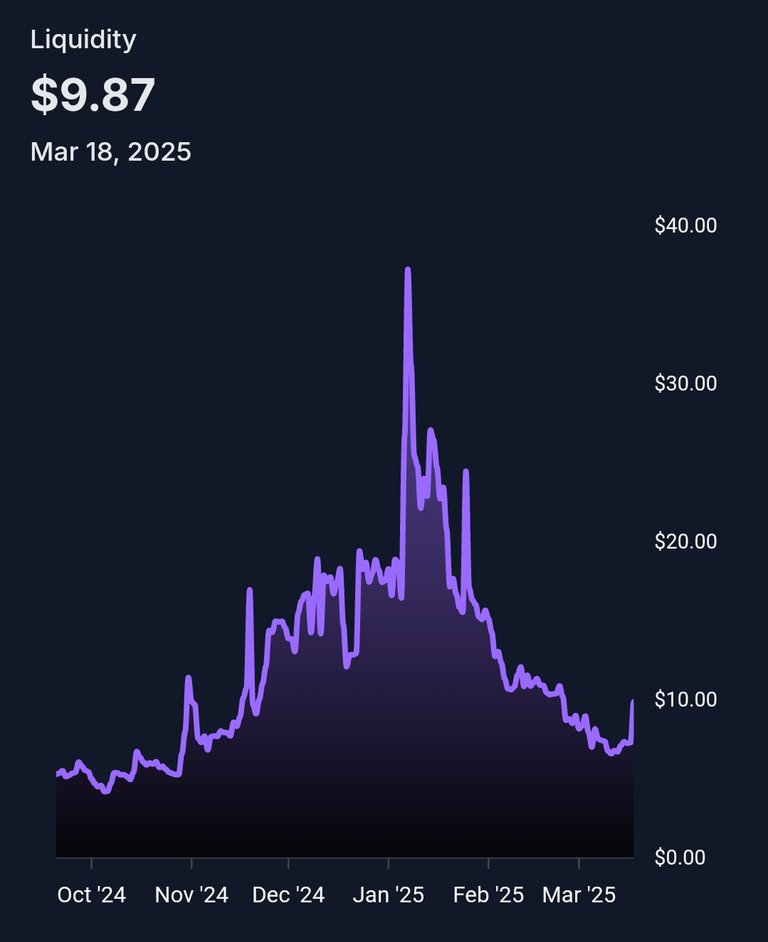
!HBIT
Success! @terra.sinkhole You mined 🟧 HBIT. If you replied to someone else, you received 0.9 and they received 0.1 HBIT on your behalf. You can receive 100% of the HBIT by replying to one of your own posts or comments. When you mine HBIT, you're also playing the Wusang: Isle of Blaq game. 🏴☠️
Sorry, but you didn't find a bonus treasure token today. Try again tomorrow...they're out there! Your random number generated was 0.7321606276668415 See the odds chart here. You can also see your number in the Discord server, #hbit-wusang-log channel. There is a treasure chest of bitcoin sats hidden in the game. Someone will find it. Happy hunting. 😃Check for bonus treasure tokens by entering your username at a block explorer A, explorer B, or take a look at your wallet. Read about Hivebits (HBIT) or read the story of Wusang: Isle of Blaq.
tools | wallet | discord | community | daily <><
The ability to declare complete autonomy each morning represents the utmost form of wealth.
Cien películas / One hundred films (5)
Máximo riesgo (1993) Dirigida por Renny Harlin y con Stallone como protagonista, es una gran película de acción. Con la montaña como ptotagonista es una película muy entretenida. Una versión moderna del camino del héroe: desde el desafío hasta la redención.
Cliffhanger (1993) Directed by Renny Harlin and starring Stallone, this is a great action movie. With the mountain as ptotagonist it is a very entertaining movie. A modern version of the hero's journey: from defiance to redemption.
#spanish #cine #movies #directoresdecine #filmdirector
First, there were never 130+ places (it was 20-30 at most) in Portsmouth that took crypto.
Second, to my knowledge, Bruce himself has never once (or very rarely) used crypto himself when he had the chance. If he wants to know why people didn't use it, he should ask himself.
Third, since 2017 Bitcoin hasn't been consistently usable for payments. Anyone who used it can tell you. I closed my bank to live all on Bitcoin, had to stop after a year. I ran a Lightning node, not workable for payments.
Fourth, let's be frank: lots of early Bitcoiners made a ton of money and just retired. No need to grind for adoption anymore, they made their bags.
#crypto #bitcoin
Fifth, crypto tribalism caused BTC vs. Dash vs. BCH vs. Monero vs. BSV to prevent working together (the ones who onboarded all the Portsmouth merchants became BSV maxis and kind of screwed up adoption for everyone).
Finally, I'm still living on crypto, onboarding merchants, holding meetups, etc. I'm not asking what happened, I'm making things happen. Anyone want to live on crypto and onboard their local merchants, hit me up.
And yes, here's proof I've been using crypto, from the least likely source to give this any kind of publicity
Is it safe to say that 2017 is the year when holders of Bitcoin stopped using Bitcoin as money? It looks to me as if 2017 is the year people began treating Bitcoin like a share of Berkshire Hathaway stock.
That's when it started, because fees got too high. Some people still tried, and when Lightning came around people started trying again, but that didn't last.
Tras de cámara.
Super Flat - Wreckfest
https://youtube.com/shorts/KGqQUkbCDIs
A very flat car feat. Speedbird GT (Pontiac Firebird)! ^^
https://youtube.com/NathanGraham
#Wreckfest #NathanGraham #Gaming #Car #Gameplay
Part 1/6:
Exploring Magnetic Fields and Eddy Currents with Paul
In this fascinating experiment, Paul delves into the intriguing world of magnetic fields and their interaction with conductive materials, specifically copper. Using a six-foot long copper tube, he aims to demonstrate the phenomenon of eddy currents and how they generate opposing magnetic fields, a concept that is beautifully illustrated through Lenz's Law.
The Experiment Setup
Part 2/6:
At the outset, Paul introduces the main components of the experiment, which includes a six-foot copper tube and various magnets of distinct sizes and specifications. The inner diameter (ID) of the tube measures 0.686 inches, while the outer diameter (OD) is 0.715 inches. Paul drops a magnet that measures 0.625 inches in diameter and 0.125 inches thick into the tube, setting the stage for demonstrating magnetic interactions.
As he prepares to conduct the experiment, Paul makes sure to position himself far enough from the tube to ensure no interference from external magnetic fields could affect the results. This attention to detail exemplifies the scientific method that he follows throughout the presentation.
Observations and Results
Part 3/6:
Paul drops the first magnet into the copper tube, facing north. As it descends, he observes a peculiar behavior: the magnet appears to wobble and sway as it interacts with the copper. This behavior draws attention to the idea of Lenz’s Law, whereby a moving magnetic field induces currents in the conductor, which in turn creates an opposing magnetic field that resists the magnet's motion.
The experiment becomes even more dynamic as Paul introduces a second magnet, which is slightly different in thickness. Observers notice that the magnet, now facing south, drags and alters its trajectory slightly as it travels down the tube. This phenomenon highlights the subtle yet fascinating dynamics at play when different magnetic orientations are tested.
Demonstrating Variable Effects
Part 4/6:
In continuing his exploration, Paul conducts further tests with different types and sizes of magnets. A half-inch diameter sphere magnet falls through the tube much quicker than the other types, illustrating that the shape and mass of the magnet significantly affect its fall rate. Paul also notes intriguing observations regarding how the magnets' rotations continue uninterrupted as they descend, a behavior reminiscent of anti-gravity effects.
To provide a clearer visualization, Paul discusses utilizing fluorescent dots to track the orientation and rotation of the magnets. His enthusiasm for understanding magnetism is evident as he describes the various experimental setups he's undertaken, sharing insights from over 100 experiments that he has meticulously conducted.
Part 5/6:
The Impact of Tube Material
Interestingly, Paul transitions to discussing the effects of using different types of materials. He briefly mentions that eddy currents are still present in aluminum tubes but that the results are not as pronounced as those observed in copper. This observation leads him to conclude that the choice of material plays a crucial role in the effectiveness of the experiment.
The Journey of Discovery
Throughout his demonstration, Paul expresses his passion for experimental science and the quest for knowledge. His excitement peaks when he notes that magnets can take substantially longer to travel through the tube than expected, with times extending from 20 seconds to 50 seconds with further experimentation.
Part 6/6:
Paul encourages viewers to join him for subsequent videos to explore these concepts in greater depth, suggesting that the journey of discovery regarding magnetic fields and eddy currents has just begun.
Conclusion
Paul's engaging experiment not only illustrates the principles of magnetism and conductivity but also serves as a reminder of the wonders of scientific exploration. By visually showcasing the intricacies of magnetic interactions, he paves the way for a deeper understanding of fundamental physical laws. This experiment encapsulates the thrill of engaging with science, encouraging viewers to continue their own explorations into magnetic phenomena.
Constructing a financial system based on real estate is an incredibly flawed idea. This basis is practically worthless. More of it can always be created.
The entire financial structure remains unstable because houses do not provide a solid foundation. Housing exists for people to live in.
Basing finance on property means that housing values continually rise, making it increasingly difficult to cover basic living expenses. House values are determined subjectively.
The price of a property in a neighborhood can fluctuate based on various factors, including the evaluator's perspective. Governments have the power to upend the housing market overnight by increasing property taxes.
The housing market operates at the discretion of government decisions. Authorities favor rising house prices because higher property values generate more tax revenue.
Once property taxes are no longer essential for government survival, their strategies for city expansion and attracting new residents will likely shift. Bitcoin will serve as the foundational element of the future financial system.
Bitcoin stands out as the most stable basis available in modern finance. Regardless of external circumstances, 1 BTC will always equal 1 BTC.
No alternative possesses the same level of fungibility, divisibility, portability, scarcity, immutability, resistance to censorship, durability, and verifiability. Nothing can replace Bitcoin.
Once banking institutions and governments recognize this, they will adjust their interactions with Bitcoin. Rather than trying to eliminate it, they will come to embrace Bitcoin. Such a change will be essential for their survival.
°1144
GW#1033 - HALO Reach
👀
A healthy routine.
Thanks man, i just tested the hive keychain..
Glad it worked for you.
#newlion
who is calling my name?🤣
Operations and development teams were significantly outmaneuvered by some sharp cursor and vibe coding—an experience that brought back memories of transformative software migrations. The git repository hasn't looked this fresh in years.
A replacement for an established monitoring tool was engineered in less than a week, thanks to the efforts of two exceptionally skilled developers and a powerhouse code editor.
This enterprise-grade production system for an airline advanced to review, QC, and audit swiftly, underscoring that traditional SaaS solutions might be nearing their end.
#french
All The Problems Have a SOLUTION.
A mid afternoon snack for the hungry lion to dine on.
feed me daddy
NSFW
oh wait, wrong chat
!summarize #charliekirk #megynkelly #politcs #gavinnewsom #california
Part 1/6:
Analysis of Gavin Newsom’s Podcast and its Implications
In a recent episode featuring Charlie Kirk as the inaugural guest on Gavin Newsom’s podcast, a spirited discussion unfolded that has raised key questions about the future of political dialogue in America, particularly as it pertains to the impending presidential elections in 2028.
The Podcast Dynamics
Kirk’s appearance was notable for its straightforward exchange of ideas, particularly surrounding the contentious issue of transgender athletes competing in women's sports. Kirk asserted that it is indeed unfair to allow biological males to compete against females, a sentiment that resonates with a significant portion of the population, including over 70% of Democrats, despite the reluctance of lawmakers to act on it.
Part 2/6:
Those involved in the political dialogue, reflecting on Kirk’s participation, have expressed concern that by engaging with Newsom, they may inadvertently be aiding his preparation for a future run for presidency. Speculation suggests that Newsom is training for a potential showdown against candidates like J.D. Vance from Ohio, and that his performance in these discussions is pivotal for his political development.
Criticisms and Concerns
Opponents of featuring Newsom in discussions like these argue that it provides him with the practice needed to refine his skills and appeal to more right-leaning constituents. Critics contend that rather than honing his abilities for the campaign trail, such podcasts reveal Newsom's vulnerabilities—especially as his favorability ratings continue to drop.
Part 3/6:
In fact, it has been suggested that Kirk's engagement ultimately exposes Newsom as a "synthetic fraud," as he struggles to gain traction with his party base. Kirk himself articulated that while he saw the discussion as a valuable opportunity to challenge Newsom's positions and engage a vast audience, he also recognized that this engagement could backfire on Newsom, diminishing his hopes for a presidential run.
The Value of Dialogue
Kirk defended the decision to engage, citing the substantial viewership that the podcast garnered, which included a diverse array of audience members who may not be typically politically active. He maintained that the exposure was beneficial, allowing for the presentation of conservative ideas against the backdrop of Newsom’s policies and rhetoric.
Part 4/6:
In discussing the responsibility of conservatives engaging with prominent Democratic figures, Kirk advised that any future conversations should maintain a firm and disagreeable stance, pressing for real policy commitments and accountability. He urged conservatives to pose critical questions, ensuring that politicians are held to their public statements, particularly regarding controversial subjects like transgender sports.
Conclusion
Part 5/6:
The conversation around Gavin Newsom’s podcast and Charlie Kirk’s notable guest appearance reflects broader themes in American political discourse. As potential candidates gear up for the 2028 elections, the manner in which these dialogues are conducted will be pivotal. While Kirk and others see dialogue as an opportunity for exposure and debate, critics warn that it might also serve to polish the images of politicians who lack substantive accomplishments.
Part 6/6:
Moving forward, the challenge will lie in striking a balance between engaging in necessary conversations and not unwittingly bolstering the platforms of those whose policies may not align with the values of the audience. The political landscape is evolving, and how figures from opposing sides of the aisle interact will shape the narrative leading into future elections.
"Israel will, from now on, act against Hamas with increasing military strength," Netanyahu's office said.
The White House sought to blame Hamas for the renewed fighting. National Security Council spokesman Brian Hughes said the militant group "could have released hostages to extend the ceasefire but instead chose refusal and war."
!summarize #billmaher #democrats #kidrock #politics #elections
Part 1/6:
Bill Maher Reflects on Politics and Predictions for the Future
On a recent episode of his podcast Club Random, Bill Maher delved into the political landscape of the United States, revisiting significant figures and events from recent history. In particular, Maher discussed the 2020 presidential election, the aftermath of Joe Biden's victory, and the future of the Democratic Party.
Revisiting the 2020 Election
Part 2/6:
During his conversation, Maher pointed to Joe Biden's election win as a pivotal moment in American politics. He noted that, despite the controversies and allegations surrounding the election—particularly from Trump supporters like Kid Rock—Biden undeniably won the presidency. Maher's commentary underscored a common theme in political discourse: the debate over election integrity versus acceptance of the outcomes.
Maher suggested that the narrative surrounding Trump's loss is enhanced when viewed as a "trilogy," wherein his defeat leads to a more dramatic comeback story. He noted the importance of maintaining a storyline that involves struggle and perseverance, positioning Trump’s eventual return as a testament to his legendary status in American political culture.
Part 3/6:
The State of the Democratic Party
Transitioning to the Democratic Party's dynamics, Maher expressed skepticism about their immediate future. He lamented the party's apparent inability to connect with voters and predicted a difficult road ahead. Maher highlighted the lack of charisma among Democratic leaders, particularly in comparison to figures like Donald Trump. He provocatively stated, “I don’t think we’ll ever see a Democrat president again,” reflecting on a perceived shift in the political landscape.
Part 4/6:
As the discussion continued, Maher critiqued figures such as Kamala Harris, remarking on their public handling of electoral defeats. He implied that Democrats tend to withdraw from the spotlight quickly after losses, contrasting their behavior with the more resilient presentations often displayed by Republicans.
Predictions for Future Elections
Despite his critiques, Maher maintained a glimmer of optimism regarding the potential for a Democratic comeback, opining that the political tides could rally in favor of the party as Americans become increasingly dissatisfied with current leadership. He argued that while Democrats may struggle, they still have a chance to reclaim the House of Representatives in upcoming elections.
Part 5/6:
Maher pointed out that part of the issue lies with the Democratic National Committee (DNC), which he believes has historically suppressed dissenting voices within the party. He cited this suppression as detrimental to the Democratic ethos and called for a reevaluation of how candidates are presented and supported across the board.
Conclusion: A Call for New Voices
As the conversation wound down, Maher reflected on potential leadership changes, mentioning Harris's aspirations for future positions while advocating for a more inclusive approach to candidate selection within the Democratic Party. He emphasized the need for new voices to emerge, suggesting that a rejuvenated party would better serve the American populace.
Part 6/6:
In his commentary, Maher not only encapsulated the current political strife but also laid out a roadmap for potential recovery and renewal in Democratic politics, asserting a critical need for reform to adapt to shifting public sentiments. As the episode concluded, Maher hinted at addressing broader themes such as "technofascism," promising continued exploration of these integral issues on his podcast.
As the United States navigates these defining moments, the discourse Maher promotes continues to challenge the established political norms and invites a rethinking of what lies ahead for both major parties.
Poland's Defence Minister Wladyslaw Kosiniak-Kamysz hailed the move as "a very strong political declaration showing how determined we are to defend our homeland."
"Finland is also considering such a decision, so I think that soon all the countries... in the northeastern region of NATO's flank will make a similar decision," Kosiniak-Kamysz told reporters.
The Latvian government on Tuesday officially launched the process of pulling out from the convention.
"This would be the first time when Latvia would step out of any international convention we've ever signed," Prime Minister Evika Silina said Tuesday after the cabinet meeting.
More than 160 countries and territories are signatories to the Ottawa Convention, including Ukraine but not the United States or Russia.
!summarize #msnbc #poll #media #legacy #trump #democrats
Part 1/7:
The Decline of Democratic Support: A Polling Perspective
The overarching sentiment captured in recent media coverage is one of astonishment and dismay regarding the apparent collapse in support for the Democratic Party. Two significant polling data, one from CNN and another from NBC, highlight this trend, revealing a record-low favorability rating of just 29% for Democrats—an unprecedented low that hasn't been observed since these metrics have been tracked. This decline, especially dramatic from a previous high of 60% favorability in 2008, provides compelling evidence of the current political landscape and the challenges facing Democrats.
Polling Insights and Public Mood
Part 2/7:
An exploration of public sentiment presents additional layers of complexity, particularly concerning perceptions of the direction of the country. A noticeable increase—44% of respondents believe the country is heading in the right direction—contrasts sharply with previous years, with the last time this figure surpassed 40% dating back to 2012. Though there are significant contributing factors through Republican endorsements, the uptick is also present among independent voters, indicating a nuanced shift in the electorate's mood.
While it's easy to dismiss these numbers as merely political positioning, tangible improvements in everyday realities, such as falling inflation rates and declining food prices, are contributing to a somewhat positive outlook for many citizens.
Part 3/7:
Media Reaction: Confusion and Analysis
The media, particularly outlets like MSNBC, struggles to reconcile these polling numbers with their expectations. For them, these ratings represent not just a challenge for the Democratic Party but also a perplexity around their failure to retain support from middle America. The dialogue among commentators reveals a sense of urgency to find a unifying figure or an articulate spokesperson who can effectively communicate Democratic values and restore faith in the party.
Dissonance in Democratic Messaging
Part 4/7:
Several commentators express dissatisfaction with current Democratic leadership and the party's communication strategies. There is a call for a shift toward fact-based dialogue over emotional expressions, with critics denouncing flamboyant displays of emotion as counterproductive to securing understanding and loyalty from the electorate. This, notably, raises eyebrows given the irony of these critiques often emerging from emotional discussions themselves.
Ezra Klein’s sentiment—that the media and self-important figures should reclaim credibility as authoritative voices—mirrors the broader frustration within the Democratic Party regarding who can reliably advocate for their policies and frame their messaging amidst internal discord and external criticism.
The Search for Leadership
Part 5/7:
The conversation brings attention to the void within the party, suggesting that figures like Gavin Newsom, currently facing backlash for engaging with opposing viewpoints, might possess the qualities necessary for effective leadership. Yet, the overall sentiment is one of exasperation; the expectation of a Democratic savior prior to primary elections feels unrealistic to many.
The commentary highlights that the Democratic Party seems out of touch with everyday American issues, struggling to convey empathy and clarity amidst ongoing national crises. This disconnect is intensifying as inflation concerns still loom large in everyday discussions, despite recent improvements.
Conclusion: A Path Forward?
Part 6/7:
As the Democratic Party grapples with its plummeting favorability, the urgent need for recalibration and reinvigoration is more apparent than ever. The underlying message showcases a party in distress, caught between striving for emotional identification with voters and maintaining the credibility necessary for effective advocacy.
Part 7/7:
In light of these developments, it remains to be seen how the party will adapt and engage with its base moving forward. For now, the polling data acts as a critical lens through which the current political climate can be examined, indicating a potential inflection point for the Democratic Party that requires rapid and strategic action to revive its fortunes among frustrated voters. The outcome of this introspection will be vital as both the party and its representatives look to rebuild their standing before the next electoral cycle.
!summarize #maozedong #china #history
This video has already been summarized: https://inleo.io/threads/view/taskmaster4450le/re-taskmaster4450le-39lxyxdb1
!summarize #chuckschumer #politics #government #democrats
Part 1/10:
The Current Economic Landscape: Tariffs, Recession Fears, and National Security
In the ongoing discussion about the American economy, concerns over a potential recession and the implications of tariffs are at the forefront. Key figures, including Vice President J.D. Vance and notable commentators, emphasize the necessity of tariffs to protect American jobs and industries against foreign competition. This conversation extends into broader debates about fiscal policy and the long-term economic vision for the United States.
Understanding the Tariff Debate
Part 2/10:
Vice President J.D. Vance has articulated a staunch defense of tariffs, arguing that they are essential for safeguarding American jobs and empowering industries that have been adversely affected by international trade dynamics. He asserts that tariffs are a tool to renegotiate America's trade relationships, thereby revitalizing domestic manufacturing and making the economy fairer for working Americans. This sentiment echoes the Trump administration's efforts to recalibrate the economic landscape through what they consider a necessary long-term strategy.
Part 3/10:
However, this perspective faces significant pushback, particularly from Democratic leaders like Senate Majority Leader Chuck Schumer. Schumer's critique highlights a pervasive attitude among certain lawmakers who believe that individuals and businesses should not only benefit from their efforts without undue government interference but also resist policies perceived as burdensome. He argues that a lack of government oversight leads to adverse consequences for citizens and businesses alike. The rhetoric suggests a deep-seated ideological divide regarding the role of government in economic activity.
The Frustrations of Small Business Owners
Part 4/10:
The sense of frustration expressed by small business owners becomes apparent as they recall instances where trade policies have directly impacted their livelihood. Many assert that the offshoring of jobs to countries like China has decimated local industries, further complicating their struggle to remain viable in an increasingly competitive market. These narratives underscore a broader sentiment that resonates across various sectors of the economy, emphasizing the need for thoughtful and strategic economic policies.
Part 5/10:
As the dialogue unfolds, it surfaces an essential truth: American entrepreneurship often thrives independently of government intervention. Commentators argue that the real success stories in business come from innovation and risk-taking—qualities that flourish in a minimal regulatory environment. Supporting this notion, business leaders often highlight their commitment to building companies from the ground up, directly attributing their success to their initiatives rather than government support.
The Role of Government in Economic Growth
Part 6/10:
Conversations about the government's role in the economy point towards the notion that the public sector can serve as both a facilitator and a barrier. There exists a consensus among some commentators that government regulations often stymie growth, especially in areas like education and healthcare, where productivity rates exhibit marked declines when influenced by public policy.
As this debate evolves, the emphasis on “deleveraging” government influence while enhancing the private sector's capacity becomes paramount. This perspective is articulated through the lens of notable economists and investors emphasizing the significance of shifting focus from globalization back to a more localized economic model, anchored in manufacturing and domestic investment.
Concerns of Economic Collapse
Part 7/10:
Amid these discussions, there are stark warnings regarding national debt and economic sustainability. An alarming recognition is emerging about the staggering levels of public debt and fiscal policy, prompting calls for an urgent reevaluation of spending practices. Analysts like Scott Bessent caution against the impending crisis that an unsustainable debt-to-GDP ratio may precipitate if not addressed. With a projected economic downturn looming, the fear of entering an "interest rate death spiral" emphasizes the need for immediate policy reform.
Part 8/10:
In the realm of public sentiment, the notion of a “silent rage” regarding taxation underscores a palpable consciousness among citizens that they deserve better returns on their financial contributions to the state. This feeling has been aggravated by repetitive cycles of deficit spending, generating widespread dismay and disenfranchisement, particularly among the middle and lower economic classes.
The Potential of the AI Revolution
Part 9/10:
Turning the conversation towards innovation, participants emphasize the importance of investing in technological advancements, particularly in artificial intelligence and semiconductor manufacturing—a critical point of national security. The commitment illustrated by firms such as Taiwan Semiconductor, which is investing heavily in U.S. production capabilities, signals a shift towards self-reliance and strategic economic positioning amidst global tensions.
Underlying this argument is the recognition that America’s economic future must pivot towards cutting-edge technologies, encouraging investment in domestic infrastructures capable of propelling the nation forward in a rapidly evolving digital landscape.
Conclusion
Part 10/10:
The current dialogue surrounding tariffs, recession fears, taxation, and national security paints a complex picture of the American economy. Navigating through these issues will require a consensus on the government’s role in fostering an environment where innovation can flourish unencumbered. The commentary surrounding these topics underscores a critical need for reflective policymaking that prioritizes sustainable economic growth, emphasizes private-sector strengths, and balances individual liberties with broader societal needs. As the nation grapples with these multifaceted challenges, it remains to be seen how policies will adapt to secure a resilient economic future.
!summarize #theview #cnn #democrats #politics
Part 1/6:
The Unraveling of the Democratic Party: An Analysis of Internal Struggles
As the political landscape continues to evolve, the Democratic Party finds itself embroiled in an internal battle for identity and leadership. The recent discourse surrounding prominent party figures has revealed a growing divide within the ranks, reminiscent of a dramatic soap opera rather than a cohesive political organization. This article examines the characters in this unfolding drama, the dynamics at play, and predicts the potential ramifications of this struggle.
The Contestants: AFC Bracket of Democratic Leaders
Part 2/6:
In a tongue-in-cheek manner, the need for a 'woke bracket' has been proposed to assess the most radical members within the party—those likely to steer the Democratic agenda into unchartered territories. Figures like Jasmine Crockett, Alexandria Ocasio-Cortez (AOC), and Ilhan Omar are front and center, with speculation around Chris Murphy entering the fray due to his recent assertiveness.
Critics suggest that this quest for radical leadership could drive the party's approval ratings lower than their current standing, which hovers around a dismal 29%. The essence of this internal strife seems not merely about ideology, but about a fundamental clash of wills among those who wish to fight and those who are accused of capitulating.
Leadership Challenges and Calls for Accountability
Part 3/6:
The current Democratic leadership, including Chuck Schumer and Hakeem Jeffries, faces immense pressure from both constituents and party ranks. The ongoing government shutdown saga has become a focal point for frustration, with many party members questioning Schumer's ability to effectively lead. This reflects a broader sentiment: a yearning within the party for a leader who can advocate fiercely against the Republican agenda, rather than one who compromises.
Moreover, the visible disconnect between long-standing leadership and the younger, more radical elements of the party signifies a growing demand for transformation. The calls for action are becoming louder with grassroots movements urging Democratic leaders to engage more actively with their constituencies and reflect their desires.
Part 4/6:
The Shift in Ideological Alignment
A notable shift in public sentiment among Democratic voters has emerged, where fewer express a willingness to work with Republicans. Polling indicates that the desire to oppose the GOP's agenda has surged, shifting from 74% in 2017 to 57% presently. This change suggests a collective rejection of compromise and collaboration, underscoring the party's lurch toward extreme opposition.
The Democratic Party's response to this transformation has been underwhelming, leading to confusion and frustration among constituents. As party figures grapple with internal strife, they still stand at a critical juncture, teetering between the radicalization of their base and the need to appeal to a wider electorate.
The Future Ambiguity of Party Leadership
Part 5/6:
As tensions mount, the question arises: who will ultimately guide the Democratic Party? With numerous members openly questioning the efficacy of current leadership, especially of Schumer, the fear of a leadership vacuum grows. The prospect of a more radical left gaining control looms large, particularly with the current trajectory of party dynamics.
Experiencing a coup-like atmosphere within the party could lead to significant shifts in policy direction. Entering an era dominated by figures such as AOC and Omar may alienate moderate Democrats and independents, further complicating the party's ability to secure electoral victories.
Conclusion: The Drama Unfolds
Part 6/6:
The turmoil within the Democratic Party mirrors a reality show, rife with conflict and uncertainty. As factions vie for dominance, the outcome remains unclear—will the party lean into radical policies or find its way back to moderation?
Regardless of which path is chosen, one thing is certain: the internal struggle will have repercussions extending beyond the party itself, impacting electoral prospects and shaping America's political landscape for years to come. As the drama continues to unfold, the need for strong, cohesive leadership within the Democratic Party has never been more critical. The direction the party chooses could define its legacy—or spell its downfall.
!summarize #billburr #elonmusk #left #politics
Part 1/10:
The Incident and Political Reactions
This past weekend, a surprising incident took place involving Donald Trump, where a member of the media allegedly struck him in the face with a microphone. While many initially assumed it was a blunder, speculation now suggests a more sinister undertone, with suggestions that it may stem from "Trump Derangement Syndrome" among certain leftist activists. The individual identified as responsible for the incident is a leftist activist who, under the guise of journalism, has previously drawn harsh criticisms of Trump.
Part 2/10:
In the midst of this, comedic takes on the incident have flooded social media, with memes highlighting the absurdity surrounding it. Even Trump himself shared a humorous response, comparing the scenario to how he looks at his son when tasked with simple chores.
Bill Burr's Outrageous Commentary
In an entirely different context, comedian Bill Burr's recent comments sparked significant debate. During a comedic rant, Burr outrageously linked Elon Musk to Adolf Hitler, creating a ripple effect across social media. This punchline stood in stark contrast to Burr's earlier comedic styles, where he often lampooned the ease with which people invoke Hitler comparisons in modern discourse.
Part 3/10:
Interestingly, this intersection of humor and serious political commentary has drawn attention to the wider implications of such statements, particularly amid rising anti-Semitism. Burr's remarks seem to mirror broader cultural tensions, highlighting how extreme rhetoric can overshadow nuanced discussions.
A Closer Look at Antisemitism
In alarming incidents across the globe, visible acts of anti-Semitism have surged, predominantly among segments of the left. Videos emerged depicting disturbing scenes where young women harassed and spat upon a Jewish man in Ireland, provoking outrage and dismay. Such incidents serve as painful reminders of the ongoing prevalence of hate and ignorance, often couched within broader political grievances.
Part 4/10:
The alarming rise in anti-Semitic rhetoric among self-proclaimed anti-fascists raises critical questions about sincerity in combating these ideologies. Media representation and responsibility in addressing these incidents also come under scrutiny, especially when juxtaposed against narratives of victimization and oppression.
The Mental Strain of COVID Restrictions
As the discussion shifts to Australia, memories of strict COVID-19 restrictions still linger. Past statements from various state leaders reflected an almost absurd level of control and paranoia that at times seemed excessive. Notable quotes remind us of the overreactions surrounding pandemic measures, where playground courts were closed and social interactions outside one's household seemed frowned upon.
Part 5/10:
This relentless cycle of rules not only alienated citizens but also left many questioning the credibility of leadership during crisis moments. The void between government directives and public opinion emphasizes the friction that arose during this challenging time.
Gender Identity and Gym Accessibility
Shifting towards gender identity discussions, reactions have emerged regarding a newly established gym for biological women that excludes trans women. A non-binary personal trainer voiced criticism, asserting that such exclusion is inherently unsafe for women and fails to foster an inclusive environment. This debate underlines the complexities surrounding gender identity and safety, leading to allegations that restricting access may reinforce traditional gender norms.
Part 6/10:
Critics argue that reality cannot be overlooked in favor of individual feelings, and discussions surrounding self-identification and physicality unleash a whirlwind of emotions on both sides. The discourse continues to challenge society's understanding of gender in various facets of life, especially in spaces traditionally reserved for one gender.
Economic Insights Under Trump
Recent polls indicate a surging optimism about the direction of the United States, with the current approval levels echoing sentiments not seen for over two decades. Discussions illuminate that under Trump, there appears to be a palpable shift in American sentiment, contrasting sharply with perceptions of a grim economic reality under the Biden administration.
Part 7/10:
Economic commentary brings forth hopes that Trump's reforms will alleviate burdens on American citizens—eliminating certain taxes and fostering fair trade practices. Critics, however, question the feasibility of these ambitious plans amidst growing national debt. Yet, supporters maintain that Trump aims to empower the middle class, opposing the administration's trend toward increased economic disparity.
The Fallout of BLM
Part 8/10:
Interviews highlighting the aftermath of the Black Lives Matter (BLM) movement delve into its financial accountability. Notably, individuals were questioned on the tangible benefits derived from the movement amidst accusations of mismanagement and embezzlement. Critiques range from everyday citizens feeling exploited by a movement that supposedly had their interests at heart to celebrity figures echoing frustrations over perceived fiscal irresponsibility.
As BLM’s reputation continues to face scrutiny, a broader conversation about racial justice funding and accountability emerges. Many wonder whether the movement succeeded in fostering real change or merely amplified existing divides to monetize political activism.
Stranded Astronauts and Political Underpinnings
Part 9/10:
In a contrasting narrative, the successful rescue of two astronauts who were stranded in space showcases human resilience and ingenuity. However, commentary suggests that political considerations may have influenced how this achievement was perceived in the media. The apparent reluctance to celebrate the success of private endeavors orchestrated by figures like Elon Musk underscores the tensions between private innovation and government narratives.
The dynamic between Trump, Musk, and current leadership highlights the ongoing tensions within American politics. The intersection of technology, private enterprise, and national identity seems destined to elicit further debate as society grapples with the realities of modern governance.
Part 10/10:
Overall, the interplay between humor, serious political discourse, and social tensions reflects a society in flux, grappling with multifaceted issues that shape its collective identity. Each story intertwines within a larger narrative of a nation trying to reconcile its past, assess its present, and consider future directions.
!summarize #tesla #china #berlin #cybercab #fsd
Part 1/8:
Tesla's Sales Surge: A Robust Global Performance
In the latest episode of Beston Tesla's Overflow show, the discussion focused on the impressive sales ramp-up of Tesla in Europe and China, amid increased production capacities. Despite some initial dips attributed to the transition in Model Y production, Tesla now showcases a remarkable recovery across its key markets.
Tesla's Return to Form in Europe
Tesla's sales in Europe saw a decline at the start of the year, primarily due to the production shift towards revamped models. However, recent reports indicate that sales are on an upswing across various European nations. A manager from Tesla's Berlin factory noted that there are no demand issues and that production continues to increase significantly.
Part 2/8:
The statistics shared during the episode portray Tesla as the best-selling electric vehicle (EV) brand in Europe, with the Model Y leading the charge as the top-selling EV. Even with the initial sales slump, Tesla's brand remains robust, and it continues to outpace competitors, with a fourfold sales advantage over the nearest rival in Spain. This resilience speaks volumes about Tesla's stronghold in the European EV market.
Strong Recovery Indicators from China
Part 3/8:
Turning to China, the response to Tesla's production adjustments has been similarly positive. Following the dip in sales caused by transitioning to the new Model Y series, sales figures have rebounded sharply. Recent data confirms that Tesla is tracking closely to its previous year's sales figures, suggesting that demand continues to hold strong.
Sales reached approximately 15,300 units in a week, marking a healthy resurgence. The episode emphasized that the Shanghai factory’s production rate is significantly higher, allowing Tesla to remain competitive even as it updates its flagship models. The potential for record sales in China again this year seems plausible as interest in the refreshed Model Y surges.
The Cyber Cab and Future Developments
Part 4/8:
In addition to sales data, the episode featured insights from an industry leader, Sandy Monroe, about Tesla's upcoming Cyber Cab. Monroe highlighted that this vehicle would require less power—less than 50 kWh for a range of approximately 300 miles—positioning it as one of the most efficient EVs on the market.
Comparatively analyzed against competitors, the Cyber Cab could outperform many existing robotic taxi services in efficiency and cost-per-mile calculations. With prototypes set for production in upcoming months, the timeline for launching this innovative vehicle looks promisingly ahead to 2026.
The Competition Heats Up
Part 5/8:
The conversation also delved into growing competition in the autonomous driving realm, especially from Chinese manufacturers like Li Auto, which unveiled their next-generation autonomous architecture. Li Auto's autonomous technology aims for a level of driving intelligence that integrates spatial and behavioral reasoning, drawing comparisons to Tesla's technology.
Despite the advancements claimed by competitors, Tesla's full self-driving capabilities continue to prove effective through real-world performance metrics. Recent video releases from China demonstrated Tesla’s advanced capabilities, with its autonomous system navigating complex roads seamlessly. As Tesla gathers more data, the potential for regulatory approvals looms larger.
Advancements by BYD and Others
Part 6/8:
The episode also covered noteworthy developments from BYD, which showcased their new supercharging technology capable of delivering incredibly rapid charge speeds—over 1,000 kW. This leap positions BYD among the leaders in the facet of fast charging, promising significant advancements in EV charging infrastructure.
Tesla's impending entry into the Indian market was another significant highlight, with applications submitted to register the Model 3 and Model Y. As Tesla edges closer to expansion, the automotive landscape in new territories is set to evolve dramatically.
Conclusion: A Bright Future Ahead for Tesla
Part 7/8:
The overarching theme of the episode is clear: Tesla is not only recovering from early-year challenges but also cruising towards a stronger foothold in multiple markets around the globe. With each positive report on sales and technological advancements, Tesla's reputation as an industry leader remains intact.
As the competition intensifies—both from seasoned players and new entrants—Tesla appears well-prepared to adapt and continue innovating. The developments in full self-driving technology, upcoming product launches, and market expansion strategies encapsulate the thrilling prospects that lie ahead for Tesla enthusiasts and potential customers alike.
Part 8/8:
Whether it’s significant sales rebounds in Europe and China, or technological innovations, Tesla is undoubtedly a driving force in the EV revolution.
Rep. Gill Files Impeachment Article Against Judge in Venezuelans' Case
Rep. Brandon Gill Tuesday introduced a resolution calling for the impeachment of U.S. District Judge James Boasberg, claiming that he abused his powers by ordering the Trump administration to stop the deportations of Venezuelans it accused of being gang members.
The Texas Republican, in his article of impeachment, charges that Boasburg took action to "advance political gain while interfering with the President's constitutional prerogatives and enforcement of the rule of law," reports The Hill.
He also accused Boasburg, an appointee of former President Barack Obama serving in the District of Columbia, of having "attempted to seize power from the Executive branch and interfere with the will of the American people."
"By making a political decision outside the scope of his judicial duties, he compromised the impartiality of our judicial system and created a constitutional crisis," the article also states.
Gill's resolution came after President Donald Trump earlier Tuesday called for Boasberg's impeachment in a strongly worded post on Truth Social, where he insisted that the judge was not elected as president and slammed him as being a "Radical Left Lunatic of a Judge," as well as a "troublemaker and agitator."
Boasberg ruled Saturday, in a verbal order, against Trump's use of the Alien Enemies Act of 1793 to deport accused members of a Venezuelan gang and directed planes carrying them to return to the United States.
However, the planes arrived in El Salvador and Honduras, which raised questions about the flights' timing and handover of the deportees.
!summarize #ice #uadi #jobs #layoffs #china #germany #europe
Part 1/8:
The Troubling Future of Audi and the German Automotive Industry
The German automotive industry is facing a significant crisis, highlighted by the recent job losses announced by Audi. For years, concerns have been raised about the pressures this industry faces, especially in light of increasing competition from Chinese manufacturers. As these challenges escalate, the implications for both workers and the future of automotive production in Germany become increasingly dire.
A Major Shift in the Automotive Landscape
Part 2/8:
Audi recently revealed plans to cut tens of thousands of jobs as part of a larger strategy aimed at reducing expenses and stabilizing the company. Specifically, the manufacturer is set to eliminate around 7,500 positions by 2029, a response to declining sales and profits. Last year, Audi's sales plummeted, reflecting a broader downturn across the industry. The need for cost-cutting measures has never been more crucial, particularly as Volkswagen’s credit rating suffered its first-ever downgrade, signaling deep-rooted issues within the German automotive sector.
The Challenge from China
Part 3/8:
The competition from Chinese automakers, who increasingly utilize automation and artificial intelligence to streamline production, poses a serious threat to Audi and its counterparts in Germany. Chinese companies are reportedly able to manufacture vehicles in astonishingly short periods—some claim as little as 50 seconds per car—effectively leveraging technology to lower production costs dramatically. As Audi grapples with this reality, they face a pivotal moment wherein they must innovate or risk falling irretrievably behind.
Inaccurate Timescales and Job Guarantees
Part 4/8:
Despite the proposed job cuts, Audi expresses a commitment to maintaining employee stability until 2033. However, this pledge raises questions about the sustainability of their workforce and the operational efficiency of the company. The management’s decision to maintain employment numbers until the end of the decade without firing for operational reasons may disincentivize productivity. Simultaneously, it reinforces fears that, as competition heightens, Audi may struggle to adapt to a rapidly changing market.
Investment versus Operational Reality
Part 5/8:
Interestingly, Audi plans to invest approximately €8 billion (about $9 billion) in its facilities over the next four years. Much of this funding appears targeted at modernizing production in Germany, yet skepticism surrounds whether such investments can yield returns in the face of substantial external competition. There is a palpable risk that funds allocated for modernization might not be enough, especially since they are simultaneously striving to maintain operations for their traditional combustion engine vehicles.
A Dual Production Strategy
Part 6/8:
Audi’s approach of producing both electric and combustion-powered vehicles in the same plants may not be as effective as intended. While aiming to create a "robustly and flexibly positioned" production line, critics criticize this dual strategy as potentially inefficient. Furthermore, the increasing valuation of electric vehicles poses a challenge for companies focusing heavily on internal combustion engine models.
Pricing Strategies and Market Perception
In light of dwindling sales, Audi finds itself in a position where raising prices across its vehicle lineup seems a necessary reaction to declining profitability. However, this approach may not provide the anticipated increase in sales. The historical failure of luxury brands attempting similar tactics raises doubts about its efficacy.
Part 7/8:
The Road Ahead: Employment and Sustainability
The works council claims to have secured a degree of job security for its employees amid cost-cutting initiatives. Still, the underlying reality is troubling. As Audi strives to reduce bureaucracy and flatten management structures, the potential for job losses looms large, reflecting a company at a critical juncture. A reduction of workforce may lead to long-term instability, particularly as China outpaces Audi in both production capabilities and market share.
Conclusion: A Yearning for Change in the Automotive Sector
Part 8/8:
The future of Audi appears precarious, particularly as it confronts dwindling market share and profitability challenges, especially in essential markets like China. The overarching concern is whether Audi and the broader German automotive industry can adapt fast enough or whether they will find themselves at a severe disadvantage in an increasingly competitive global landscape. As discussions of innovation, restructuring, and competition continue, the path forward for Audi and its workforce remains fraught with uncertainty, with challenges likely to intensify in the coming years.
!summarize #jfkjr #assassination #rosscoulhart #files #history #cia
Part 1/7:
Unveiling the JFK Files: A Break in Secrecy
The long-standing intrigue surrounding the assassination of President John F. Kennedy may soon see new revelations as the White House prepares to potentially release thousands of previously classified documents. This conversation unfolded during an interview featuring investigative journalist Ross Colhard, highlighting both skepticism and anticipation in relation to these documents.
The Context of Secrecy
Part 2/7:
For decades, documents related to the assassination of JFK have been closely guarded, with various administrations citing national security concerns for their continued classification. Both former President Donald Trump and current President Joe Biden have sought extensions to keep these documents private, raising questions about what information they contain and why it remains hidden.
Part 3/7:
Ross Colhard voiced his skepticism regarding the promises made about document releases, recalling how past assurances regarding disclosures, particularly the Epstein files, left many feeling disappointed. Despite these past experiences, the impending release includes a substantial number of documents, specifically around 1,000 documents that could shed new light on the circumstances surrounding the assassination.
The Anticipated Impact of the Document Release
Part 4/7:
Colhard shared his views on the potential ramifications of the release of these documents, expressing that some in the intelligence community are likely feeling anxious about what might be unveiled. While national security is often cited as a reason for keeping information confidential, he pointed out that the aging personnel associated with 1960s events pose less of a risk for exposure compared to more contemporary cases.
Part 5/7:
Should the full 80,000 pages be released—with redactions for sensitive names and information—there is speculation about whether they would clarify previously suspected links between Lee Harvey Oswald, the accused assassin, and the CIA. Colhard indicated that there is a particular interest in the CIA’s potential knowledge of Oswald’s activities leading up to the assassination, especially during a trip he made to Mexico City.
Broader Implications Beyond JFK
Part 6/7:
Interestingly, the discussion surrounding JFK's assassination documents is part of a broader context involving other high-profile assassination cases, such as those of Robert F. Kennedy and Martin Luther King Jr. Colhard highlighted that these cases are also covered under Trump's executive order and warrant significant public interest for accountability.
The release of such documents is portrayed as an essential move toward transparency and public knowledge, allowing citizens to assess the history of these events firsthand. The interrogation around JFK's assassination—whether it was a coup d'état or the act of a lone gunman—may finally approach resolution, pending the details revealed in the forthcoming documents.
Conclusion: A Call for Transparency
Part 7/7:
As the world waits in anticipation for the release of the JFK files, the call for transparency grows louder. Investigative efforts into past atrocities and controversial events by the government stand to benefit from public access to these documents. Whether the documents will reveal groundbreaking information remains to be seen, but one thing is clear: the pursuit of truth in history is vital for accountability and understanding the actions of those in power.
The hope is that in allowing sunlight to shine upon these hidden records, the narrative of history will become clearer, and new perspectives can emerge about pivotal moments that shaped the United States.
!summarize #tesla #fsd #zeekr #agi #china
Part 1/10:
Tesla's Full Self-Driving: A Leap into New Territories
In a significant reveal, Tesla Vice President Ashak Kwami has labeled the company's Full Self-Driving (FSD) technology as a "different kind of AGI," stirring interest and excitement in the automotive and tech communities alike. As Tesla prepares to launch FSD as a monthly subscription service in China, and potentially in Europe as early as next month, the advancements and implications of the technology are becoming increasingly profound.
The Exciting World of Full Self-Driving in China
Part 2/10:
During a recent discussion, several captivating videos showcased the performance of FSD in diverse scenarios across China. Observers were particularly astonished by instances where FSD appeared to exhibit a consciousness-like awareness of its environment. One striking example involved the car navigating a lot without road markings, demonstrating an ability to avoid edges intelligently while executing plans to find an exit.
Part 3/10:
As discussions unfolded, there was a suggestion that FSD might have memory capabilities, recalling routes it has previously traveled. This phenomenon was showcased in videos where drivers noted improvements in the car's maneuvering on familiar paths. The potential for FSD to learn from experiences and adapt its driving style based on previous encounters could imply a future where cars can consider unique homeowner challenges, like navigating tricky driveways.
FSD Save Lives: Real Stories from Users
Part 4/10:
Owners are sharing incredible testimonials of how FSD has potentially saved their lives during sudden, dangerous encounters with other vehicles on the road. In multiple instances, the FSD technology exhibited rapid reaction times, avoiding collisions in scenarios that would have likely ended in disaster if handled by a human driver.
With these high-stakes narratives gaining traction on Chinese social media, the safety measures provided by FSD are further cementing the technology's reputation. Tesla's reputation in the region amplifies as FSD begins to penetrate everyday driving scenarios, effectively showcasing its competence to the masses.
Subscription Services and Competition Dynamics
Part 5/10:
Tesla's introduction of a subscription service for FSD in China is a strategic move, likely aiming to make the technology more accessible to various user groups, including the elderly. While previous skepticism existed concerning older individuals and their willingness to adopt new technology, it appears that once accustomed to the use of FSD, many older drivers find it liberating and a means to regain independence.
Part 6/10:
Simultaneously, competition in the electric vehicle market is heating up, as notable rival, Zeker, announced they would be offering their advanced driver-assistance systems free of charge. This reveals a shift in the market dynamics where Tesla's innovations are driving competitors to enhance their offerings rapidly. Despite some companies trying to position themselves as alternatives, evidence suggests that Tesla remains the benchmark in this domain.
Groundbreaking Developments in Regulatory Approvals
Part 7/10:
Anticipation is high regarding the potential rollout of FSD in Europe, starting in the Netherlands. A report suggests that Tesla may bypass typical regulatory delays through an exemption, enabling it to introduce its supervisory FSD capabilities sooner than anticipated. If approved soon, this could mark a landmark moment not just for Tesla but for autonomous driving legislation throughout Europe.
The implications of such a rollout are multifaceted. With public and regulatory acceptance paving the way, Tesla could establish itself as the pioneer in hands-free driving under European law, potentially triggering a series of regulatory changes across the continent.
Tesla's Resilient Performance in China
Part 8/10:
Recent sales statistics in China provide a promising outlook for Tesla. While the first quarter traditionally sees a dip in sales compared to the previous quarter, the data indicates a year-over-year recovery, with the possibility of matching or even surpassing last year's numbers.
Despite perceived competition and market slowdown, Tesla's product offerings remain strong. The company has recently increased prices on select models, which may signal robust demand amid production adjustments. This maneuver aligns with Tesla's strategy to balance supply and demand effectively.
Conclusion
Part 9/10:
As Tesla advances the narrative of FSD technology and expands its reach while grappling with competition and regulatory landscapes, the excitement surrounding its potential applications continues to grow. Whether through enhanced safety measures proven by real-life user experiences, upcoming subscription services, or the ambitious expansion plans into Europe, Tesla is at the forefront of a driving revolution that may forever redefine transportation.
Part 10/10:
By innovating in such pivotal ways, Tesla not only solidifies its position in the current market landscape but also shapes the trajectory of self-driving technology as we know it. The coming months will be crucial in determining the extent of FSD's influence as regulatory bodies, competitors, and consumers continue to engage with this transformative technology.
!summarize #juansoto #nymets #baseball #mlb
Part 1/8:
The Inevitable Booing: A Reality for New York Fans
As the start of a new baseball season approaches, the excitement among New York Mets fans is palpable. The acquisition of star players tends to create a honeymoon phase, flooded with hopes and dreams for championship glory. However, a darker, familiar undercurrent lies beneath: the looming specter of boos, especially if those players underperform against sky-high expectations.
Star Players and Fan Reactions
Part 2/8:
In the bustling sports landscape of New York, both Mets and Yankees fans share a unique bond, rooted in their unwavering passion for their teams. This often manifests in intense emotional reactions—love and enthusiasm during winning streaks, and harsh criticism when expectations aren't met. Carlos Beltrán, one of the most prominent Met acquisitions, serves as a prime example. Despite moments of brilliance, he faced boos when he didn’t live up to the fans’ lofty expectations.
The discussion also considers other players, such as Mike Piazza, Garrett Cole, and even newer acquisitions like Juan Soto. The premise remains the same. No athlete, regardless of their talent or previous successes, is exempt from the judgmental gaze of New York fans, especially when their on-field performance falters.
Part 3/8:
The Psychology of Booing
The philosophy behind booing takes on a crucial role in how fans interact with players. Many argue that baseball, as a sport heavily focused on individual performance, amplifies this reaction. Each play can be a direct confrontation between the player and the expectations set by the crowd, making moments of failure more pronounced. As one commentator put it, “In baseball, if you get on the wrong side of a fanbase, it’s consistent. Every time you touch the ball, you feel it.”
This reality creates an immense pressure cooker for signature players in New York, where significant monetary investment compounds the expectations. With ticket prices at an all-time high, fans feel entitled to an exceptional level of performance, especially when millions are on the line.
Part 4/8:
The Fan Experience and Expectations
The perpetual dilemma acknowledges that fans are paying for more than just a ticket; they seek an experience—a blend of thrilling plays, emotional connections, and high stakes. The recent contracts, especially exorbitant ones like Soto's, raise the stakes. Fans instinctively connect these investments with the hope of team success. If the team falters or the player does not deliver, the fan's disappointment can quickly translate into boos, sometimes disproportionately.
Part 5/8:
As the discussion shifts to Juan Soto, there’s widespread agreement that fans’ patience may wear thin relatively quickly; a drop in performance could see boos even in April, as the season gets underway. The delicate relationship between a player's worth and their performance looms large, a reality even Soto may face should he fall short of the enormous expectations resting upon his shoulders.
Historical Context and Trends
Part 6/8:
Historically, the trenches of booing have claimed many victims, from Dave Winfield to Roger Clemens. The consensus is that the majority of big-name players in New York, unfortunately, have faced the ire of unhappy fans. However, there remain rare exceptions of athletes who have navigated these turbulent waters unscathed, often thanks to immediate performance success or exceptional circumstances.
For many Mets fans, it is essential to recognize that the honeymoon phase for Soto may differ from previous seasons, enhanced by his youthful charisma and the novelty of joining the team. A feeling of collective ownership also reigns: “He picked the Mets over the Yankees,” a sentiment that could prolong his grace period with the fans.
A Guiding Light for Fans
Part 7/8:
So where does this lead the fans? The conversations encourage introspection. Many claim they will refrain from booing, even calling for policies to avoid the toxic nature of negative fan responses. Yet the honesty of past experiences reveals a painful truth—booing might not solely be rooted in performance but in the collective emotional investment fans have made.
Ultimately, what resonates is the principle of enjoying the journey—the wild ebb and flow of the season. New York fans hold the power to influence players with their reactions, and while booing may seem inevitable, choosing when to express disappointment is as vital as celebrating a victory. It’s an ongoing conversation haunting the hearts of New York sports aficionados with every season’s opening day.
Part 8/8:
As the season dawns, it leaves fans to ponder—how quickly will patience wear thin? Will Juan Soto join the ranks of booed athletes, or will he find favor in the hearts of flaring New York fans? Only time will tell, but one thing is for certain: enthusiasm and expectation permeate the air as the games begin.
!summarize #lacyhunt #monetarypolicy #economics
Part 1/10:
The Thoughtful Money Spring Conference: Key Takeaways and Insights
The recent Thoughtful Money Spring Conference, hosted by founder Adam Tagert, proved to be an enlightening event filled with expert analysis on pressing economic issues. Over the span of ten and a half hours, attendees were treated to a wealth of insights from various economists and financial experts who tackled the multifaceted challenges facing the economy today.
Economic Growth and Recession Risks
Part 2/10:
The day kicked off with Lacy Hunt, a former senior economist at the Federal Reserve, unveiling a "perfect storm" of five trends that are currently hampering economic growth. Hunt's analysis highlighted key factors including monetary conditions, U.S. fiscal policy, debt overhang, tariffs, and demographics, all suggesting that a recession later this year is becoming increasingly hard to avoid. He emphasized that risks of recession are greater than generally recognized, with expectations for a slow and challenging recovery.
A Call for Bold Reforms
Part 3/10:
Following Hunt, Luke Groman painted a stark picture of America's economic crossroads. He urged a departure from the failing status quo, warning that without significant reform—such as major debt reduction and a revaluation of gold—the country risks falling into a crisis even worse than the 2008 financial meltdown. His analysis expressed that the current 120% debt-to-GDP ratio is unsustainable and that urgent action is necessary to avert deepening economic turmoil.
Drying Up of Liquidity
Part 4/10:
Michael How then addressed the deteriorating liquidity conditions that have underpinned recent market growth. He noted the precarious position of the Federal Reserve and questioned its capacity to prevent another financial crisis. His commentary points to a significant stall in liquidity, which could exacerbate existing financial vulnerabilities as the year progresses.
Market Sentiment and Technical Analysis
Darius Dale transitioned the discussion to market sentiment, expressing a stark shift in his outlook from bullish to "ragingly bearish." His defensively positioned allocation model reflects concerns over a looming refinancing crisis in 2025, as well as potential inflationary pressures exacerbated by current U.S. policy decisions.
Part 5/10:
Technical analyst Fen Henrich provided insights into market trends, suggesting that the bull market may not be over yet. He indicated the possibility of a bounce-back as long as bullish indicators can be sustained. Despite current bearish sentiment, he warned that the bears still need to prove their case as key technical levels remain intact.
The Dollar and Passive Capital Flows
Brent Johnson shared his views on the U.S. dollar, discussing the implications of recent weakening and potential rallies. He attributed market movements to a combination of political factors and shifts in international yields.
Part 6/10:
Mike Green then delved into passive capital flows, emphasizing whether recent exuberance, particularly in levered ETFs, could continue into the future. He noted a shift away from small-cap stocks and highlighted ongoing transitions in the market landscape.
Precious Metals and Inflation Protection
Andy Scheckman discussed the significant demand for precious metals, pointing to a potential default that could spike interest in gold and silver as safe-haven assets. His remarks indicated a growing concern regarding the depletion of resources in bullion markets, underscoring the urgency of monitoring these trends.
Value Investments and International Markets
Part 7/10:
John Thorndike from GMO stressed the attractiveness of value investments in non-U.S. markets, particularly as fiscal stimulus initiatives take hold in countries like China and Europe. He articulated a view that this trend may provide better returns than currently overvalued U.S. equities.
Louie G corroborated Thorndike’s sentiments, adding that transformations in global fiscal policies are pivoting opportunities toward international stocks, making them an appealing investment avenue moving forward.
Income Investment Strategies
Part 8/10:
Steven Bavaria discussed shifting attitudes in income investing, promoting a model that focuses on growing cash income rather than volatile capital gains. He aimed to equip investors with strategies to navigate turbulent markets effectively, emphasizing the stabilizing benefits of cultivating consistent income streams.
Wealth Protection Strategies
Lyn Alden followed, outlining strategies for protecting wealth in light of diminishing purchasing power. Her focus on high-quality, scarce assets included equities, precious metals, and real estate as critical factors in safeguarding financial stability.
Housing Market Insight
Part 9/10:
Melody Wright provided an assessment of the housing market, declaring that a national correction has begun. She expressed concern over rising inventory levels and shifts in market dynamics throughout the housing sector.
Community Engagement and Future Prospects
The conference culminated in a lively Q&A session, affirming the value of community engagement among financial advisors and participants. The feedback from attendees reflected a positive sentiment regarding the conference’s insights and presentations, highlighting the actionable information shared throughout the day.
Recording and Future Discussions
Part 10/10:
For those who missed the live event, the full replay is available at thoughtfulmoney.com/conference. Looking ahead, Adam Tagert is preparing for further discussions, including reactions to upcoming Federal Reserve announcements and exploring the economic implications of the new administration’s policies on various fronts. With a lineup of interviews featuring seasoned insiders, there is much to look forward to in the coming weeks.
The Thoughtful Money Spring Conference has set the stage for critical discourse around economic conditions and investment strategies, leaving participants with both caution and optimism as they navigate the evolving landscape.
!summarize #kennedycenter #donaltrump #president #kennedy #assassination #files
Part 1/7:
A New Direction for the Kennedy Center and DC
In a board meeting addressing the current state of the Kennedy Center, a historic cultural institution in Washington DC, concerns were raised regarding its disrepair and management issues. The sentiments expressed highlighted a broader commentary on mismanagement within the nation itself, drawing parallels between the situation at the Kennedy Center and ongoing national challenges.
Disrepair and Mismanagement
Part 2/7:
The Kennedy Center, according to observations made during the meeting, is in a state of severe disrepair, reflecting the consequences of poor management. The speaker pointed out that an excessive amount of money—$250 million—had been spent on constructing underground rooms that are deemed impractical and unlikely to be utilized. The design and expenditure decisions were criticized as wasteful, capturing an attitude that mirrors inefficiencies found elsewhere in government.
Part 3/7:
Further scrutiny was placed on the infrastructure of the Center. The exterior columns, which were originally intended to be covered with marble or granite, had only been painted, lacking the grandeur expected of such an iconic location. This neglect and failure to modernize were viewed as a waste of resources that could be better allocated for improvements.
Union Issues and Costs
As the meeting unfolded, it was revealed that even minor events at the Kennedy Center are hampered by high costs associated with union structures. For example, the cost for musician Lee Greenwood to perform at this board meeting was quoted at an overwhelming $30,000, a figure that some deem exorbitant for a ceremony aimed at improving internal morale and engagement.
Commitment to Revitalization
Part 4/7:
Despite the frustrations expressed, there remains an optimistic vision for revitalizing the Kennedy Center. The speaker emphasized the need to collaborate with Congress to restore the building and enhance its appeal. The objective is to create an environment that attracts visitors and showcases remarkable performances. It was suggested that upcoming shows, including Broadway hits, could play a pivotal role in reinvigorating interest among both locals and tourists.
Broader Concerns for Washington, DC
Part 5/7:
Throughout the meeting, it became apparent that the challenges faced by the Kennedy Center are part of a larger issue related to urban management and safety in Washington, DC. The speaker articulated a commitment to addressing crime and improving public spaces, noting progress made in collaboration with local authorities to clear tent encampments outside federal buildings.
Urging Tourists to Visit
When asked about the experience for potential visitors, the speaker encouraged people to attend shows at the Kennedy Center, promising that improvements will manifest over time. Despite not being fond of certain shows, like "Hamilton," there remains hope that with programming changes, the performances will resonate more positively with audiences.
National and International Issues
Part 6/7:
Amid discussions of cultural revitalization, there were also concurrent comments about international relations, specifically regarding Russia and Ukraine. The speaker alluded to the complexities of the current geopolitical situation, expressing concerns about humanity and the ongoing conflicts, hinting at future engagements with foreign leaders to prioritize peace and resolve crises.
Protecting Places of Worship
The conversation shifted towards national security and the recent vandalism at a Catholic church in Kansas, which was condemned as a hate crime. The speaker, expressing support for religious institutions, indicated a willingness to address these incidents and enhance protections for places of worship across the nation.
Conclusion
Part 7/7:
The meeting at the Kennedy Center serves as both a reflection of a historical institution in need of revitalization and a microcosm of broader national issues related to governance, cultural preservation, and urban safety. There are pledges for improvement and rekindling of the Kennedy Center's potential, underscored by a commitment to engage with both local and national challenges facing Washington, DC. The hopeful outlook for the future is matched by practical calls to action within the administration, as the speaker seeks to align efforts in cultural enhancement and community safety.
!summarize #democrats #politics
Part 1/8:
The Current State of the Democratic Party: A Comprehensive Overview
The political landscape in the United States is undergoing a significant shift as the Democratic Party finds itself facing unprecedented challenges. With public disapproval at an all-time high and a palpable sense of chaos within the party, many analysts are questioning the longevity of their strategies and messaging.
Public Opinion and Approval Ratings
Part 2/8:
Recent polling data reveals that the Democratic Party is experiencing a historic low in favorability among American voters. According to CNN and NBC News, approval ratings for the party are plummeting, with CNN reporting only 29% of voters viewing the Democratic Party favorably, while NBC News cites figures even lower than that. These numbers tie back to the early ‘90s, reflecting a troubling trend that suggests a growing disconnect between the Democratic leadership and the electorate.
Congressional Democrats: A Disapproved Majority
Part 3/8:
The disapproval rates for congressional Democrats are striking. As reported by Quinnipiac University, a staggering 68% of voters disapprove of the Democrats in Congress, with only 21% expressing approval. These figures are especially worrisome when even within the Democratic base, a plurality of voters—49%—disapprove of their Congressional representatives. Such discontent highlights the urgency for Democrats to recalibrate their approach if they hope to regain the trust of their supporters.
Electoral Prospects and Midterm Predictions
Part 4/8:
As discussions around the upcoming midterm elections intensify, the implications of these polling dynamics could spell disaster for the Democratic Party. Notably, various data points indicate that midterms may represent a "bloodbath" for Democratic candidates. As voter registration trends shift unfavorably for Democrats, observable changes signal a political landscape ripe for significant Republican gains.
Democrats vs. Trump: A Losing Strategy?
Part 5/8:
Critics within the Republican sphere are also emphasizing the Democratic Party's strategy of picking fights they consistently lose, particularly against former President Donald Trump. A recent article highlights a controversial federal judge's ruling that undermined attempts to deport illegal gang members, framing it as a broader indication of the Democrats’ inability to effectively tackle issues tied to public safety and immigration policies.
As Trump continues to advocate for policies like immediate deportations of violent criminals and the establishment of a national sovereign wealth fund, many view these moves as gaining traction among voters frustrated with the status quo. Such developments could enhance Trump's appeal while further isolating Democrats.
The 80/20 Doom Loop
Part 6/8:
Political analysts are coining a term known as the "80/20 doom loop" to describe the Democrats’ current predicament. This phenomenon reflects their tendency to champion agendas that only resonate with a small fraction of the electorate (20% support), while neglecting broader, consensus issues that enjoy more widespread backing. For instance, issues such as waste fraud and abuse in government spending or border security are overwhelmingly supported across party lines, yet the Democrats’ current positions risk alienating them from potential allies.
The Impact of Media Narratives
Part 7/8:
Democrats also face scrutiny from legacy media, often portrayed as an echo chamber rather than an objective narrative. This reliance on partisan media outlets further exacerbates the disconnect between Democratic leaders and everyday voters, who are increasingly looking for authenticity and actionable strategies instead of politicized rhetoric.
Future Prospects: A Call to Arms
As the Democratic Party grapples with these challenges, discussions are brewing about the critical need for transformative leadership and strategy. Without a recalibration of messaging and a genuine emphasis on addressing the concerns of all Americans, the party risks significant electoral failures.
Part 8/8:
In an environment characterized by volatility in public sentiment and shifting political allegiances, the future of the Democratic Party hangs in the balance. As citizens prepare for the midterms, both parties must maneuver strategically in a landscape that remains unpredictable, infused with the potential for significant change.
As America stands at the threshold of a new political epoch, the proactive engagement of constituents will be pivotal, helping shape the trajectory of party politics in the months and years to come.
!summarize #israel #war #netanyahu #gaza #hamas
Part 1/6:
Escalation in the Israel-Hamas Conflict: A Firm Stance
The ongoing conflict between Israel and Hamas has reached a critical juncture, marked by increasingly aggressive military actions and a stark refusal by Hamas to negotiate terms regarding hostages. Israeli leadership has made it clear that the time for dialogue has passed and that a decisive military response is now the focus.
Renewed Commitment to Military Action
Part 2/6:
The Prime Minister, along with the Minister of Defense, revealed their strategy of intensified fighting against Hamas. Emphasizing the dire situation regarding hostages, the leadership expressed that every proposal made to Hamas has been outright rejected. This unwavering stance from Hamas has prompted Israel to escalate its military actions significantly. The Prime Minister warned that negotiations will only occur "under fire," indicating that military might will precede any potential conversations aimed at peace or negotiations.
Hostages at the Heart of the Conflict
Part 3/6:
Central to the Israeli strategy is the urgent need to secure the release of hostages held by Hamas. The Prime Minister spoke compassionately about the distress experienced by the families involved, acknowledging the "inhuman nightmare" they endure daily. The commitment from the defense establishment to act relentlessly in the interests of these families underscores the emotional stakes intertwined with the military objectives.
Military Pressure as a Strategy
Part 4/6:
A crucial point made during the address was that military pressure on Hamas is a necessary condition for the safe release of hostages. The Prime Minister stated that the objectives of hurting Hamas and retrieving hostages are not mutually exclusive; rather, they are interconnected. Previous rounds of negotiations, which led to the release of 96 hostages, were attributed to sustained military efforts against Hamas, solidifying the belief that force is essential in seeking peace.
Wider Conflict and Regional Dynamics
Part 5/6:
As the situation intensifies, it calls attention to broader regional dynamics, including actions from groups like the Houthis in Yemen. With missiles being launched against Israel, the overall security apparatus is stressed. The Prime Minister urged citizens to heed safety instructions, reinforcing the notion that civilian cooperation is critical during such tumultuous times.
Solidarity and Resolve
In closing, the Israeli leadership expressed deep gratitude to the military and security personnel for their efforts and determination. They portrayed a united front to overcome the current challenges and reaffirmed their conviction that together with the international community, particularly the United States, they can confront and defeat threats posed by groups allied with Hamas.
Part 6/6:
Conclusion
The remarks reflect a decisive shift in strategy as Israel prepares for an enduring conflict with Hamas, driven by the dual imperatives of securing hostages and neutralizing the threat posed by Hamas to Israeli citizens. As military engagement escalates, the complex dynamics of the conflict continue to evolve, raising questions about the potential for future negotiations and the humanitarian impact of prolonged warfare on both sides. The overarching narrative remains one of resilience, unity, and an unyielding commitment to achieve national security goals amidst an ongoing crisis.
!summarize #alberta #canada #trump #america #politics
Part 1/8:
Alberta’s Desire for Statehood: The U.S. as a Solution?
In recent months, discussions surrounding Alberta's potential secession from Canada have sparked significant interest. The dialogue not only involves a strong admiration for Donald Trump, but also highlights the possible implications of tariffs that the U.S. has imposed on Canada. For many in Alberta, the notion of becoming the 51st state of the United States is becoming increasingly appealing. The critical questions being asked include whether Alberta's trajectory could trigger a chain reaction among other western provinces, like Saskatchewan and British Columbia, and what this means for Canadian sovereignty.
Economic Factors and the Tariff Crisis
Part 2/8:
The existing tariffs placed on Canadian goods by the Trump administration are at the center of this narrative. These tariffs, according to some analysts, are fundamentally weakening Canada's economy, putting pressure on provinces already facing economic challenges. In Alberta, where conservative values reign, sentiments are reportedly shifting toward a more favorable view of joining the U.S., potentially at a 50/50 divide. The exacerbating economic situation could lead more residents to consider a separation from Canada as a viable solution.
Part 3/8:
The implications of a potential one-for-one exchange rate, suggested by supporters of this movement, aim to enhance the economic conditions in Alberta. Currently, the Canadian dollar is significantly weaker against the U.S. dollar, and a potential policy shift could result in greater financial benefit for Canadians and territorial gains for the U.S.
Strategic Importance: Territory and Resources
Part 4/8:
The allure of Alberta and other provinces isn't just about economic advantages; the geographic and strategic positions play a critical role as well. If Alberta were to secede and join the U.S., it could pave the way for acquiring the natural resources that these regions hold. The territories in Northern Canada—Yukon, Nunavut, and Northwest Territories—are also part of this discussion, as they offer crucial strategic advantages in the Arctic region. The U.S. would gain control over vital shipping routes that could dictate international relations, particularly with global warming opening up new navigable passages.
The Liberal Government’s Stranglehold
Part 5/8:
Political turmoil in Canada adds another layer to this complex issue. The current Liberal leadership has faced criticism, and public sentiment has soured against Prime Minister Justin Trudeau. The leadership transition from Trudeau to Mark Carney, viewed by some as a "pawn" of the World Economic Forum, has further alienated conservative populations in Alberta and Saskatchewan. The potential for another election being pushed back creates uncertainty; however, many believe that the Liberal government will not be able to handle the economic fallout if tariffs continue to undermine the Canadian economy.
The Call for a New Trade Deal
Part 6/8:
Despite the seismic shifts in public sentiment and political dynamics, one belief remains consistent: the importance of trade relationships. Experts predict that Canada may ultimately need to renegotiate their trade agreements. With tariffs on key agricultural products, such as dairy, Canadians might find themselves in a position where they must reconsider their economic strategies with the U.S. A more favorable trade deal could be essential for both parties, particularly if Canada hopes to stave off economic collapse.
Political Fallout and the Potential for Secession
Part 7/8:
If Alberta does indeed lean toward secession, it could lead to significant ramifications for Canada as a whole. The possibility of a "domino effect" places pressure on provinces such as Saskatchewan and even Quebec, which has its own aspirations for independence. Each region's economic vitality is intricately linked, and secession could prompt legislative action and referendums, reshaping the Canadian landscape.
Conclusion: A Pivotal Moment in Canadian History
Part 8/8:
As the issue of tariffs continues to unfold, along with a growing economic crisis within Canada, the emerging discussions around Alberta's secession will undoubtedly shape the future of Canadian politics. The potential for Alberta and other western provinces to join the U.S. as states presents a scenario that could fundamentally alter the fabric of North American geography and politics. Whether these ambitions will materialize remains uncertain, but the conversation regarding Alberta's role in Canada and possibly the United States is heating up, signaling a pivotal moment in history where the boundaries of nations might very well be tested.
!summarize #hakeemjeffries #chuckschumer #democrats #politics
Part 1/6:
A Stand Against Medicaid Cuts: A Unified Effort
As discussions around moving forward in the U.S. healthcare landscape intensify, a dedicated effort has emerged aimed at halting critical Medicaid cuts being proposed by House Republicans. The urgency of this matter has prompted a nationwide campaign led by House Democrats, emphasizing the importance of unity and a clear message as they fight to protect healthcare access for millions of Americans.
The Call to Action
Part 2/6:
In a recent conversation held on a Sunday morning, key officials underscored the need for collective action to prevent the proposed cuts from becoming law. This initiative is not merely a political maneuver but a moral imperative that speaks to the lives of over 90 million Americans who rely on Medicaid for their healthcare needs. From women and children to seniors and individuals with disabilities, the repercussions of these cuts would be devastating.
Mobilizing Engagement
Part 3/6:
To amplify their message, House Democrats are organizing a series of events categorized as a "Medicaid Day of Action." This multifaceted initiative includes site visits, town hall meetings, press conferences, and opportunities for constituents to voice their experiences and concerns directly related to Medicaid services. Healthcare providers across the nation are also being leveraged to elevate their voices, emphasizing that the ongoing battle regarding Medicaid is not just a political issue but one of fundamental life and death for many.
Bipartisan Resistance to Budget Cuts
Part 4/6:
The unity among Senate Democrats alongside their House counterparts is palpable. They are resolutely opposed to the initial budget resolution, which attempts to enact these Medicaid cuts. The lawmakers remain steadfast, ensuring that their position against these drastic cuts is clear and unwavering.
The Gravity of the Situation
The proposed Medicaid cuts are noted to be the most significant in American history, driving home the critical nature of this issue. The implications of stripping these vital services are severe, particularly for the most vulnerable populations across the nation.
Exposing the Underlying Scheme
Part 5/6:
Criticism has been leveled at the Republican leadership, accusing them of orchestrating a plan that benefits wealthy corporations and billionaire donors at the expense of working-class Americans. This narrative depicts these cuts as a means to funnel taxpayer money away from necessary health services in favor of substantial tax breaks for the rich.
A Commitment to Protect Healthcare
Part 6/6:
In conclusion, the resolve among Democrats to protect Medicaid and ensure adequate health care for all Americans remains strong. The forthcoming weeks are expected to be crucial as they intensify their campaign against what they deem as inhumane cuts. The message is clear: lawmakers are committed to safeguarding essential health services, and they will not allow working-class Americans to bear the brunt of financial schemes that jeopardize their healthcare. The fight is on, and unity is key as they endeavor to ensure that these proposed cuts do not take effect.
Dem Govs. Pritzker, Walz Criticize Schumer for Spending Vote
After voting to advance a Republican spending bill rather than risk a government shutdown, Senate Minority Leader Chuck Schumer, D-N.Y., continues to take heat from fellow Democrats.
Senate Minority Leader Chuck Schumer, D-N.Y., is continuing to take heat from fellow Democrats after voting to help advance a Republican spending bill rather than risk a government shutdown.
Illinois Gov. JB Pritzker and Minnesota Gov. Tim Walz, both Democrats, criticized Schumer in recent days, with Pritzker declining to back him for minority leader.
“Look, he’s the elected leader,” Pritzker said after an event at the Center for American Progress. “I disagree with what he did, and vehemently so. But I also know that he has done good work as a Senate leader in other ways.”
!summarize #israel #ceasefire #gaza #hamas #war
Part 1/9:
The Current Situation in Gaza: A Tragic Reality
In the latest escalation of violence, Israeli officials have threatened to unleash severe military action on the Gaza Strip, and the horrifying consequences are becoming increasingly evident. Eyewitness accounts describe devastating scenes at al-Ali Hospital, where the bodies of young children are being laid out, covered by a single blanket. Families are shattered, with desperate cries echoing for lost loved ones amidst the chaos and loss.
Part 2/9:
Young children, completely innocent, have tragically found themselves amongst the dead, raising haunting questions about the real cost of this conflict. The situation is so dire that witnesses report hearing mothers sobbing in desperation, while others collapse from the sheer weight of trauma and grief. One man recounted that they narrowly escaped being killed when their neighbors' home was bombed while they sheltered nearby, underscoring the indiscriminate nature of the strikes.
Prime Minister Netanyahu's Order
Part 3/9:
Prime Minister Netanyahu ordered these strikes late at night, disrupting ongoing hostage negotiations. Reports indicate that at least 16 people, including four senior Hamas figures, were killed in these airstrikes. Alarmingly, local officials have stated that over 100 children have lost their lives in the fighting—a loss that weighs heavily on the hearts of many in both Gaza and Israel.
Despite the death toll emerging from airstrikes, many analysts believe that Netanyahu intends to reinforce his power domestically rather than aiming for peace. Critics argue that he has consistently sidestepped talks that could lead to lasting resolutions, favoring military tactics over diplomacy.
The Role of Hostage Negotiations
Part 4/9:
Families of hostages, like Yehuda Coen, have expressed fear and frustration. Coen's son is one of the 24 hostages held in Gaza, and he has spoken out against the government's handling of negotiations, describing it as a gamble with lives. The emotional turmoil among families resonates through protests in the Israeli Parliament, where relatives of hostages confront politicians about the government’s strategies.
Destruction and Suffering in Gaza
Part 5/9:
Back in Gaza, the destruction is widespread. Many displaced families are sheltering in schools, now reduced to rubble, with remnants of human flesh collected in plastic bags serving as reminders of the violence. The uncertainty looms over how the Israeli government intends to proceed; whether this is simply an escalation or a precursor to another ground invasion remains unclear.
The funerals for many victims are hastily being arranged at al-Ali Hospital, showcasing yet again the blood-soaked reality of life in Gaza.
Domestic Opposition and Political Responses
Part 6/9:
In Tel Aviv, opposition to Netanyahu's military actions is mounting, with large anti-government protests taking place. These protests are fueled by perceptions that the strikes are driven by internal political motivations rather than a genuine pursuit of security or resolution.
Some former security officials also voiced concerns that the resumption of airstrikes jeopardizes the lives of hostages still held by Hamas. Netanyahu remains steadfast, asserting that these attacks are just the beginning of a long-term military strategy.
Expert Opinions on International Law and Human Rights
Part 7/9:
In a detailed discussion with Francesca Albanesi, the UN Special Rapporteur for the Occupied Palestinian Territories, the chaotic aftermath of Israel's airstrikes was critiqued through the lens of international law. Albanesi addressed claims made by Israel regarding its military actions targeting Hamas, insisting that all parties must take precautions to spare civilian lives.
She expressed her belief that, according to international human rights standards, Israel is committing actions that could be characterized as genocide, given the mass casualties and devastation seen in Gaza. Albanesi remarked on the failure of the international community to intervene in stopping these crimes, which raises profound ethical and moral questions.
The Moral Imperative for Action
Part 8/9:
As the violence continues, moral imperatives collide with political calculations. Albanesi’s reflections on her personal safety and her duties as an advocate highlight the dichotomy of privilege and responsibility that so many face today. The moral weight of the situation rests heavily on the shoulders of leaders and citizens alike. How individuals and governments respond to these injustices could define not only the future of the region but also humanity’s collective conscience.
Conclusion
Part 9/9:
The current crisis in Gaza is a tragic manifestation of prolonged conflict and suffering. As voices of dissent rise and grief pervades the lives of many, the urgent need for a constructive resolution becomes clear. The ongoing bloodshed simply cannot be an answer, and with each passing day, the stakes grow ever higher. It is a complicated and heart-wrenching situation that calls for sincere dialogue and action to bring about lasting peace and justice for all involved.
!summarize #llm #tokens #zbscale #internet #ai
Part 1/10:
The Future of Data: Scaling Beyond Limits
In a recent keynote at the NURP conference, speaker Ilia Suver highlighted an evocative statement: "We are in a world that has data as oil… we are in a world where data is running out." This idea caused significant reflection on the current data landscape and the pathways available for generating more useful data, particularly for training large language models (LLMs).
The Current State of Data and LLM Training
Part 2/10:
Currently, the training sets for these models consist of a few trillion tokens of carefully curated text. Despite the vastness of the internet, a significant portion of this available data does not meet the necessary standards of quality and curation needed for effective LLM training. This results in static snapshots of data that do not evolve with the growing digital landscape and fail to encompass the rich variety of global languages and expressions.
Part 3/10:
To address this limitation, Suver proposes a framework for scaling the training dataset from one trillion tokens to ten trillion tokens. This shift necessitates a more exhaustive and representative multilingual approach, moving beyond the predominately English-focused model training to include substantial spans of other languages such as Chinese, Hindi, French, and Spanish. The need for improved curation tools—such as automated data cleaning processes and advanced tokenizers—is paramount to manage the morphed nature of diverse languages and formats.
Scaling to Higher Dimensions: The Path to Ten Trillion Tokens
Part 4/10:
Envisioning a world where LLMs are trained on ten trillion tokens is not a simple task. Beyond multilingual data, various other types of data must be considered, including real-time web streams and continuous ingestion of high-quality content such as podcasts and videos. This presents the opportunity for continuous updates to models informed by the latest world events, but achieving this vision will demand immense computational resources and advanced architectures capable of integrating text, images, and video seamlessly.
Part 5/10:
Suver envisions the immense technological leap that portraying models updated through continuous feeds would necessitate—one involving multithreaded transformers that efficiently handle these varied modalities, indicating a future rife with possibilities yet burdened by logistical challenges.
The Ambitious Leap to a Hundred Trillion Tokens
The transition from ten to a hundred trillion tokens introduces even bolder aspirations including incorporating sensor logs from robotics and the Internet of Things (IoT). As robotics become ingrained in data collection, high-quality token generation would arise from tactile sensors, cameras, and other devices that provide interaction-based insights.
Part 6/10:
Pursuing this astronomical scale will, however, bring about new hurdles—constructing larger GPU clusters and honing systems to learn from unstructured data streams. This necessitates an ability to compress complex data forms (like visual and audio data) into meaningful tokens, accentuating the need for significantly advanced structures.
Beyond the Limits: Quadrillion Tokens and Zettabytes of Data
Part 7/10:
Imagining the future further, the discussion extends into the quadrillion (10^15) and zettabyte (10^20) eras of token generation—requiring three-dimensional scans, full audio streams, and extensive industry data standardized at city scales. Achieving this monumental task implies that data infrastructures need to be equipped for handling not just vast amounts of information, but also dynamic and diverse data in real-time.
Suver stresses the sheer scale of the needed infrastructures, delving into how we might harvest nuanced insights from complex datasets across healthcare, agriculture, manufacturing, and more.
The Quest for Artificial General Intelligence (AGI)
Part 8/10:
In contemplating the relevance of such data scales relative to Artificial General Intelligence (AGI), Suver brings forth an intriguing notion: attaining zettabyte-scale models—while grand in its ambition—may not be a strict prerequisite for achieving meaningful forms of intelligence. As observed in the current arena, existing LLMs still show remarkable competence in specific tasks, indicating potential pathways that bypass the sheer enormity of data traditionally associated with AGI deployment.
Scaling reasoning models independently from data collection is also a promising strategy. This dual approach may result in smarter models at the ten-trillion or even hundred-trillion token scales, blending data insights with enhanced reasoning capabilities for superior output.
Part 9/10:
Industry Trends and Implications
Suver weaves a narrative of constant evolution in the data landscape, highlighting key players in the industry like Microsoft, OpenAI, and Nvidia. The dynamics within this competitive environment showcase how companies coalesce around the chimera of scaling capabilities, which cultivates innovation while simultaneously presenting overwhelming obstacles.
As firms pivot to harness data centers and invest in computational capabilities, the race intensifies. Nonetheless, the dialogue refrains from suggesting that progress is unachievable; instead, it sparks creativity and ambition around the endless possibilities of tokenization and data management.
Conclusion: Designing a Tokenized Future
Part 10/10:
Ultimately, Suver's reflections urge us to reconsider the metaphor of data as oil. Instead, envisioning a world structured around refined tokenization—deliberately collecting useful, diverse, and high-quality data—will foster a more integrative approach toward modeling and artificial intelligence. The quest is less about the number of tokens alone and more about understanding the utility, diversity, and application of these tokens as we advance further into the digital era.
!summarize #trans #whitelotus #fetish
Part 1/8:
The Complex World of Autophilia: A Deep Dive
In current discussions around gender identity, one term that is gaining notice yet remains poorly understood by many is autophilia. This term, defined as a sexual attraction to oneself as a woman, has been a topic in the realm of gender studies, particularly concerning those who transition genders. Through an analysis of popular media, such as HBO's White Lotus, issues regarding autophilia are brought to the forefront, prompting discussions around its implications in broader societal contexts.
Pop Culture as a Lens
Part 2/8:
Recently, in a particular scene from White Lotus, audiences are confronted with a character expressing unusual sexual desires linked to transitioning into womanhood. The attraction to femininity and, conversely, the paradoxical desire for masculinity shines a light on the confusion many face in the realm of gender. Jack, the presenter of this topic, emphasizes that the media portrayal opens the floodgates for discussions on autophilia and brings forth perspectives from those deeply steeped in understanding sexual motivations.
Understanding Autophilia and Gender Dynamics
Part 3/8:
Autophilia presents a twisted relationship between the desire to embody femininity and the innate biological identity of being male. Sexologist Ray Blanchard delineates two major motivations for male transition: one group comprising homosexual men who face a lack of acceptance in traditional gay communities and another group—autogynophiles—who possess a profound sexual attraction to seeing themselves as women. Jack points out that many of these individuals grapple with both a yearning for femininity and an underlying envy, revealing a complicated interplay of satisfaction and dissatisfaction.
Societal Confusion and Activist Narratives
Part 4/8:
Recent discourses highlight the societal confusion that arises from transitioning narratives, which have become intertwined with broader feministic and civil rights movements. Activists tirelessly promote acceptance for all gender identities, but what often gets lost in these discussions is the distinction between genuine gender dysphoria and fetishistic motivations behind the autophilic identity. Jack's commentary underscores this critical misalignment, suggesting that the activist narrative can obscure male motivations that link gender identity to sexual fantasizing.
The Evolving Nature of Desire and Transition
Part 5/8:
Transitioning for many autogynophiles is depicted as an insatiable desire, leading to further steps like hormone treatments and surgeries, despite knowing the likelihood of never fully "passing" as female. Jack humorously encapsulates the absurdity of certain reactions when unearthing desires; he notes that upon initial revelation of autophilia, reactions vary from disbelief to confusion, yet clarity emerges through understanding the sexual nature of motivations driving such behaviors.
The Psychological Perspective: Compulsion vs. Authenticity
Part 6/8:
Exploring the psyche of the autogynophile reveals a conflict between living authentically as a man versus embracing an often unattainable and narcissistic ideal of womanhood. Jack expresses sympathy for those who genuinely struggle with their identities while cautioning against the dangers of forcing social acceptance of fantasies. He argues that understanding one's desires may lead to healthier outcomes than attempting to live a fabricated identity.
Finding Common Ground in Lived Experience
Part 7/8:
Jack relates his experiences to those of autogynophiles, pointing out the challenges of unfulfilled desires. He sees parallels between imprisoned sexual identities and the societal constraints felt by men wanting to express their homosexuality openly. This emphasis on understanding, regardless of the position one takes in the gender discourse, reflects a complex spectrum within human desires, including that of autophilia.
Concluding Thoughts: The Journey Ahead
Part 8/8:
As media representations increasingly reflect nuanced conversations about gender and sexuality, Jack’s exploration of autophilia brings the discourse into sharper focus. He believes that confronting these narratives in mainstream outlets like White Lotus is crucial for societal understanding of complex gender motivations. Moving forward, conversations on autophilia, along with the various dimensions of gender identity, must encompass compassion and understanding whilst addressing potential harms to others in the community.
The road ahead is one of exploration and recognition—recognizing the distinction between genuine identity struggles and those steeped in fetishism. Only through honest dialogue can society hope to untangle the complexities of gender in a caring and informed way.
"There's just great uncertainty here about the tariffs, how extensive they are going to be, how that's going to economically impact us, how much the Fed might ease eventually and the economy in general," said Tim Ghriskey, senior portfolio strategist at Ingalls & Snyder in New York.
"There is a lot of confusion out there, and when there's confusion, when there isn't a real opportunity for stocks to go up and for companies to expand and make more money, there's fear."
According to preliminary data, the S&P 500 lost 60.39 points, or 1.06%, to end at 5,614.73 points, while the Nasdaq Composite lost 301.91 points, or 1.70%, to 17,506.75. The Dow Jones Industrial Average fell 255.49 points, or 0.61%, to 41,586.14.
Adding to inflation concerns, U.S. import prices unexpectedly rose in February amid higher costs for consumer goods.
Alphabet fell after the company said it would buy Wiz for about $32 billion in its biggest deal as the Google parent doubles down on cybersecurity.
Nvidia shares declined. The company is expected to reveal details of its latest AI chip at its annual software developer conference.
Tesla slumped after brokerage RBC slashed its price target on the EV maker's stock to $120 from $320, citing reduced expectations for its full self-driving pricing and robotaxi market share. Its shares are now down nearly 45% on the year.
Reflecting the defensive tone, investors moved to safe-haven assets, with gold trading at a record high, after crossing $3,000 per ounce for the first time last week.
!summarize #nygiants #aaronrodgers #nfl #quarterback #freeagency
Part 1/8:
Analyzing the Current Status of the Aaron Rodgers Sweepstakes
As the NFL offseason progresses, the much-anticipated decision from Aaron Rodgers regarding his future continues to be a hot topic, especially for fans and analysts alike. On Giants Now, host Marshall Green shared insights on the latest developments surrounding Rodgers and potential suitors for his signature. The update offers fans a closer look at the evolving situation, particularly the involvement of the Pittsburgh Steelers and the New York Giants.
Recent Reports Indicate Increased Movement
Part 2/8:
Josina Anderson provided a noteworthy report stating that a source within the league suggested the Steelers feel they are "getting closer" to resolving their quarterback situation, with a sense of optimism surrounding Rodgers' potential involvement. Compounding this news, another journalist, Noah Stank Bean, revealed that the Steelers and Rodgers have engaged in conversation for the first time in several days. However, the specifics of those discussions remain unclear, and it's uncertain if any concrete progress was made.
Part 3/8:
Also worth mentioning is Jeremy Fowler's report that suggests both the Steelers and the Giants have active offers on the table for Rodgers. As the waiting game continues, both teams seem anxious to understand his decision, with various factors contributing to Rodgers' eventual choice.
Comparing Landing Spots: Steelers vs. Giants
Part 4/8:
As speculation heightens regarding where Rodgers may land, Green presents a compelling analysis of how both teams stack up against each other. He argues that if Rodgers’ primary goal is to win a Super Bowl, the Minnesota Vikings—who reportedly have the best team—should be at the top of his list. However, for those considering personal enjoyment and a comfortable farewell to the game, he believes the Giants present a more favorable environment compared to the Steelers.
Part 5/8:
Green emphasizes that the pressure surrounding the Giants would differ notably from what Rodgers might face in Pittsburgh. While a single playoff loss could lead to the firing of head coach Mike Tomlin, the expectations for Rodgers in New York are lower, potentially allowing him to cement himself as a Giants legend if he succeeds.
Offensive Comparisons
From an offensive standpoint, Green asserts that the Giants boast a better overall offensive structure than the Steelers. He cites the Steelers’ struggles down the stretch, averaging a mere 16.1 points over their last six games, and raises questions about whether Rodgers would want to join an offense that appears stagnant.
Part 6/8:
Additionally, he highlights the talent disparity at wide receiver, comparing Pittsburgh’s George Pickens to the Giants' promising rookie Malik Neighbors. Green believes that any quarterback, including Rodgers, would prefer throwing to Neighbors, who he argues could be a top-five receiver in the league by the end of 2025.
Coaching and Future Potential
When analyzing coaching, Green argues that Brian Daboll of the Giants may offer a more suitable style for Rodgers compared to Arthur Smith of the Steelers, enhancing the likelihood of offensive success. Furthermore, he points out the Giants' strategic positioning in the NFL draft, with more significant opportunities to acquire talent compared to the Steelers.
Part 7/8:
Moreover, Green outlines potential scenarios where the Giants could enhance their roster and support Rodgers should he choose New York, reinforcing the idea that the Giants have the capacity and flexibility to provide a strong supporting cast.
Conclusion: An Uncertain Future
Ultimately, the path ahead for Rodgers remains shrouded in uncertainty. Green posits that while there is a 50-50 chance of Rodgers deciding to play, retirement also remains a viable option. The Giants are seemingly content to bide their time, knowing that their likelihood of signing Rodgers aligns well with maintaining their plans for other quarterbacks.
Part 8/8:
As the situation develops, fans are encouraged to stay tuned for updates, as the outcome of this high-stakes sweepstakes could significantly reshape the landscape of the NFL in the coming years. If any new information emerges regarding Rodgers, the Giants, or the Steelers, updates will be provided swiftly. It's a pivotal time for both Rodgers and any team vying for his talents, as the stakes continue to climb.
!summarize #stephenmiller #cnn #deportation #alienact #media
Part 1/8:
The Alien Enemies Act Debate: A Constitutional Perspective
In a heated exchange on a recent news segment, Stephen Miller articulated his support for the expansive presidential powers granted under the Alien Enemies Act of 1798. His argument suggests that the Act provides legal grounds for the president to take decisive action against perceived threats from foreign nations, including Venezuela, which he claims is contributing to gang-related violence in the U.S. Miller argues that the severe conditions laid out in the Act—such as a declared war, an invasion, or a predatory incursion—authorize the president to act unilaterally.
Miller's Exposition of the Law
Part 2/8:
Miller emphasized the three criteria necessary to invoke the Alien Enemies Act. While Casey Hunt, the interviewer, engaged in an attempt to challenge Miller's assertions, he maintained that her understanding of the statute was lacking. The conversation highlighted that according to the law, the president is endowed with certain prerogatives regarding national security which should not be encumbered by the judiciary.
Part 3/8:
Miller pointed out that a district court judge, for instance, has no authority to countermand decisions made under this Act. He likened the intricacies of this legal maneuver to military decisions that cannot be obstructed by the judiciary, underscoring the importance of presidential authority in matters of national and foreign security. As he articulated, it is essential to acknowledge that foreign policy falls predominantly within the president's jurisdiction, as established by precedent and law.
Political Underpinnings and Judicial Relationships
Part 4/8:
The discussion transitioned into broader political themes, with Miller criticizing what he perceives as a decline in commitment to democratic principles by certain factions. In his view, these groups are actively attempting to subvert the will of the American people through unelected institutions, notably the judiciary, which he claims are stifling necessary actions regarding immigration and foreign threats.
Part 5/8:
Miller noted his concerns regarding the current state of Trump’s administration, particularly emphasizing its potential to be hampered by court injunctions. He expressed confidence in the strength of Trump’s legal strategy and political staff, reflecting a stark contrast with the challenges faced during the earlier part of his presidency. However, he registered apprehension about the aggregate effect of judicial interference, which could inhibit the execution of policies vital to fulfilling campaign promises.
The Historical Context of the Alien Enemies Act
Part 6/8:
Revisiting the historic nature of the Alien Enemies Act, Miller argues that while critics may deem it outdated, the principles it embodies are timeless, resonating with the consistent aspects of human nature and governance. He contends that the law's longevity and historical applications provide a robust framework that governs contemporary actions against foreign threats.
Conversely, Miller pointed out the inconsistency of critics who have contributed to the very circumstances that have compelled actions under the Act. For instance, he framed their criticisms of using "antiquated law" as ironic, given their role in facilitating unprecedented levels of illegal immigration. This context, he argues, strengthens the necessity of invoking the Alien Enemies Act.
Part 7/8:
The Potential Limits of Judicial Review
A significant portion of Miller's argument centered around the limits of judicial review concerning actions taken under the Alien Enemies Act. He asserted that the courts—including the U.S. Supreme Court—have historically refrained from imposing checks on the president in contexts related to foreign policy.
Quoting U.S. Supreme Court decisions, he stressed that the courts do not possess the jurisdiction to intervene in orders related to the removal of foreign enemies, establishing that the full responsibility for exercising this power rests solely with the president.
Conclusion: The Driving Force of Policy Making
Part 8/8:
Miller's discourse on the Alien Enemies Act encompasses a deeper conversation about the balance of power between the executive and judicial branches in the U.S. government. He advocates for a robust interpretation of presidential power supported by historical precedent to address contemporary challenges.
This debate raises essential questions about the role of the judiciary in shaping foreign policy and national security actions, especially as various stakeholders in the political arena engage in discussions around threats to democracy and the integrity of legal frameworks. As the political landscape continues to evolve, discussions surrounding these legal interpretations are sure to persist, influencing public opinion and policy.
NVIDIA Halos: Next-gen AV safety
NVIDIA also introduced NVIDIA Halos, an end-to-end safety system for autonomous vehicles that integrates hardware, software, tools, and services from the cloud to the vehicle.
Riccardo Mariani, vice president of industry safety at NVIDIA, explained that NVIDIA Holos delivers a comprehensive safety architecture to help developers build and confidently deploy autonomous vehicles.
Halos operates on three interconnected levels — technology, development, and computation — ensuring safety throughout AI training, testing, and deployment.
This framework utilizes NVIDIA DGX systems for AI training, NVIDIA Omniverse and Cosmos on OVX for high-fidelity simulation, and NVIDIA DRIVE AGX for real-world vehicle deployment.
!summarize #nygiants #nfl #freeagency
Part 1/9:
Welcome to the Giants Subtle Podcast: Baldi's Breakdown
In this special edition of the Giants Subtle Podcast, hosts John and Baldi share insights on recent developments in the world of Giants football, with a keen focus on player evaluations and recent free agency signings. As the NFL draft approaches, the discussion turns towards roster adjustments that the Giants have made, and what fans can expect moving forward.
Current State of Player Evaluations
Part 2/9:
Baldi begins by sharing his current focus on player evaluations as the draft season heats up. With the NFL combine completed and pro days on the horizon, he emphasizes the importance of watching as many potential draftees as possible. Baldi's goal is to evaluate the top 150 players, but he admits getting deeper can be a challenge. The key, he suggests, is to make quick assessments and then return to watch additional games if necessary to capture comprehensive insights.
Baldi recalls a discussion he had with former NFL scouts about the extensive evaluations they undertake, sometimes studying upwards of 800 players, a feat that seems nearly impossible in today's landscape where so much information is consumed.
Free Agency Focus: Key Signings
Paulson Adebo
Part 3/9:
The conversation shifts to the Giants' recent free agent acquisition, cornerback Paulson Adebo from New Orleans. Baldi praises Adebo's skills, particularly his ability to excel in man coverage and challenge receivers at the line of scrimmage. His background at Stanford adds an intellect aspect to his game, which Baldi appreciates. While Adebo can be overly physical at times, the Giants see strong potential in his ability to defend against top receivers in the league.
Javon Holland
Part 4/9:
Next, Baldi turns his attention to safety Javon Holland, noting the excitement of pairing him with rookie Tyler Nubin. He explains how both players possess versatility, allowing them to interchange between different roles in the secondary. Holland's market value is high, given his tackled and intelligent play, as well as his proven track record. The goal, Baldi believes, is to maximize their ball production by leveraging their intelligence and instincts as defensive backs.
Chony Goldston
Part 5/9:
Shifting to another position, Baldi discusses the arrival of edge rusher Chony Goldston. He describes Goldston as a powerful edge defender, emphasizing his ability to collapse the pocket and rush from multiple spots on the defensive line. His physicality adds a new dimension to the Giants' defensive front, particularly when paired with their existing talent.
Addressing the Giants’ Linebacking and Offensive Needs
Part 6/9:
Continuing the discussion on free agency, they address the need for depth at the linebacker position and along the offensive line. Adding rotation players like Roy Robertson-Harris and Jeremiah Ledbetter provides the Giants with steady run defense options alongside Dexter Lawrence. Signature offensive line moves focus on bolstering depth, expanding the versatility and capability of the line with players like James Hudson and Stone Forsythe.
With coaches still in the mix, the continuity of the offensive staff allows for growth and improvement. Baldi notes that significant changes are not expected, which puts more pressure on the coaches to improve the effectiveness of the existing offensive players as they await the quarterback situation to be resolved.
Part 7/9:
The Quarterback Situation: Strategies Moving Forward
One of the most pressing issues for the Giants is their quarterback situation. As of the podcast recording, neither a starter nor backup has been set, raising awareness of the impending decisions they need to make. Baldi suggests that the draft should not be ignored while contemplating free-agent signings, indicating potential names that could fill the gaps.
While top prospects like Cam Ward and Sanders are available, Baldi expresses the uncertainty around how soon the Giants need to act, especially if they plan to trade up or draft a quarterback. The stakes feel high as they have to find a solution before the draft further complicates their options.
Observations on Broader League Trends
Part 8/9:
Beyond the Giants, Baldi shares his thoughts on the wider implications of the free agency period across the league. He observes the rapid relocation of quarterbacks, with teams being methodical and strategic. If teams like the Steelers or Giants fail to secure a solution soon, they risk missing out on crucial opportunities.
As the podcast wraps up, Baldi emphasizes the necessity for teams to evaluate talent carefully and think about their long-term strategies through both drafts and free agency. He highlights that success in the NFL often stems from having a solid core of talent mixed with strategic trends in the league.
Conclusion: Looking Ahead
Part 9/9:
As the conversation winds down, Baldi expresses optimism for the future despite the current challenges. Both hosts agree on the importance of developing a strong base of talent through the draft and free agency to bolster the Giants as they compete in a tough NFC East. The insights shared on the podcast provide fans with a clearer understanding of the team's direction and the exciting dynamics of both players and strategy leading into the fast-approaching draft.
The podcast, brought to you by Citizens, the official bank of the Giants, invites fans to stay engaged as critical decisions unfold in the coming weeks, promising to continue their analysis through the upcoming draft and the evolving roster landscape for the Giants.
Core pillars of Halos: Platform, algorithmic, and ecosystem safety
NVIDIA Halos is built on three key focus areas:
Platform Safety: Safety-assessed system-on-chips (SoCs), the safety-certified NVIDIA DriveOS, and DRIVE AGX Hyperion form the foundation for safe and reliable vehicle systems.
Algorithmic Safety: Robust libraries for safety data loading, curation, and reconstruction, along with NVIDIA Omniverse and Cosmos simulation environments, help filter biases and undesirable behavior before AI training.
Ecosystem Safety: Diverse and unbiased safety datasets, automated safety evaluations, triaging workflows, and a continual data flywheel demonstrate NVIDIA’s commitment to raising the bar in AV safety standardization and regulation.
!summarize #bobiger #disney #stock #investors
Part 1/9:
The Current State of the Walt Disney Company: A Closer Look at Stock Performance and CEO Compensation
The Walt Disney Company has found itself in a precarious situation, especially for those who have invested their money in the organization over the past decade. With inflation steadily eroding the purchasing power of currency, many investors have discovered that their stocks remain stagnant, leading to growing dissatisfaction among shareholders.
Part 2/9:
In light of these developments, Disney's CEO, Bob Iger, is facing a crucial vote regarding executive compensation, which is set to unfold during this week’s annual meeting. As the company struggles with declining stock prices, concerns about Iger's decisions and leadership have intensified, potentially threatening the stability of future executive compensation packages.
A Decade of Stagnation
Part 3/9:
As of the beginning of March, Disney's stock was priced at approximately $99.36. A decade prior, in December 2016, shares were valued at around $98.59. This minimal increase over ten years signifies that, for long-time investors, the value of their investment has not appreciably changed. The minimal price differential is made even more alarming when adjusted for inflation; investors are now feeling the brunt of diminished transactional power, compounding their frustrations.
Part 4/9:
According to inflation data from the U.S. Bureau of Labor Statistics, the cumulative rate of inflation between December 2016 and early 2025 is projected to be around 32.16%. In practical terms, if Disney's value had risen with inflation, it would currently be valued at approximately $237.55 billion. Instead, the company’s stagnation reflects a harmful decrease in actual value, essentially robbing shareholders of their wealth over time.
CEO Iger and Shareholder Sentiment
Part 5/9:
Bob Iger’s leadership, while initially celebrated, is now under the microscope as scrutiny mounts around his compensation. Iger earned an alarming $31.6 million last year despite the stock falling by 33%. In the current year, his compensation package rose to $41.1 million, even though Disney's stock price dipped by 21%. Comparatively, Iger's peers in the S&P 500 enjoyed much healthier returns, further highlighting the disparity.
Part 6/9:
This perception of rewarding poor performance has left shareholders questioning Iger's management strategy. Shareholders expressed their discontent with his executive compensation through votes; in preceding years, only 80% of shareholders approved Disney's compensation package—a stark contrast to the 93% median approval rating among S&P 500 companies. The declining approval ratings serve as a warning sign for Iger and the Board, indicating that shareholders are becoming increasingly frustrated with the company's direction.
The Road Ahead: Shareholder Meeting and Future Prospects
Part 7/9:
As the annual shareholders meeting approaches, the stakes are high. The growing gap between Disney’s stock performance and broader market trends points to a potential crisis of confidence in Iger's abilities as CEO. The once-unwavering support may be showing signs of strain, with some shareholders possibly ready for significant change, including the transition to a new CEO who might better align with their expectations.
Additionally, uncertainties have surfaced regarding the future succession of the CEO role, with challenges mentioned in finding qualified internal or external candidates. This hesitation only compounds the uncertainty surrounding the company's leadership and direction, leaving investors more anxious about what lies ahead for Disney.
Part 8/9:
Conclusion: A Pivotal Moment for Disney
As investors gear up for the shareholders meeting, it is evident that the Walt Disney Company is at a crucial crossroads—facing issues that touch every facet of its operations from stock performance to executive pay. Bob Iger's leadership tenure may ultimately be judged not only by his past successes but also by how he navigates these recent challenges.
Part 9/9:
In summary, as the storyline unfolds, the sentiment surrounding the company seems to indicate a call for change and a renewed focus on strategies that ensure shareholder satisfaction and restore Disney's historical legacy as a leader in the entertainment industry. The upcoming shareholder vote may prove to be more than just a routine event—it could represent a pivotal moment in the broader narrative of the Disney empire.
Blackwell Ultra
The Blackwell Ultra processor represents a monumental leap in AI computing, engineered to handle the increasing demands of advanced AI applications.
Its architecture is optimized for intricate AI reasoning, enabling more sophisticated and efficient processing of complex datasets.
This advancement is expected to facilitate the development of more autonomous and intelligent systems across various industries.
According to NVIDIA, Blackwell Ultra, built on the groundbreaking Blackwell architecture introduced a year ago, includes the NVIDIA GB300 NVL72 rack-scale solution and the NVIDIA HGX B300 NVL16 system.
The GB300 NVL72 delivers 1.5x more AI performance than the NVIDIA GB200 NVL72 and increases Blackwell’s revenue opportunity by 50x for AI factories, compared with those built with NVIDIA Hopper.
RTX Pro series
Complementing the Blackwell Ultra, NVIDIA introduced the RTX PRO 6000 Blackwell series GPUs, tailored for professionals such as designers, developers, and data scientists.
The flagship RTX PRO 6000 Blackwell boasts 96GB of GDDR7 memory and requires 600 watts, making it suitable for intensive tasks like game development and AI workloads.
This GPU features PCIe Gen 5, DisplayPort 2.1, and the latest Blackwell RT and Tensor cores, catering to various professional needs.
!summarize #candaceowens #piersmorgan #dailymail
Part 1/10:
Kanye West and Controversial Figures: A Reflection on Recent Outbursts
In an ever-evolving landscape of celebrity culture and political discourse, recent statements made by Kanye West and attempts to invoke public sympathy for figures like Harvey Weinstein have sparked intense discussions among media personalities and society at large. This article breaks down the conversations around these contentious figures, the reactions they engender, and the implications these discussions have for broader societal issues.
Kanye West's Anti-Semitic Remarks
Part 2/10:
Kanye West, now a regular target of public scrutiny, has recently reignited condemnation through another anti-Semitic rant. His latest remarks appear part of a strategy to drum up attention for his new single featuring Diddy, yet this has become overshadowed by the divisive rhetoric he continuously employs on social media. This "Judas culture" of publicly denouncing someone despite having a personal connection is a point of contention, notably expressed by Candace Owens in a recent interview with Piers Morgan.
Part 3/10:
Owens defended her long-standing relationship with West, emphasizing her reluctance to publicly criticize him. She expressed discomfort with the double standard applied to public figures, particularly juxtaposing West's provocative social media presence with geopolitical reactions from figures like Benjamin Netanyahu. Her insistence on maintaining her private connections with West appears to shield him from public backlash, prompting further scrutiny of the ethics involved in personal versus public allegiance.
Media Dynamics and Public Figures
Part 4/10:
The conversation quickly shifts as Morgan challenges Owens to confront West's vocal antisemitism, highlighting the potential danger he poses given his substantial following. Owens counters by questioning the focus on Jewish individuals in the conversation around the imagery employed by West, probing deeper into the intersection of race and social commentary. This leads into an essential discussion on how America’s media shapes narratives about figures who foster divisive and harmful rhetoric.
Part 5/10:
Owens expresses concern over the broader implications of social justice movements, criticizing perceived biases when approaching cases related to prominent figures. Her argument is fortified by anecdotal references to the media's role in framing narratives around celebrity figures, often utilizing media manipulation to further their agendas.
Harvey Weinstein: Wrongly Convicted?
The dialogue around Weinstein has similarly intensified, particularly following Owens' recent defense of him. She suggests that the media played a critical role in his conviction, which she believes was flawed and steeped in moral judgment rather than factual evidence. According to her, the "trial by media" undermines the judicial system, drawing parallels to the condemnation suffered by figures like West.
Part 6/10:
Despite numerous allegations from various women, Owens highlights that the jury which convicted Weinstein was persuaded primarily by the testimony of only three women. She emphasizes that the legal proceedings should hinge on individual accountability rather than a collective response to moral failings. This line of reasoning raises the question of whether legal accountability is swayed by public sentiment rather than substantial evidence.
Gender, Power, and Misogyny
Part 7/10:
The broader implications of perceptions surrounding masculinity, particularly in light of the #MeToo movement, are also central to the discussion. Owens brings attention to Andrew Tate and the backlash against him, allowing for a critique of what she describes as "toxic femininity." Tate's controversial views resonate with some young men who feel disenfranchised by progressive narratives.
Owens argues that reactions to such figures stem from previous stereotypes that denigrate masculinity. This perspective serves to illuminate the tension between gender identity politics and freedom of speech within public discourse—highlighting the often fraught intersections of culture, power, and accountability.
The Role of Media in Social Justice Movements
Part 8/10:
The discussions extend to current events as Owens raises concerns over the treatment of various figures based on their public personas and alleged affiliations. The case of Mahmoud Halil, a protest leader who faces deportation, illustrates the complexities tied to free speech and the law. Halil's situation is particularly poignant given his American residency and the scrutiny surrounding his affiliations with groups perceived as radical. The dialogue underscores the potential repercussions of political agendas on individual rights and freedoms.
Part 9/10:
As these events unfold, the conversations surrounding public figures like West, Weinstein, and Tate prompt critical reflection on the power dynamics inherent in celebrity culture and social justice movements. The interplay of media representation, personal relationships, and public morals shapes societal narratives, illuminating a profound battle over who gets to define justice and accountability in the public eye.
Conclusion: A Call for Critical Reflection
Part 10/10:
The ongoing dialogues surrounding these controversial figures reveal more than just individual discrepancies; they expose societal fractures rooted in race, gender, and moral judgment. As the media continues to play a pivotal role in shaping public perception, engaged audiences are encouraged to question narratives and reflect on the broader implications of celebrity culture. With each new episode igniting fresh debates, the need for thoughtful discourse and critical engagement has never been more vital.
An arson attempt targeting a Tesla charging station in South Carolina left the suspect engulfed in flames and facing up to 20 years in prison, authorities have stated.
The suspect allegedly torched three chargers in a protest against President Trump and Tesla CEO Elon Musk, scrawling anti-Trump graffiti before accidentally setting himself ablaze with his own Molotov cocktails, as noted in a New York Post report.
Arsonist Burns Self in Tesla Protest
Federal prosecutors stated that 24-year-old Daniel Clarke-Pounder hurled five Molotov cocktails at a Tesla charging station in North Charleston, igniting three chargers while leaving messages like “f–k Trump” and “long live the Ukraine” in the area. Witnesses reported that Clarke-Pounder caught fire mid-act, with one device scorching his back as he fled, according to a police report cited by WCBD.
!summarize #property #tax #housing #realestate #florida
Part 1/9:
The Ambitious Tax Reform Proposal in Florida
Florida's Governor Ron DeSantis has set forth an audacious goal: to eliminate property taxes in the state, aiming to make Florida the first state in the U.S. to accomplish this. This proposal has sparked a significant conversation and debate, particularly focusing on its implications, feasibility, and the necessary constitutional amendments required to enact such a change. Notably, any amendment would need the support of at least 60% of voters to pass.
Part 2/9:
In a housing market characterized by rising prices and shifting dynamics, the implications of abolishing property taxes need careful analysis. As of January 2025, the median price for single-family homes in Florida stood at approximately $410,000, marking a slight increase of 1.2% from the previous year. Yet, homes are staying on the market longer, taking around 50 days to enter pending status. While some well-priced homes may attract multiple offers and sell quickly, the overall trend indicates that more inventory is leading to longer selling times. Currently, there is over five months' worth of housing supply, suggesting that prices may begin to decline as inventory rises.
The Condominium Market & Homeowner Insurance Crisis
Part 3/9:
In contrast to the single-family home market, condos appear to be facing challenges, with a median price dropping by 2.3% to around $312,000. Concerns over inspections and rising assessments due to regulations like the Surfside Bill have cast a shadow over older condominium units. Inventory for condos is piling up, with properties taking as long as 200 days to sell in some instances. This overabundance provides opportunities for informed buyers but underscores a decline in market sentiment.
Part 4/9:
Moreover, the burgeoning cost of homeowners' insurance has further complicated the Florida real estate landscape. On average, homeowners are paying about $10,000 for insurance, partly due to the increased risk of hurricanes and older home structures. A subset of Florida's homeowners, approximately 15% to 20%, are choosing to self-insure, a strategy many experts warn against, especially given the state's susceptibility to natural disasters.
Governor DeSantis has acknowledged the overwhelming pressure on homeowners and has recently announced some rate reductions for specific areas in South Florida. While these efforts may provide some relief, challenges remain prevalent, particularly for residents in Southwest Florida who may not benefit from these cuts.
Part 5/9:
Understanding State Revenue and Tax Dependencies
To grasp the viability of DeSantis's proposal, one must explore how Florida generates revenue. The state operates without a personal income tax, primarily relying on sales taxes, corporate taxes, and tourism-related revenues, alongside local property taxes, which considerably fund essential services like education and public safety. Eliminating property taxes without an alternative funding source could devastate these services unless substantial adjustments are made.
Part 6/9:
Research and analysis indicate the gravity of the situation: revenue lost from property tax elimination could necessitate raising an estimated $43 billion through other means—or significant cuts to essential public services. Experts indicate that this could mean higher sales taxes or expanded tourism taxes, placing a burden disproportionately on lower-income residents and renters.
Potential Solutions and the Risks Involved
Part 7/9:
Various options could theoretically replace the revenue lost from property taxes. Increasing the statewide sales tax from its current 6% could be one avenue, though this approach could have adverse effects on low-income residents. Another possibility is expanding tourism taxes, a risky approach given the volatility of the tourism sector. Taxing corporations more is another potential strategy, yet any increase must be balanced carefully to maintain Florida's appeal as a business-friendly environment.
Ultimately, the elimination of property taxes could necessitate a combination of these strategies while potentially requiring reductions in government services to balance the budget gap left by the absence of property tax revenue.
Historical Context and Public Sentiment
Part 8/9:
DeSantis's proposal, gaining traction among homeowners, must contend with historical precedents. Similar initiatives in other states, such as a 2012 attempt in North Dakota, faced voter rejection once the implications for public services became clear. The reluctance to severely limit essential services like education and public safety could lead Floridians to reconsider their support for the proposed tax overhaul.
As discussions continue, the challenge remains clear: the interdependency of state revenue and public services necessitates careful thought around tax cuts. Residents of Florida have significant stakes in understanding the ramifications of such a foundational policy shift.
Part 9/9:
In conclusion, while the ambition to abolish property taxes stands as an appealing prospect to many Floridians, the complexities involved cannot be understated. As deliberations unfold, a comprehensive understanding of potential consequences is crucial for ensuring the long-term stability and welfare of Florida’s communities.
!summarize #baltimore #commerce #realestate
Part 1/10:
The Baltimore Peninsula: A Vision of Renewal Facing Challenges
As I stroll through Baltimore’s latest waterfront neighborhood, I’m struck not just by the upscale buildings and promising vistas, but by a haunting absence: people. It’s a stunning Saturday, yet the streets feel deserted, leaving me to wonder: why are these beautiful new spaces sitting unused? To answer that, we must look back at the broader context of Baltimore's redevelopment, the ambitious plans for the Baltimore Peninsula, and the hurdles that have arisen in this ongoing transformation.
Baltimore's Struggles: A Brief History
Part 2/10:
Like many cities in the Rust Belt, Baltimore has long been undergoing a process of reinvention in the face of significant economic and demographic shifts. At its peak in the 1950s, the city boasted a population of nearly a million, largely driven by its robust industrial base. However, as industries began to decline in the 1970s, the population halved; today, the city is a shadow of its former self.
Part 3/10:
With the departure of heavy industry, Baltimore has been searching for strategies to revitalize its economy and communities. This quest led to the proposal of the Port Covington project around a decade ago, initiated by Under Armour founder Kevin Plank, who envisioned an "entirely new city within the city," reminiscent of Dubai. His ambitious scheme proposed constructing a vibrant neighborhood on formerly barren industrial land, projecting the integration of 50,000 residents and a bustling urban experience by 2030.
The Ambitious Port Covington Project
Part 4/10:
As a Baltimorean, I felt a sense of excitement at the possibilities; not only would this project potentially inject much-needed revitalization into the city, but it also promised a front-row seat to witness a city being built from the ground up. However, the project was not without its controversies. Critics raised concerns over the exceedingly generous tax incentives being offered—over $600 million—questioning why a struggling city would invest such vast resources into what some perceived as a vanity project benefiting only the affluent.
Part 5/10:
Despite this pushback, the project was greenlit, and in 2018, with a quarter-billion investment from Goldman Sachs, ground was broken, ushering in the start of construction. As building progressed, particularly through the pandemic, optimism remained high. Yet, the reality was beginning to unfold behind the hopeful façade.
Declining Fortunes and a Lonely Future
By 2023, while new buildings were completed, it became evident that the project's pace was far slower than anticipated, reflecting weaker-than-expected demand for office space. Market conditions have shifted dramatically, leading to a surplus of office space, while the residential sections—though showing some leasing success—struggled to attract tenants without adequate amenities or foot traffic.
Part 6/10:
With the grandeur of initial visions fading, buildings started to resemble suburban developments rather than the anticipated urban oasis. The streets remained sparsely populated, and retail options were scant, further dissuading foot traffic in an area needing vibrancy to thrive.
As of 2025, substantial discussions surrounding the project's expansion have notably stalled, with little indication of new buildings breaking ground anytime soon. Without significant new construction on the horizon, the area risks remaining an upscale "ghost town."
The Challenges Ahead
Part 7/10:
The project faces multiple critical challenges hindering its success. Chief among them is the dramatic change in office space demand after the pandemic. Companies have significantly downsized and adapted, leaving the project's initial hopes for a bustling employment hub unmet.
Moreover, the decline in Under Armour's fortunes—its headquarters scaled back to a fraction of its original vision—reflects broader market shifts and raises questions about reliance on a singular corporate anchor. The motivations behind rebranding efforts, once focused on establishing a "Silicon Valley of the East," now suffer from mixed results and diminished clarity in their appeal.
Part 8/10:
Additionally, logistical concerns abound. Despite proximity to thriving neighborhoods, accessibility remains an issue. The unpleasant, dangerous walks hinder connections to appealing nearby areas, compounded by insufficient public transport options. Commuters depend heavily on cars, dealing with poor road conditions—a frustrating barrier that makes engagement with more vibrant parts of the city problematic.
The Personal Touches
Part 9/10:
Beyond logistical inefficiencies, one can't ignore deeper reflections regarding urban planning decisions. The demolition of historically significant buildings, such as the Gold Street power plant, raises questions about the balance between modernization and preservation. These decisions confound the desire for a “gritty industrial chic” aesthetic while detracting from the area's historical narratives.
With the overhead noise from I-95 present almost constantly, the environment lends itself to discomfort rather than the inviting community atmosphere that was originally envisioned.
Conclusion: A Fork in the Road
Part 10/10:
The Baltimore Peninsula project stands at a critical juncture. While it holds the backing of influential developers and substantial investments, it is still grappling with significant operational headwinds. The intricate tapestry of urban development, economic recovery, and community engagement is complex.
As a resident, I remain hopeful for the potential success of this venture. Yet, my confidence wanes when faced with the stark reality of its current trajectory. The intersection of ambition and real-world challenges looms large over the future of Baltimore’s revitalization efforts. If the city hopes to breathe life into its newest district, meaningful action must be taken to address the underlying issues threatening its vision of renewal.
!summarize #tsmc #taiwan #trump #china #semiconductors
Part 1/11:
Taiwan's Semiconductor Dilemma: The TSMC Investment and Its Implications
The recent announcement of an expansive $100 billion investment by Taiwan Semiconductor Manufacturing Company (TSMC) in the United States has caused ripples of concern and speculation in Taiwan, a nation deeply entrenched in the semiconductor industry. This historic decision comes at a time when the island's relationship with the US is under scrutiny, raising questions about American reliability and Taiwan’s geopolitical strategy.
A Historic Context
Part 2/11:
In the 1980s, Taiwan faced a profound crisis as the ruling Nationalists grappled with a diminishing military and diplomatic presence against the backdrop of increasing Chinese influence. Following the US's severance of official ties with Taiwan in 1979, uncertainty loomed regarding American commitment to the island. This dire situation precipitated a covert nuclear weapon program by Taiwan, intended to restore its leverage against China. However, under pressure from the US, Taiwan abandoned its nuclear ambitions, leaving the island with a pressing need to secure its sovereignty.
Part 3/11:
This urgency paved the way for TSMC’s establishment, which focused solely on semiconductor manufacturing, sparking a global revolution in chip production. By the end of 2022, TSMC had claimed a staggering two-thirds of the semiconductor market, making it an indispensable player in global supply chains and a critical asset for Taiwan's security. The industry has since been referred to as Taiwan's "silicon shield," safeguarding its autonomy against external threats.
The Shock of Investment
Part 4/11:
Earlier this month, former President Trump and TSMC CEO C.C. Wei revealed plans for TSMC to invest significantly in building advanced semiconductor facilities in the US. While this news was met with enthusiasm from US leadership, it has aroused anxiety among Taiwanese lawmakers and citizens. Key figures have voiced concerns regarding whether such a move would dilute the company’s roots in Taiwan and compromise the island's security role. The fear of TSMC's decline as an integral part of Taiwan's identity is palpable.
Part 5/11:
The Taiwanese government has attempted to allay such concerns, with statements affirming that most R&D will remain in Taiwan. Nonetheless, the investment has not quelled apprehensions about the future of US-Taiwan relations. Skepticism regarding US reliability, particularly following the chaotic US withdrawal from Afghanistan and the perceived feeble response to Russia's aggression in Ukraine, has led many in Taiwan to question whether American support in a potential conflict with China can be trusted.
Trust Issues and American Commitment
Part 6/11:
This skepticism isn't unfounded. A marked shift in perception occurred after the outbreak of the Ukraine crisis; belief in American support for Taiwan in the event of a Chinese invasion significantly decreased from 65% to around 36%. Questions linger: will the US come to Taiwan’s defense if necessary? The current administration's mixed messaging contrasts sharply with the more steadfast assurances from President Biden just a year ago, creating an environment of uncertainty.
Part 7/11:
Former President Trump, with his controversial comments hinting that Taiwan should financially contribute to its defense, injects further volatility into the discourse. His remarks reflect not only a transactional view of international relations but also stoke doubts among Taiwanese people, who already feel vulnerable in the face of a looming Chinese threat.
The Practicalities of Expansion
Part 8/11:
While the implications of TSMC’s investment are profound, practical obstacles remain. The initial expansion of TSMC’s facilities in Phoenix, Arizona, has already faced significant cost overruns and staffing challenges, revealing the complexities associated with semiconductor manufacturing. The US requires skilled Taiwanese workers to sustain operations, which adds a layer of difficulty, as job transitions could further fray sentiment among the Taiwanese populace regarding their role in bolstering American industries.
An investment of this magnitude necessitates governmental approval in Taiwan, and officials have stated that national interests will guide their review of the deal. This indicates a cautious approach to engage with foreign investments while safeguarding national integrity.
Part 9/11:
Mutual Benefits and Regional Dynamics
If navigated well, the investment could result in benefits for both the US and Taiwan. For the US, such a deal strengthens semiconductor manufacturing on its own soil—a crucial strategic goal for both the Trump and Biden administrations. For TSMC, the expansion helps alleviate pressure from high demand back home, allowing the company to scale its operations internationally. Additionally, the deal could potentially deepen US-Taiwan relations, aligning them around shared economic and security interests.
However, it’s crucial to underscore the obstacles that mistrust could impose. Concerns about American tariffs on Taiwanese chips or further geopolitical maneuvering could hinder progress and overshadow the economic benefits of the investment.
Part 10/11:
The Chinese Response
China’s stance against the investment is predictably antagonistic, labeling it a betrayal of Taiwan. Their discontent may inadvertently reaffirm the deal's value to Taiwan, but this perspective underscores the geopolitical complexities and pressures Taiwan faces.
As regional dynamics shift, the TSMC investment stands as a litmus test for Taiwan's navigation through these turbulent waters. Whether this deal will solidify Taiwan’s standing in the global semiconductor market or weaken its sovereignty remains to be seen.
Conclusion
Part 11/11:
The unfolding situation surrounding TSMC’s investment in the US encapsulates a broader narrative about Taiwan’s future amidst geopolitical competition. As the island grapples with its identity, security, and economic reliance on foreign powers, careful maneuvering and a clear strategy will be vital in ensuring that Taiwan remains resilient in the face of growing challenges.
Navigating this multilayered situation will require not only economic foresight but also heightened awareness of the implications that these decisions carry for the future of Taiwan and its standing in the global community.
!summarize #china #drug #fentanyl
Part 1/8:
The Global Opioid Crisis: The Role of China's Drug Export Policies
The opioid crisis has burdened the United States for years, but emerging trends reveal that China is significantly influencing this global epidemic. The situation has escalated, notably with the rise of deadly drugs that are now spreading to markets beyond the US, leading to alarming public health concerns worldwide.
A Call to Action Against Apple
Part 2/8:
In the midst of discussing these grave issues, Chris Chappell of "China Uncensored" highlights an ongoing battle with Apple regarding the censorship of their mobile app. He expresses concerns that Apple may be intentionally delaying the approval process for their app, a sentiment shared by many of their followers, who have rallied to support a petition urging Apple to lift the censorship. This isn’t the first time Apple has blocked their app, as a similar situation occurred in 2017.
The Chinese Government's War on Drugs – Or Not?
Part 3/8:
On the surface, China's government maintains a strict zero-tolerance approach toward the use of illegal drugs domestically, characterized by severe penalties that include the death penalty for drug offenses. Despite the intensity of their campaigns against drug abuse within their borders, a glaring contradiction emerges: the Chinese Communist Party (CCP) actively supports the export of synthetic opioids abroad, particularly to the US.
The Role of Subsidies in Opioid Production
Part 4/8:
Investigations by a US congressional committee have uncovered that the Chinese state is actually subsidizing the export of synthetic opioids such as fentanyl. State-funded tax rebates and grants to pharmaceutical companies have reportedly been a driving factor in the mass production and international distribution of these dangerous drugs. Even as China touts efforts to regulate and control opioid production, they continue to remain the primary source of fentanyl and its precursors globally.
The Global Spread of Synthetic Opioids
Part 5/8:
The impact of Chinese opioids extends well beyond American borders. A new and lethal synthetic drug called Kush has surged in popularity across West Africa, prompting national emergencies in countries such as Sierra Leone and Liberia. This drug, containing potent synthetic opioids, has led to increased mortality rates, with deceased individuals so numerous they’ve been left unattended in the streets.
Experts highlight that new versions of synthetic opioids, like the synthetic opioid azines, are being mixed into recreational drugs across Europe and even Australia, contributing to a notable rise in drug-related deaths. Health authorities in these regions have warned that they are witnessing a concerning trend reminiscent of the US opioid epidemic.
Part 6/8:
Conjecture and Strategies Behind Chinese Narcotics
Some speculate that the Chinese government's allowance of this drug exportation is part of a broader strategy to weaken the West, a form of “asymmetric warfare” that aims to capitalize on the chaos drug abuse creates in foreign societies. This theory, grounded in historical grievances stemming from opium trade wars of the 19th century, implies that some factions within the CCP may view current developments as financial leverage against Western nations.
Part 7/8:
Moreover, economic motivations cannot be overlooked. In the wake of the COVID-19 pandemic, the Chinese economy has faced challenges, and reliance on the drug trade offers an alternative for generating revenue amidst declining conventional exports. This complex interplay between economic necessity and ethical implications raises critical questions about the future impact of drug exports on both China and the international community.
Conclusion: A Call for Global Awareness
Part 8/8:
As the prevalence of synthetic opioids continues to rise globally, a joint effort is needed among nations to address the strategies that allow such crises to flourish. The urgency for effective policies and actions is clearer than ever, not only for combating the immediate public health risks but also for tackling the economic motivations behind these widespread drug trades.
In closing, the narrative woven throughout the global opioid crisis is multifaceted and calls for greater awareness, collaboration, and a reevaluation of existing strategies employed by parties at every level of involvement.
!summarize #joeygallo #mlb #pitching #hitting
Part 1/6:
The Curious Case of Joey Gallo: From Home Run King to Aspiring Pitcher
Joey Gallo has long captivated the world of baseball fans with his unique hitting style and incredible power. However, his journey through the league has taken a dramatic turn, as Gallo now sets out to reinvent himself as a pitcher.
Early Career and Remarkable Power
From a young age, Gallo was marked as a player to watch. Drafted as a first-round pick and hailed as a top prospect in the Texas Rangers organization, he quickly cemented his place in baseball history.
Part 2/6:
He became the fastest player in American League history to hit 100 home runs, doing so in just 377 career games. His approach to hitting was peculiar—prioritizing home runs over all other metrics. In his rookie season of 2017, Gallo hit an astounding 41 home runs but only managed 23 singles, a statistic that epitomized his unconventional style.
Decline in Performance with the Yankees
After a series of successful seasons with the Rangers, Gallo was traded to the New York Yankees. His time in the Bronx proved disastrous. Despite his power-hitting reputation, his batting average plummeted to .160, an abysmal figure that would typically signal a struggle.
Part 3/6:
In 2022, Gallo continued to struggle and became a target for fans' frustrations. The anticipation of greatness turned to despair as he became known as a strikeout machine, with his confidence taking a severe hit. Feeling the weight of criticism, Gallo expressed how it affected him personally, leading to a low point in his baseball career.
A New Opportunity with the Dodgers, But Another Setback
Things seemed to improve when Gallo was traded to the Los Angeles Dodgers, a team known for its ability to rejuvenate players. In his first 14 games, Gallo’s OPS soared above 1.000, hinting that he might be back on track. However, the optimism quickly evaporated, as he finished the last 30 games of the season hitting just .122.
Part 4/6:
After spending time with the Minnesota Twins and later the Washington Nationals, where he continued to struggle, Gallo faced the harsh reality of being a free agent. The lack of interest from teams forced him into a minor league contract with one of the league's worst teams that was soon to become even more problematic.
The Unexpected Transition to Pitching
In a surprising twist, Gallo decided to pivot entirely and explore pitching. His recent social media posts demonstrated his past with the position, including highlights from high school where he famously threw 94 to 95 mph.
Part 5/6:
A creative announcement showcased his intent to take the mound, unexpectedly revealing his aspirations as a pitcher. While one might regard this transition with skepticism regarding his chances, it’s imperative to recognize that Gallo, despite the failure at bat, is still a beloved player with the potential to add a new chapter to his career.
The Challenge Ahead
Embracing a new role on the field does come with significant challenges. Gallo is effectively beginning from scratch in unfamiliar territory, as transitioning from hitting to pitching requires distinct skills. Yet, there’s hope that Gallo can succeed with hard work and dedication.
Conclusion: An Intriguing Future
Part 6/6:
Joey Gallo’s story is a compelling narrative of highs and lows in the world of professional sports. As he steps away from the batter's box to the pitcher's mound, the baseball community is left to ponder not just the potential of his new journey but also to reminisce about the powerful home runs that defined him.
Whether Gallo’s pitching career will flourish or fade remains uncertain, but fans can certainly appreciate the significance of his resilience and determination to redefine himself in the game.
locked my keys in my car in the middle of Atlanta. that was fun. how is your day going?
Oh my God, my brother is habitual of doing such episodes. Once we had to wait for the last movie show, because the person whose keys, he picked up while walking through a detector, was of a motorbike 🛵. Had to wait for our car keys. I know the feeling.
always a great time lol
There is a trick for that. Spare key at home? call home and let the person press on the open button of the spare key near the microfone of the phone. Hold your phone near the car on speaker. The door will open, that's it!
if only i had an extra key fob
better than urs i suppose lol. ur in my neck of the woods...hope u didnt have to deal with the locksmith mafia.
luckily i know a guy. he was there in 25 minutes.
sweet
At the times in my life when I ate, travel, sleep alone, I get to know me very well. No place to hide, I had to face myself head on. They were the hyper-learning times.
Why is "JuicyPeach 🍑💦" liking my posts about cross-chain DEXs on X?
Haha you gotta love x bots sometimes 🤣
Kinda feel sorry for the guys who fall for it
Justin Sun hint on TRX moving to Solana
Not much information yet, but this could be something big.
just landed in Cologne and now on the route to the film studio. Check my leo short for some imagery!
Hive is just like real life. Dicks around in real life, dicks on Hive.
That was a comment left on @cathyarrow 's long form post.
Must be sad to be that negative in life all the time.
Sad, negativity at its peak. Sadist people derive pleasure sadly.
I just taugh Cathy how to down vote ;)
A great combative strategy.
oooooh i can use some downvote power!!!!!
🤣
Indeed you can my friend ;)
I did and I taught Cathy how to ;)
that guy is a clown show...always smack talking everyone.
Oh I know ;)
Stupidity knows nothing about self containment...
Must be sad to have nothing better to do! 😕
very
Just looking at his/her post history I might expect that he/she was subject to transition 🤷♂️
Who ever it is, seems to be upset at the world. !BBH
It appears that the proposal isn’t being accepted at the moment…
"Not even a damn chance of skipping."
The next chapter of my life is called peace and happiness.
#life #newlion
Welcome to the lovely space, Inleo is a place to engage and have fun.
Good to know
Welcome to inleo, have fun with threading.
Welcome to Inleo 🦁
Thank you very much
Good to have you on Inleo.
#hive #posh #gosh
I wrote a post on the prompt the influencial person in my life that's misunderstood
https://inleo.io/@johnny023/the-love-behind-the-toughness-understanding-my-sisters-unspoken-care-fwn?referral=johnny023
😂 I refuse to acknowledge people that don’t talk properly. Grammar is so important to me.
Just oanded in Cologne and now on the way to the film studio
Beautiful, have great time.
infortunately already driving back in about an hour
Have a safe drive.
So much going on that we missed this on the day of, but... happy birthday @mayaprotocol!
We've been with the Maya team since before they launched, and are proud to be the first chain added.
They have quickly risen to the top of the cross-chain space in influence, and we're there to help them every step of the way.
Here's to many many more years! 🎉🍫
#crypto
Congratulations Maya! You rock

Happy Birthday, Maya. You 🚀 rock.
They're pretty amazing!
More than 17k plays only on Spotify on our new Panda Beats ANIME ROCK album after 2,5 weeks! 🎶
Thank you so much for listening! ❤️🎉
#pandabeats #music #spotify #raven #copyrightfree #ncs
Awesome Fracking Sauce :)
Thank you! =)
That's super cool and awesome.
Thank you! =)
awesome! Happy gor you!
Thanks alot! =)
Congrats, I will follow
274 $LEO costs around 16 $HIVE right now.....
Wonder how much that might be worth in a year from now if you buy that amount every day....
Hmm I think someone did the math of that and made a infograph. Cant really remember who though.. 🤔
ha ha ha ha ha guilty!
I read that again....And I spake engwish.....My goodness, let me try this again.
Imagine buying 274 $LEO a day for an entire year...Right now, that would cost 5800 Hive or so....Wonder how much it would be worth 12 months from now?
It's nice to convert at this rate and pace. That's the best way to accumulate the sweet Leo.
Just a daily purchase, and sticking to it. No idea if I can ever do this now, but still something to think about. 100k LEO at the end of the journey too.
100k would be an awesome deal especially at this price. Would be a quick thingy.
Any benefit of buying LEO?
I would be surprised if it wasn’t worth at least 5 X
!summarize
#kundalini #yoga #meditation
Part 1/8:
Total Health Tuneup: A Journey to Wellness through Movement and Meditation
The Total Health Tuneup class offers an inspiring approach to holistic well-being through a series of movements, meditative practices, and breath work. This session, which spans approximately two hours, is designed to rejuvenate participants physically, mentally, and spiritually. Here’s a breakdown of the session's core components that contribute to overall health.
Beginning with Breath
Part 2/8:
We commence the class by engaging in a mindful breathing exercise. Participants are guided to bring their prayer hands to their hearts, close their eyes, and take three deep breaths. This intentional attention to the breath sets the foundation for calming the mind and body, leading into deeper states of meditation and movement.
The instructor emphasizes the importance of breathing: “When we slow down the breath, we slow down the mind.” By synchronizing breath with intention, participants cultivate an environment conducive to relaxation and focus.
Movement and Warm-Up
Part 3/8:
Following the initial meditative breathwork, the class transitions into a dynamic Spine Flex sequence. Whether seated cross-legged or in a chair, participants engage in flexing their spines with inhalations and exhalations, promoting spinal health and posture awareness.
Throughout the session, students are encouraged to listen to their bodies, with modifications offered to accommodate different skill levels. The instructor frequently reminds participants to focus on the sacred mantra, linking movement with breath, to amplify the holistic experience.
Strengthening the Core
Core strength is a significant focus of the class, highlighted through various exercises, including:
Part 4/8:
Bridge poses that strengthen and mobilize the lower back, enhancing flexibility and core strength.
Double leg lifts and locust poses, which cultivate core engagement while fostering healthy spinal alignment.
Engaging in each of these activities, the instructor reminds participants to harness the power of breath, guiding them through rhythmic inhalations and exhalations as they execute each movement.
Detoxifying and Energizing Movements
The instructor articulates the importance of the session's sequences, which not only strengthen the core but also detoxify internal organs. As the class partakes in movements targeting the thyroid, liver, kidneys, and digestive functions, participants experience an energetic release intended to harmonize the body and mind.
Part 5/8:
In teaching the kicking and scissors exercise, the instructor cleverly remarks, “If you’re not willing to kick your own butt, time and space will do it for you.” This highlights the significance of active participation in one’s health and well-being.
Integrating Balance and Flexibility
Balance and flexibility are further nurtured through extensive stretching routines. As participants engage in twists and warm-up exercises, they focus on maintaining proper alignment while integrating breathwork, enhancing the overall quality of movement. The structure of various poses encourages participants to explore their range of motion and develop a deeper connection to their bodies.
Part 6/8:
In the chair pose, the instructor emphasizes the importance of alignment, reminding students to keep their chests up and eyes forward, further challenging their stability while maintaining breath control.
Concluding with Reflection and Gratitude
As the session unfolds and culminates in a gentle transition to a reflective meditation, participants are guided to lie back and absorb the benefits from their practice. With an emphasis on relaxation, students are given the space to honor their efforts by transitioning into a serene meditative state.
Part 7/8:
The class concludes with a tranquil chanting of the mantra, reiterating the bond between body, breath, and spirit. The final moments of the class serve as an invitation for participants to visualize their health and happiness with empowered breaths.
A Holistic Health Approach
Through movement, breath, meditation, and intentional reflection, the Total Health Tuneup class serves as a powerful reminder of the interconnectedness of body and mind. It encourages participants to explore various facets of wellness, emphasizing the necessity for both inner and outer strength.
Part 8/8:
Whether engaged in practical exercises or meditative introspection, the overall experience is rich with insight into the importance of self-care and the pragmatic application of yoga for everyday wellness. The invitation to transform through personal responsibility is clear, leaving participants uplifted and energized as they conclude their session, equipped with tools for holistic health.
Could the development team address this issue?
This is why i stopped following curation trails
#newlion #cent #InLeo #bbh #hive #ccc
https://img.leopedia.io/DQmdewhjGLj7pa3CbrjVTQm6Rt2Lpj4k5jL9xgvv6MNPMBn/brave_screenshot_hive-account-dashboard.onrender.com%20(1).png
Best option is to self-curate.
Manual curation is better on so many levels, but yeah its harder.
exactly curation trails just make the whales richer. Stop the madness
non-whales don't bother voting on non-whale content either...
exactly. That is the problem.
You should never vote any whale Content unless you want the chain to fail
why? I thought you would get your own rewards too when they curate with the trail? Where did I get it wrong? Please a little insight here is needed. Am just new to all this😀. #newlion
yes you get your rewards when u upvote (via a curation trail or self-curating),
This post is about which gives you the best return. In my experiment, self-curation gave me better return.
Ok nice
Did I miss the result or is Putin and Trump still on the phone?
The call will continue whole night :P
Seem like more like a phone conversation between 2 in love teenagers 😅
I know. They cannot stop talking to each other. Made for each other.
If it involves a road trip , nature , coffee , mountains or beaches.
I'm in!
#InLeo please fix the reputation number displayed along with dp
#newlion #hive
thanks - thats a lot of money for reporting bugs! i should consider doing this more often @leo.voter
#feedback we get it too
🧵/1
I'm not shy to admit that I'm not among those who heed to medical checkups as they are being preached everywhere.
#threadstorm #outreach #health
🧵/2 I try as much as possible to take in enough vitamins from fruits and vegetables. Although I don't buy fruits often I make sure I eat enough vegetables always
🧵/3
https://inleo.io/@kingsleyy/staying-healthy-g92?referral=kingsleyy
Neither Good Nor Evil
Artwork by: @justcallmesly
#art
Taking charge now. Enjoy a drum clinic featuring Dave Lombardo on Lv888 tv.
Disney's Hercules, a 2D/3D hybrid platform game for the PlayStation, though short, was pretty decent overall.
#retrogaming #PlayStation #cent #bbh
Check out the full post for more on this game: https://ecency.com/hive-140217/@darth-azrael/disney-s-hercules-playstation
backlot of theGerman telenovela „Unter Uns“



Lovely shots.
thank you! I did not see this in my notifications
No it‘s not moving! 😵💫
#opticalillusions
I got the here below error when trying to perform a swap on #LeoDex.
It also says: "Hive Chain Halted on Maya Network".
#feedback #mayanetwork
1/🧵 The Pain of Unnoticed Effort: A #Reality Check on Hard Work
Putting more efforts doesn't guarantee it'll #work in your favour, disappointment that comes is much worse as you accept reality
#outreach #threadstorm
2/ Whenever you want to get something, first thought is always "I'm going to get it by working hard"
Does it work?
A lot of cases where your efforts won't be even noticed
3/ is it worse than you're Getting Neglected or you're putting efforts to wrong thing/people?
I've shared more in this blog:
https://inleo.io/@idksamad78699/the-pain-of-unnoticed-effort-a-reality-check-on-hard-work--5wa
Luxury homes, high-end vehicles, expensive apparel, and a lavish lifestyle do not equate to real wealth.
True wealth is having the freedom to live life according to one's own choices.
50% of the revenue buys $LEO and the rest buys $HIVE and $CACAO. This is the way!
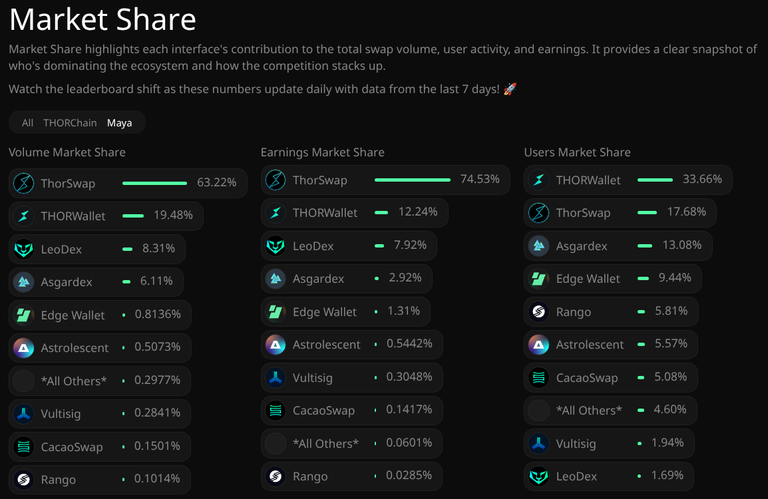
https://inleo.io/threads/view/khaleelkazi/re-leothreads-pkntmtcp
Hope we see the effect on this soon!
Leo Entertainment Threadcast
A big thanks to @mightpossibly, for granting us the free access to use the #aisummaries tool to feed in YouTube entertainment video on this cast because the LeoAi is hungry for more data..
#threadcast #leoentertainment #mcb 18/03/2025
!summarize #enews #entertainment
Part 1/4:
Southern Charm Season 10 Reunion: Craig Conover in the Hot Seat
The excitement surrounding the much-anticipated reunion of Southern Charm Season 10 is at an all-time high, with Craig Conover taking center stage amid speculations and dramatic confrontations. The reunion promises to deliver fireworks, especially concerning Craig's tumultuous history with ex-girlfriend Paige DeSorbo.
Craig and Paige: A Three-Year Rollercoaster
Part 2/4:
Craig and Paige's relationship spanned three years but has been anything but smooth. In a sneak peek of the reunion, Craig candidly reflects on their breakup, stating, "Like all my stuff just showed up on my porch one day." This emotionally charged revelation underscores the suddenness of their split and sets the stage for speculation about Paige's current romantic life.
When questioned whether Paige's decision to end their relationship was linked to her new partner, Craig doesn't mince words. He implies a sense of inevitability, quipping, "It's like if it walks like a duck, it quacks like a duck, it's a duck.” This metaphor hints at the apparent feelings that may have led Paige away from their relationship, leaving viewers eager for more information.
Part 3/4:
Shep's Confrontation and the Group Dynamics
The reunion doesn't shy away from highlighting the tension among friends. Shep Rose confronts Craig about his behavior during the season, branding it as "unhinged" and "crazy." Their friendship, once strong, appears to be on shaky ground, as evidenced by Shep's blunt assessment. He expresses doubt about their friendship, suggesting that perhaps if Craig’s behavior doesn’t change, they shouldn't be friends at all.
Part 4/4:
Compounding the tension, Austin Kroll reveals his apprehensions regarding Craig, admitting, "I am terrified of Craig." Austin's fears reflect the broader sentiment that has emerged among the cast regarding Craig’s unpredictable nature. The sense of unease within the group suggests a deeper rift that goes beyond simple disagreements.
Conclusion: A Reunion to Remember
Fans eagerly await the two-part reunion special set to air on Thursday, March 27th, at 8:00 p.m. on Bravo. With unresolved issues and simmering tensions among the cast, this reunion promises to be an emotional rollercoaster. As secrets unravel and friendships are put to the test, viewers will be kept on the edge of their seats, eager to see how this complicated web of relationships plays out.
!summarize #enews #entertainment
Part 1/6:
Kylie Kelsey Stars in Hilarious Ad for Liquid Death
On March 18th, Kylie Kelsey, the pregnant wife of retired NFL star Jason Kelce, presented a light-hearted glimpse into her life with a new ad for the popular canned water company, Liquid Death. Known as the sister-in-law of Kansas City Chiefs tight end Travis Kelsey, Kylie humorously showcased her baby bump while promoting the drink in a comedic setting.
Kylie opened the ad in a bar environment, playfully slugging back cans of Liquid Death while engaging with fellow patrons. The video captures her quipping, “Kylie Kelsey are you drinking? I’ve had so many of these today!” showcasing her humorous take on her pregnancy.
Funny Moments and Unique Marketing
Part 2/6:
The amusing tone continued as Kylie made a tongue-in-cheek reference to the absurdity of “drinking for two.” She cleverly pitched Liquid Death’s limited edition personal keg, making light of the struggles of pregnant women with the joke, “Drink up! Oh my God, your water just broke!” This comedic twist on pregnancy cravings and the joys of motherhood resonated well with viewers, highlighting her relatable personality.
Further Insights into Motherhood
Part 3/6:
In addition to the humor in the ad, Kylie’s real-life experiences as a mother of three daughters — Wyatt, Elliot, and Bennett — adds depth to her portrayal. The Kelce family announced the expected arrival of their fourth daughter back in November through a heartfelt Instagram photo featuring their daughters in matching pink sweaters labeled "big sister." This image perfectly captured the mix of emotions the older siblings felt about the new addition, with Kylie humorously noting the stark contrast in their reactions.
Part 4/6:
Wyatt appeared fearful, Elliot beamed with excitement, while Bennett sobbed in dramatic fashion, providing a candid reflection of sibling dynamics during such transitions. Kylie’s ability to turn this into a humorous commentary shows her talent not just as an actress in the ad, but as a relatable mother sharing her journey online.
Plans for the Future
Part 5/6:
Kylie has kept an honest dialogue about her experiences and future plans for the family. During a December episode of her podcast, "Not Going to Lie," she jested that baby number four might be the last, humorously declaring, “I think it might get shut down after this one!” Her husband, Jason Kelce, echoed similar sentiments in his own podcast, "New Heights," suggesting that baby number four could round off their family perfectly. He remarked, “I think four beautiful little girls is a very magical number,” indicating their contentment with their growing family.
Conclusion
Part 6/6:
Kylie Kelsey’s vibrant persona shines through in both her humorous ad for Liquid Death and her candidness about motherhood. As the Kelce family prepares to welcome their fourth child, fans can appreciate the blend of humor and heartfelt moments that define their journey, showcasing the joys and challenges of parenting in a modern context. With her lighthearted approach, Kylie not only entertains but also connects with audiences, making her a relatable figure for many navigating similar life experiences.
!summarize #enews #entertainment
Part 1/7:
Seeking Truth: The Mysterious Deaths of Kadir and Nazir Lewis
The tragic deaths of twin brothers Kadir Malik Lewis and Nazir Raheem Lewis have left their family and community grappling with shock and disbelief. Classified by authorities as a murder-suicide, their bodies were discovered on March 8th in Hawasi, Georgia, creating confusion and heartache among their loved ones who seek to understand the circumstances that led to their untimely demise.
A Heartbreaking Discovery
Part 2/7:
Kadir and Nazir, both 19, were found shot to death at Bell Mountain, located nearly 90 miles away from their home in Lawrenceville, Georgia. Their family has expressed utter bewilderment at the location where their sons' bodies were found, emphasizing that the twins had neither previously visited this area nor had any experience hiking in such mountainous terrain. “They don’t hike out there. They never even been out there,” a family member stated, highlighting the disconnect between the brothers’ usual activities and the tragic event.
Part 3/7:
Compounding the mystery is the revelation that just a day before their discovery, Kadir and Nazir had booked a flight to Boston to visit friends. This planned trip underscores the surreal nature of their deaths and raises critical questions about their final hours; the family reported finding airline tickets in their wallets when the bodies were discovered.
Questioning the Official Narrative
Part 4/7:
Despite the Georgia Bureau of Investigation’s (GBI) early conclusions regarding the manner of death, the Lewis family's conviction runs deep: they believe the twins were loving and inseparable, characteristics that make the murder-suicide label difficult for them to accept. Family members openly expressed their disbelief, asserting, “I couldn’t imagine them hurting each other… I never even seen them get into a fist fight before.”
Part 5/7:
The GBI has provided some details regarding the incident. In a statement released on March 16th, they confirmed that both brothers suffered gunshot wounds and outlined their preliminary findings. The statement emphasized that autopsies were pending, and the investigation remained active, indicating that more forensic tests would provide additional insights. The GBI's investigation continues, but the family feels that not enough is being done to explore the complexities surrounding the twins’ deaths.
An Ongoing Investigation
Part 6/7:
As the investigation unfolds, the Lewis family continues to demand answers. The autopsies conducted by a GBI medical examiner have yet to yield conclusive results, and the family's insistence on a more thorough examination reflects their unyielding desire for truth. Their bond with Kadir and Nazir not only compels them to seek clarity but also serves as a poignant reminder of the love and connection that once flourished between the twins.
The case has sparked broader conversations about mental health, violence, and the pressures faced by young individuals. The Lewis family’s heartbreaking quest for answers highlights a collective yearning within communities to better understand the tragedies that affect them.
Part 7/7:
In conclusion, the mystery surrounding the deaths of Kadir Malik Lewis and Nazir Raheem Lewis remains unresolved. Their family’s search for clarity and the questioning of authorities’ conclusions underscores a fundamental need for transparency and justice in the aftermath of grief. Ultimately, the hope is that the investigation will reveal the truths needed to honor the memories of these young lives so tragically cut short.
!summarize #enews #entertainment
Part 1/8:
The Tragic Passing of The Vivian: A Study in Substance Abuse Awareness
The recent news surrounding the untimely death of The Vivian, the first winner of RuPaul's Drag Race UK, has sent ripples through both the entertainment industry and the LGBTQ+ community. The beloved performer, known off-stage as James Lee Williams, passed away at the age of 32, leaving behind a legacy that is now overshadowed by the sobering reality of substance abuse.
Cause of Death Revealed
Part 2/8:
Nearly three months posthumously, The Vivian's family has released details regarding the cause of death. Chanel Williams, The Vivian’s sister, confirmed to the BBC that the cause of death was cardiac arrest precipitated by the effects of ketamine use. This revelation has added a heartbreaking context to the loss, drawing attention to the often-overlooked dangers of recreational drug use.
Part 3/8:
Manager Simon Jones also weighed in on the conversation, emphasizing the importance of raising awareness regarding the risks associated with ongoing ketamine usage. "Ketamine usage is on the rise, particularly amongst young people, and I don’t think the full dangers of the drug are being discussed," he stated. The family aims to work alongside a substance abuse charity to foster awareness and dialogue about substance abuse, hoping that The Vivian’s story can serve as a cautionary tale for others.
A Bright Career Cut Short
Part 4/8:
The Vivian’s journey to fame began at the young age of 16 when they started performing in drag, showcasing a talent that would eventually lead them to international recognition. Born in Wales, James Lee Williams first entered the RuPaul's Drag Race narrative in 2015 as a UK ambassador for the acclaimed U.S. series. In 2019, The Vivian emerged victorious in the inaugural season of RuPaul's Drag Race UK, capturing the hearts of fans and critics alike. The performer later graced the stage again in RuPaul's Drag Race All Stars’ seventh season, further establishing their presence in the realm of drag.
Part 5/8:
Despite their celebrated career, The Vivian's death has served as a stark reminder of the personal struggles that can accompany public success. The impact of their passing is not only felt by their family and friends but resonates deeply within the broader community of fans who admired their talent and authenticity.
Reflections and Warnings
Part 6/8:
In the wake of their death, questions arise about the pressures faced by performers within the entertainment industry, and how those pressures might contribute to unhealthy coping mechanisms, including substance abuse. In a poignant moment of reflection, James Lee Williams, in a hypothetical message to his younger self, advises: "Just try and say no, because in a few years time it's going to get you in a lot of trouble with your health and your friends and your home life." This insightful warning encapsulates the difficulties faced by young artists navigating fame, pressure, and the vulnerabilities that come with it.
Conclusion: A Legacy to Carry Forward
Part 7/8:
The Vivian's legacy is now one that carries the weight of a vital message about the dangers of substance abuse, especially within communities that often face stigmas of their own. As the family and friends of the late performer work towards raising awareness, it is imperative for society as a whole to engage in these conversations, fostering supportive environments that prioritize mental and emotional well-being.
Part 8/8:
In remembering The Vivian, fans are encouraged not only to celebrate their contributions to drag and popular culture but also to commit to the critical task of addressing the broader implications of substance abuse. It serves as a reminder that beneath the glamour, there are often hidden struggles, and that real conversations about mental health and substance use are just as crucial as the performances that enthrall and inspire.
!summarize #enews #entertainment
Part 1/4:
Gina Kersen Haider’s Heartfelt Message Amidst Family Crisis
Gina Kersen Haider, a prominent cast member of The Real Housewives of Orange County, recently shared a poignant update regarding her family through her Instagram account. On March 17th, she revealed that her ex-husband, Matt Kersen Haider, experienced a major health scare—a heart attack—over the past weekend. Despite the severity of the situation, she expressed gratitude that he is recovering well.
A Health Scare for a Young Dad
Part 2/4:
In her Instagram post, Gina detailed the alarming events that unfolded when Matt, who is only 40 years old, suffered from a heart attack on Saturday. She commended a friend named Brit for promptly rushing him to the hospital, where medical staff acted swiftly to provide the necessary care. Gina reflected on the toll this incident took on their children—Sienna, Nicholas, and Luca—admitting that the kids were left shaken by the sudden emergency.
A Family's Relief
Part 3/4:
Fortunately, the situation took a positive turn as Matt was discharged from the hospital and returned home. Gina's sense of relief was palpable in her words as she expressed her joy at having him back with the family. In light of this experience, she emphasized the importance of cherishing time with loved ones and the value of family unity.
Co-Parenting Insights
Part 4/4:
Gina, who divorced Matt in 2019 after seven years of marriage, concluded her message with wisdom regarding co-parenting. She offered a reminder to others who may be navigating similar challenges, highlighting that regardless of the circumstances, all parents share a common goal: to be there for their children. Her reflective statement—"tomorrow is not promised, today is a gift"—serves to inspire others to prioritize their family bonds and appreciate each shared moment.
In a time filled with uncertainty, Gina Kersen Haider's heartfelt reflection on her family’s recent health crisis reminds us all about the fragility of life and the importance of love and support within families, no matter what form they take.
!summarize #enews #entertainment
Part 1/5:
Ivanka Trump Celebrates Family Growth: A Loving Gesture Towards Carly Claus
In a heartfelt display of familial support, Ivanka Trump has publicly celebrated her sister-in-law Carly Claus' exciting news of expecting her third child with husband Joshua Kushner. Known for her close-knit family values, Ivanka showcased her affection through a simple yet meaningful gesture by liking Carly’s announcement on social media.
Carly Claus' Joyful Announcement
Part 2/5:
On March 17, 2024, Carly Claus took to Instagram to share the delightful news, posting photos of her growing baby bump alongside her two sons, Levi and Elijah. The caption of her post radiated happiness as she wrote, “There’s a party!” This announcement not only marks another milestone for the Claus-Kushner family but also brings joy to relatives like Ivanka, who is always eager to support her family.
Ivanka's Family Values
Part 3/5:
Ivanka Trump, the eldest daughter of former President Donald Trump, has always placed a high value on family. Married to Jared Kushner since 2009, the businesswoman is a devoted mother to her children, Arabella, Joseph, and Theo. During an appearance on the "Skinny Confidential Him & Her Show" podcast, she articulated the importance of these connections, stating, “I like to think of my life through the lens of my priorities,” emphasizing that her top priority is her family.
Shared Experiences of Motherhood
Part 4/5:
Both Ivanka and Carly find deep fulfillment in motherhood. In a recent feature with Vogue, Carly expressed her profound joy as she navigates parenthood, stating, “It’s the greatest experience in my life. I mean maybe it’s the hormones, but it just gives me the greatest joy every single day to wake up and have these two little delicious humans whom I just love so much.” Their shared experiences as mothers further strengthen the bond within the family, showcasing how love and support thrive among them.
Conclusion
Part 5/5:
Ivanka Trump's support for Carly Claus' family expansion is a testament to the values they both hold dear: love, family, and the joy of parenting. As the Claus family prepares for their new addition, it is evident that family ties and shared experiences in motherhood remain central to their lives. With the arrival of this new baby on the horizon, the celebration of family continues to grow, creating an even stronger bond among them.
!summarize #enews #entertainment
Part 1/4:
Gwyneth Paltrow Reflects on Her Relationship with Brad Pitt
Gwyneth Paltrow has recently given credit to her ex-boyfriend Brad Pitt for imparting valuable lessons that have shaped her views on love and relationships. In a revealing interview with Vanity Fair, she opened up about their time together, recalling their meeting on the set of the film Se7en in 1994, their engagement in 1996, and their breakup a year later.
Part 2/4:
Nearly three decades later, Paltrow reminisces about her experiences with Pitt, describing him as a "very intriguing character," likening her experience of dating him to having dated someone of high stature, such as Prince William. Her reflections underscore the importance of that relationship at the beginning of her career and how it influenced her perspective on balancing work and personal life.
Part 3/4:
One of the most significant lessons she learned from her relationship with Pitt was the importance of prioritizing her love life over her professional commitments. Paltrow openly shared that she faced criticism from her higher-ups for taking time off to be with Pitt during their romance, yet she has no regrets about the choices she made. This sentiment was reinforced when she stated, "I really embrace the roads that I take."
In a heartfelt exchange during a conversation with Pitt in 2022, he expressed his gratitude for their friendship, adding, "It's lovely to have you as a friend now, and I do love you." This demonstrates that even after their romantic relationship ended, both have been able to cultivate a meaningful connection based on mutual respect and affection.
Part 4/4:
Paltrow's journey through love did not end with Pitt. She has since had other noteworthy relationships, including her marriage to musician Chris Martin from 2003 to 2016 and her current marriage to producer Brad Falchuk. However, despite the ups and downs of her love life, she maintains a positive outlook, reinforcing her belief in the significance of her past experiences and decisions.
In summary, Gwyneth Paltrow's reflections highlight the impactful role that her relationship with Brad Pitt played in her personal growth and understanding of love. Her candid acknowledgment of the lessons learned, along with her firm belief in embracing her choices, offers an insightful glimpse into the life of an actress who has navigated the complexities of love and fame while remaining true to herself.
!summarize #enews #entertainment
Part 1/6:
Kanye West and Kim Kardashian: A Family Feud Unfolds
The public feud between Kanye West and Kim Kardashian has taken a new twist, igniting conversations in the pop culture landscape once again. The ex-couple's recent clash revolves around a collaboration involving their daughter, North West, and rapper Playboy Cardi, which has resulted in some heated exchanges on social media.
The Initial Incident: Kim's Repost
The drama began when Kim Kardashian shared a request from Playboy Cardi on her Instagram story. The request was aimed at North West, suggesting that she could contribute vocals for a song. The mention of North was accompanied by lyrics referencing Kim and her Skims brand, highlighting both the familial and business connections intertwined in their lives.
Part 2/6:
In response to Kim's post, Kanye took to social media—formerly known as Twitter—and expressed his grievances about being excluded from Cardi's upcoming album. He implied that Playboy Cardi had contacted him about securing North's vocals while simultaneously dismissing Kanye, stirring the pot further in what is already a complex family dynamic.
Kanye's Grievances
Kanye's emotional response was palpable, and he didn't hold back. He criticized the idea of Cardi reaching out to his daughter without consulting him first, calling it an affront to paternal boundaries. His comments grew progressively more pointed: "I held my tongue about not being on Cardi's album... it was too far." This declaration revealed an underlying tension about respect and involvement in their children's lives.
Part 3/6:
This public airing of grievances came shortly after Kanye released a new song titled "Lonely Roads Still Go to Sunshine." The song is notable not only for its contents but also for featuring North's vocals alongside other artists, which may have been part of the core issue that spurred the dispute.
The Release of Diddy’s Song
The timing of this unfolding situation is crucial as Kanye's latest track features North and came shortly after he expressed his frustration. The song, in which North is heard rapping, shows her blossoming talent and creativity. The lyrics realign North with the family's artistic legacy while also indicating her individual expression. In the song, she reflects on resilience and self-identity, encapsulating a young artist's burgeoning persona.
Part 4/6:
Text Message Tensions
As the situation escalated, Kanye shared now-deleted text messages that illustrated the depth of his grievances. His conversation with Kim revealed contentious discussions about managing their daughter’s future. Kanye expressed a vehement determination to combat any moves Kim made regarding North's name, which she was attempting to trademark.
Their messaging takes a dramatic turn with Kanye warning, "Amend it or I'm going to war," signaling not just frustration but a readiness for conflict. The exchange reinforced the notion that their post-divorce relationship remains complicated and fraught with issues surrounding co-parenting.
Conclusion: A Public Family Drama
Part 5/6:
As Kanye West and Kim Kardashian navigate their ongoing family saga, the tensions surrounding co-parenting and creative collaboration are becoming public fodder for discussion. With their daughter's involvement in music and the clashing wills of two very public figures, the narrative continues to unfold, raising questions about the implications for their children and the nature of celebrity relationships in the spotlight.
Part 6/6:
The situation serves as a reminder of the personal challenges that often accompany public lives, highlighting how co-parenting can become a battleground for emotional and creative expression, all while keeping the well-being of their children in focus. This drama is emblematic of broader societal discussions about family, fame, and the intersections of personal and professional lives in the celebrity sphere.
!summarize #enews #entertainment
Part 1/4:
Celebrating Rob Kardashian: A Birthday Tribute from Khloe
Khloe Kardashian recently took to social media to celebrate her brother Rob Kardashian’s 38th birthday on March 17th, sharing intimate moments from the family’s celebration. Through her heartfelt posts, she provided fans with a glimpse into their special bond and the love that continues to flourish within the Kardashian family.
A Festive Birthday Cake
On her Instagram Stories, Khloe showcased a striking sports-themed cake adorned with faux $100 bills and St. Patrick's Day gold coins. This playful dessert not only fit the occasion but also served as a delightful representation of the family's festive spirit. The thoughtfulness of the cake reflects the effort made to celebrate Rob's special day in a memorable way.
Part 2/4:
Heartfelt Reflections
In her lengthy Instagram caption, Khloe opened up about her deep affection for her brother. Accompanying a throwback photo of themselves with their late father, Rob Kardashian Sr., she wrote, "Happiest of birthdays to my baby Bobby boy. I couldn't be prouder or more honored to call you my brother."
Khloe emphasized the significance of their relationship, stating, "Walking through life with you by my side is one of my greatest blessings and I don’t take a single moment of it for granted." Her words reflected a profound appreciation for their bond, as she also acknowledged the shared experiences their children will have.
A Tribute to Their Brotherly Love
Part 3/4:
Continuing her warm tribute, Khloe shared additional throwback moments on her Snapchat Stories, reminiscing about the times Rob had spent with their family on the reality show, "Keeping Up with the Kardashians." Despite having stepped back from the spotlight in recent years, his family's unwavering support remains.
In a recent episode of "The Kardashians," Khloe stated, "I do think Rob would come back to the show... I know Rob has been through a lot personally and he's literally the best dad I know." These words underscore the pride she feels as she witnesses Rob’s growth, both as a father and as an individual.
Looking Ahead
Part 4/4:
As Rob moves forward in life, Khloe expressed her faith in his journey. She remains supportive of his potential return to the family’s television show and acknowledges the challenges he has faced while celebrating the strides he has made. With a profound bond between them, Khloe’s birthday tribute is a beautiful reminder of the enduring connection that defines the Kardashian family, blended with love, nostalgia, and hope for what lies ahead.
!summarize #enews #entertainment
Part 1/6:
Caroline L's Atypical Love Story
Caroline L, the 27-year-old White House Press Secretary, recently shared her heartwarming love story with husband Nicholas Riio, illuminating the beauty of an unlikely romance characterized by a significant 32-year age gap. Caroline appeared on the Megan Kelly show, where she candidly discussed the unconventional nature of their relationship, unveiling the deep support and friendship that bonds them.
A Serendipitous Meeting
Part 2/6:
The couple met in 2022 under interesting circumstances. Caroline was on the campaign trail, vying for a congressional seat in New Hampshire. Although her political bid did not succeed, it serendipitously led to a blossoming romance. She and Nicholas were introduced through a mutual friend, setting off a sequence of events that would lead them to fall in love.
Embracing the Unconventional
Part 3/6:
Caroline acknowledged the uniqueness of their relationship, especially considering the 32-year age difference. On the show, she shared that there were initial thoughts about the age gap, jokingly mentioning, "I can't date him, he's 597," which highlights the typical societal perceptions about such relationships. However, her feelings for Nicholas transcended those concerns. She emphasized, “he's incredible; he is my greatest supporter, he's my best friend, he's my rock.”
Celebrating Milestones
Part 4/6:
The couple reached significant milestones shortly after their engagement in 2023. They welcomed their son, Nicholas Robert Niik Riio, in July, bringing immense joy to their lives together. Their family journey continued as they exchanged vows just two weeks before Donald Trump's second inauguration in January—a day that Caroline has described as one of her all-time favorites.
A Partner in Every Sense
Part 5/6:
Caroline's heartfelt remarks about Nicholas underscore the strength of their partnership. She lauded his accomplishments as a businessman and praised his unwavering support for her career aspirations. Caroline noted, “he's built a very successful business himself, so now he's fully supportive of me building my success in my career.” This support extends beyond just professional spheres; she emphasized Nicholas's role as a father, declaring him “the best dad I could ever ask for.”
Part 6/6:
In a world where relationships often conform to conventional norms, Caroline L and Nicholas Riio’s love story stands out, reminding us that true partnership transcends age, societal expectations, and challenges. Their journey exemplifies that love, respect, and support are pivotal in building a lasting relationship.
!summarize #enews #entertainment
Part 1/4:
The Shocking Incident: Shawn Lowe Attacked by His Rescue Dog Moose
In a harrowing account, Shawn Lowe, a former contestant on The Bachelor, recently shared a traumatic experience involving his adopted rescue dog, Moose. The boxer, adopted just three months ago, attacked Shawn not once, but twice, resulting in significant injuries that required hospitalization.
The Attack: A Fight for Survival
In an emotional Instagram video posted on March 17, Shawn described the chilling experience. The first attack occurred on March 13 while he was hosting a barbecue at home. When the smoke alarm went off, Moose displayed unexpected aggression, leading to a violent confrontation. Shawn recounted the moment: "I honestly just felt like I am fighting for my life here against a dog."
Part 2/4:
During the struggle, Moose bit and clamped down on Shawn's arm, causing severe damage that necessitated multiple stitches across five or six wounds.
A Second Assault: Trauma Revisited
After returning home from his first visit to the hospital, Shawn endured a second terrifying encounter with Moose just twelve hours later. Despite hoping for a friendly reunion, he was met with aggressive behavior once again. "I looked at him and I'm just praying like please let it be the friendly Moose that I know," he recalled, but his fears were quickly realized as Moose lunged at him, prompting a desperate call for help from his father.
This second incident led Shawn back to the emergency room, compounding the trauma of the first attack.
Reflections and Responsibility
Part 3/4:
Despite the severity of the situation, Shawn expressed sympathy for Moose, emphasizing, "I don't blame Moose a bit." He recognized that the dog likely had a troubled past that might have contributed to the aggressive behavior exhibited during the attacks. “He really didn’t show any signs” of being dangerous, Shawn stated, describing Moose as affectionate and loving, especially around his kids.
A Difficult Decision: Moose's Future
In light of the attacks and the potential risk to his children, Shawn made the difficult decision to find Moose a new home. "I can't keep Moose in this house," he explained, acknowledging the safety concerns for his family. He is currently in talks with animal control and a no-kill shelter to determine the best course of action for Moose.
Part 4/4:
As he navigates this challenging situation, Shawn is cooperating with both local animal control and the rescue organization from which he adopted Moose, trying to ensure that the dog finds a safe and suitable new environment.
Conclusion: A Cautionary Tale
Shawn Lowe's harrowing experience serves as a stark reminder of the unpredictability that can accompany pet adoption, particularly with rescue animals. It highlights the importance of understanding a pet’s history and the potential risks involved. As Shawn continues to address this unfortunate turn of events, he remains hopeful for Moose's future while prioritizing the safety and well-being of his family.
!summarize #enews #entertainment
Part 1/4:
Tracy Morgan's Health Emergency at Madison Square Garden
On March 17, during an exhilarating New York Knicks game against the Miami Heat, renowned comedian and actor Tracy Morgan experienced a serious health emergency. This incident unfolded at Madison Square Garden, drawing significant attention and concern from fans and viewers alike.
Incident Detail
Reports indicate that the game was abruptly halted when Morgan, who was in attendance, was observed throwing up on the court. Eyewitnesses noted that he appeared to be bleeding from his nose, raising alarms about his condition. In a video circulating on social media, the beloved comedian could be seen struggling with his health, blotting his face with a towel as he was escorted off the court in a wheelchair.
Part 2/4:
Following the alarming event, E! News has made attempts to reach out to Morgan’s representative for further comment, but as of now, there hasn’t been any response. The seriousness of the incident has left fans and the public concerned about the comedian’s well-being.
A Troubled Past
This recent health scare is not the first that Tracy Morgan has faced. Over a decade ago, in 2014, he was involved in a catastrophic car accident that nearly cost him his life. The incident occurred when a Walmart truck collided with the limousine van he was riding in, leading to a devastating six-car pileup in New Jersey. Following this horrific accident, Morgan suffered a severe brain injury and multiple broken bones, requiring a long and painful recovery process.
Part 3/4:
Moreover, prior to this accident, Morgan had also undergone a kidney transplant in 2010. The organ donation came from his ex-wife, Tanisha Hall. At a recent event, during an SNL 50 celebration, he reflected on the lessons learned from his tumultuous past. He expressed gratitude for surviving the accident, stating, “I’m just thanking the Lord that I’m a part of this, that I survived that accident and I'm alive to be here for this.”
Public Reaction and Future Outlook
Part 4/4:
Tracy Morgan’s health incidents have underscored the fragility of life and the unpredictable nature of health. His fans have rallied to support him during his ongoing challenges, showing a deep concern for his well-being. As more information emerges regarding the recent incident, many are hoping for a swift recovery for the comedian.
Supporters of Morgan are reminded of his resilience in the face of adversity, and they continue to root for his strength and health in the future. As he has proven time and again, taking each day as it comes, Morgan’s journey is a testament to perseverance and survival against the odds.
!summarize #enews #entertainment
Part 1/5:
Embracing Vulnerability: Anita’s Journey in "Lissa: The Other Side of Anita"
Anita, the Brazilian pop sensation, opens up about her life and career in her latest Netflix documentary, "Lissa: The Other Side of Anita." In a candid discussion, she delves into the challenges of celebrity life, the struggles of maintaining success, and the essence of self-discovery in the entertainment industry.
The Pressure of Fame
Part 2/5:
Anita highlights the transient nature of fame, particularly in the competitive world of entertainment. Reflecting on her experiences, she notes that in Brazil, staying at the top is a brief affair. "You can't stay in the top for more than like 8 minutes or something like that; otherwise, you're going to die," she states. This encapsulates the fierce nature of the industry, where artists must continuously reinvent themselves to remain relevant.
A Journey of Self-Discovery
Part 3/5:
Throughout the documentary, viewers are invited to accompany Anita on her personal voyage. She emphasizes the importance of connection and relatability, encouraging others to recognize their own struggles reflected in her story. The film serves as an intimate exploration of her aspirations and challenges, making it clear that fame does not equate to fulfillment.
Love and Personal Growth
Anita candidly discusses her romantic pursuits, revealing that her current focus is on personal growth. "I'm working on myself so much that obviously I'm attracting people that are on the same path," she shares. This mutual commitment to self-improvement highlights a more profound understanding of relationships, where both partners strive to evolve together.
Honesty About Cosmetic Enhancements
Part 4/5:
Another area where Anita breaks the mold is her transparency about cosmetic procedures. She notes, "I always want to be honest with my audience... It’s not that you were born ugly and I was born pretty; it’s because I worked on it." By addressing her journey with plastic surgery openly, Anita challenges societal expectations and promotes a realistic perspective on beauty.
A Night to Remember with Madonna
No discussion about Anita would be complete without mentioning her iconic performance alongside Madonna, which she describes as a monumental celebration of women's and LGBTQ rights. Reflecting on this unforgettable night, Anita expresses her gratitude for being part of a historical celebration that honors the contributions of women and supports the LGBTQ community.
Part 5/5:
The Excitement of New Music
As fans eagerly anticipate more from the artist, Anita encourages them not to miss her new single, "Lissa," featured prominently in her documentary. With powerful visuals and a heartfelt message, the single captures the essence of her journey, further solidifying her place in contemporary music.
In "Lissa: The Other Side of Anita," viewers gain insight into the complexities of fame, personal growth, and the importance of authenticity, making it a must-watch for anyone interested in the multifaceted world of an artist striving to connect with themselves and others.
!summarize #enews #entertainment
Part 1/3:
A Night of Excitement: A Look into the Artists’ Anticipation
On a vibrant evening marked by glamour and celebration, excitement fills the air as artists gather for an unforgettable event. The energy is palpable, especially for a group making their debut in this dazzling atmosphere.
Feeling the Energy
Representing Japan, this group expresses their eagerness to soak in the festivities. Their first appearance at such a significant event is a milestone, one they are determined to embrace fully. Through their words, it's clear that they are not only excited about the performances but also eager to connect with the energy that surrounds them and the celebration of music.
Aspirations for Collaboration
Part 2/3:
When asked about potential collaborations, the artists display a keen admiration for several prominent figures in the music industry. Lady Gaga stands out as a primary inspiration, valued for her iconic sound and vibrant energy. The mention of collaborating with such a star reflects their ambition and desire to create impactful music.
In addition to Gaga, other names like Megan Thee Stallion and Mariah Carey emerge in their conversation. The variety in these artists speaks to their broad musical interests and aspirations, yearning to work with icons who have made significant marks in the industry.
The Spirit of Celebration
Part 3/3:
The conversation wraps up with laughter and gratitude, showcasing not only their passion for music but also their camaraderie and excitement for the event. Their appreciation for the electric atmosphere and their early time in the spotlight emphasizes the joy that comes from being part of a vibrant musical community.
This night is not just another event on the calendar—it symbolizes a dream for these artists, igniting aspirations and creativity as they look forward to what lies ahead. The world of music continues to thrive, amplified by the dreams and excitement of those who bring it to life.
!summarize #enews #entertainment
Part 1/7:
From Bravolebrity to Personal Growth: The Journey of Ariana Madix
In the ever-evolving landscape of reality television, few stars have captivated audiences quite like Ariana Madix. Most known for her role on Vanderpump Rules, Ariana has not only made a name for herself in the spotlight but has also embarked on a transformative journey of personal growth and self-discovery. Recently, in an engaging interview, Ariana opened up about her upcoming projects and the insights she has gained along the way.
Embracing New Opportunities
Part 2/7:
Ariana expressed her excitement for the upcoming season of Love Island, revealing her enthusiasm for returning to the show. While she couldn’t divulge too many details, her palpable passion for the series is evident. "I love the show, I think it's incredible," she exclaimed, reflecting on her experience with the last season's success. She stressed the importance of individuality in competition, emphasizing that “you can’t compete where you don’t compare.” This philosophy resonates not only in the context of reality TV but also in personal relationships, suggesting a thoughtful approach to navigating the complexities of both love and friendship.
Advice for Finding Love in 2025
Part 3/7:
As a public figure navigating her own romantic landscape, Ariana shared valuable advice for those seeking love. Her key message? Know what you want and don’t settle for less. Her approach emphasizes that while people may desire companionship, it should come from a place of self-awareness and assurance. Ariana's own experiences led her to recognize her current partner as someone who embodies everything she has ever wanted, often surprising her with his ability to anticipate her thoughts and needs.
The Journey of Personal Growth
Part 4/7:
Reflecting on her personal development, Ariana discussed her perception of self-growth. She acknowledged feeling like the same person who moved to Los Angeles at 26, chasing her dreams, but also recognized her increased comfort in her own skin. “I can be comfortable being over-caffeinated on a television interview,” she humorously noted, embracing what some might deem “cringe” behavior as a form of authenticity. This sentiment highlights a larger truth in personal growth: the journey often involves learning to be unapologetically oneself.
Is He the One?
Part 5/7:
Delving into her romantic life, the interviewer couldn't resist asking if Ariana has found "the one." Her response was straightforward and filled with emotion: “Yeah, I think so.” She articulated her sense of certainty about her relationship, noting that there’s something undeniably different about her partner right from the start. As for dreams about family and marriage, Ariana admitted to daydreaming occasionally, hinting at a hopeful and optimistic future.
A Message to Her Fans
Part 6/7:
Closing the conversation, Ariana wanted her fans to understand a significant message. She believes that her journey can be a source of inspiration for others. “Whatever you want your journey to be, you can do it the same way that I've been able to do things 'cause I'm just me,” she shared. This empowering statement is a testament to her belief in the power of authenticity and personal empowerment in the face of challenges.
Part 7/7:
Ariana Madix's journey through reality TV, personal transformation, and love offers a multifaceted perspective on contemporary life and relationships. Her blend of enthusiasm, honesty, and resilience paints a picture of a young woman unafraid to chase her dreams while staying true to herself. As she prepares for another season under the spotlight, fans can expect not only to witness her evolution but also to find inspiration in her story.
!summarize #enews #entertainment
Part 1/7:
Exploring Dove Cameron's New Single "Too Much"
Dove Cameron, the talented singer and actress, recently released her new single "Too Much," captivating audiences with its depth and emotional resonance. During a candid discussion about the song, Cameron revealed the personal experiences that inspired her creation, giving insight into her journey of self-acceptance and personal growth.
The Inspiration Behind "Too Much"
Part 2/7:
Cameron acknowledged that while a specific incident sparked her inspiration for "Too Much," the song's significance transcends that moment. She articulated a common struggle many individuals, particularly women, face: the feeling of being "too much" in different aspects of life. Reflecting on her relationships and experiences, she noted that she often felt overwhelmed by the perception that she had to minimize her presence or personality to fit in.
Part 3/7:
She emphasized that this theme resonates widely, suggesting it’s a shared experience among many women. After taking a break from dating and reevaluating her past, Cameron found renewed hope and perspective with her current partner. Their relationship has been enlightening for her, showcasing an acceptance of her multifaceted identity and proving that love can indeed exist in a healthier dynamic.
Cameron's reflections serve as a reminder that self-acceptance is a journey, and it's not always linear. Although she is now in a loving relationship, the ability to write "Too Much" demonstrates her ongoing exploration and understanding of herself.
Living a Normal Life
Part 4/7:
In her conversation, Cameron also shared delightful tidbits about her life with her partner. They enjoy quiet evenings at home, indulging in activities like binge-watching the series "Lost" and experimenting with deep-frying foods. This stark contrast to the often glamorized lives of celebrities paints a picture of Cameron's desire for normalcy and private joy.
When asked about her partner's culinary skills, Cameron eagerly praised his cooking, humorously admitting her own lack of kitchen talent. The couple's down-to-earth lifestyle is a significant part of what keeps their relationship grounded and authentic.
A Fascination with "Gossip Girl"
Part 5/7:
Dove Cameron's love for pop culture, particularly the show "Gossip Girl," emerged during the discussion, revealing her obsession with the iconic characters. Her nostalgia for the series was evident, especially when she recalled her favorite moments and quotes. The revelations about her past tweets and fan affection for characters like Blair Waldorf showcased her connection to the narrative and its influence on her life.
In a playful exchange, she was asked which of her songs could resonate with Blair Waldorf. Cameron's humor and charisma shone through as she teased about unreleased music, leaving the audience excited for what’s to come.
What's Next for Dove Cameron
Part 6/7:
As "Too Much" continues to gain traction, Cameron hinted at upcoming music that fans should be on the lookout for. The anticipation surrounding her unreleased work vouches for her artistic evolution and commitment to connecting with her audience through relatable themes.
With her unique blend of personal storytelling, insight into relationships, and unabashed love for pop culture, Dove Cameron is poised for a remarkable chapter in her career. As she continues to embrace her identity and share her journey through music, listeners can undoubtedly look forward to more heartfelt creations from this rising star.
Conclusion
Part 7/7:
Dove Cameron's "Too Much" serves not only as a catchy pop single but also as a poignant exploration of self-identity and acceptance. Her candid reflections reveal the complex experiences of womanhood and relationships, reminding listeners of the importance of staying true to oneself. As she navigates her artistic journey, Cameron's authenticity and relatability solidify her place in the music industry, ensuring her fans will be eager to see and hear what comes next.
!summarize #enews #entertainment
Part 1/7:
The Evolution of JoJo Siwa: From Child Star to Empowered Artist
JoJo Siwa has always been mesmerizing to her audience, and the moment she turns around in a striking outfit during an interview, it’s clear that her charisma and uniqueness haven’t waned. With an intriguing blend of nostalgia and excitement, she reflects on her journey so far, which has spanned over a decade since she began her career in entertainment at just nine years old.
Part 2/7:
JoJo’s evolution has been nothing short of remarkable as she expresses a profound sense of renewal and potential, stating, “I feel like I’m just getting started.” This sentiment resonates deeply, especially as many might assume that someone who has been in the public eye for so long would feel burnt out. On the contrary, JoJo finds herself reinvigorated, feeling as if she has returned to the passion she had for her craft during her teenage years.
The Journey to Parenthood
Part 3/7:
A significant part of JoJo’s personal growth is her evolving vision of family, which she happily shares. Recalling a prior conversation about having children, she now emphasizes the importance of including her partner in the conversation. “I’ve been so maternal...since I was like 12,” she reveals, yet there’s a different tone to her words now. With her current relationship flourishing, thoughts of parenthood have transformed into a shared dream – a poignant reflection of her maturity and emotional depth.
JoJo describes her relationship as something extraordinary, feeling completely understood and matched with her partner's care. This kind of growth is beautiful to witness, and it symbolizes a much deeper journey toward personal fulfillment beyond her career.
Part 4/7:
Embracing the Musical Renaissance
Transitioning into her music career, JoJo expresses an electrifying enthusiasm for what lies ahead in 2025. After years of navigating the industry, she has finally gained full control over her voice and artistic direction, stating, “I finally...am in sole control of my voice.” This newfound autonomy allows her to express her genuine self through her music, marking a significant departure from the past.
The excitement in her voice is palpable as she hints at upcoming projects that promise to reflect more of her authentic self. “There’s some sort of level of human that I’ve missed out on in the last year,” she admits, indicating a desire to reconnect not just with her fans but with her core identity and experiences.
Part 5/7:
JoJo also teases a major announcement slated for March 22nd, asserting that it’s “bigger than music,” which adds an element of suspense to her ever-optimistic narrative.
Inspired by Icons
In a moment of reflection, JoJo speaks about Lady Gaga, who is a significant influence in her life. Coming out to Gaga’s "Born This Way" showcases the impact of representation and empowerment that JoJo has embraced throughout her career. The admiration she holds for Gaga is palpable, fueling her aspirations and dreams within the industry—specifically expressing a desire to work with her alongside other icons like Gwen Stefani and Bebe Rexha.
Part 6/7:
As she looks forward to future collaborations and new projects, JoJo retains an air of approachable authenticity, inviting her audience into her journey with every step she takes.
Conclusion: A Bright Future Ahead
JoJo Siwa’s trajectory has shifted from being a child star to a more nuanced artist embracing the complexity of adulthood. Each answer during her conversation reveals layers of her identity, from her aspirations of becoming a parent to her rekindled passion for music. The excitement she exudes allows her fans to share in her growth, and as she aims for creative autonomy and new artistic ventures, it’s undeniable that the world is eager to see the next chapter in JoJo's remarkable narrative.
Part 7/7:
Her story is both an inspiration and a promise of the limitless possibilities that lie ahead, setting the stage for JoJo Siwa as she truly begins her next grand adventure.
!summarize #enews #entertainment
Part 1/6:
The Ongoing Legal Battle Between Justin Baldoni and Blake Lively
The legal turmoil involving actor Justin Baldoni and actress Blake Lively has escalated significantly, drawing attention within the entertainment industry. As the case unfolds, Baldoni's lawyer has revealed the gravity of the situation, indicating that Baldoni has been severely impacted by the circumstances surrounding this dispute.
The Seriousness of the Situation
Part 2/6:
During a recent episode of the Town Podcast, Baldoni's attorney, Brian Fredman, discussed the possibility of a settlement in the drawn-out legal battle that is currently scheduled for trial in May 2026. According to Fredman, the stakes are high, emphasizing that in today’s world, one must not only be found innocent but must actively work to prove their innocence. This intense pressure reflects the public scrutiny and personal repercussions Baldoni is facing throughout this legal struggle.
Part 3/6:
Fredman made it clear that they are dedicated to proving Baldoni's innocence, which he believes can only be convincingly demonstrated in a courtroom. The attorney noted that simply not being found guilty is no longer enough; the burden of proof lies heavily on the accused, intensifying the urgency of the ongoing case.
Perspectives on Settlement
While podcast host Matt raised the point that both parties might have incentives to settle the dispute to avoid further spectacle and damage, Fredman expressed skepticism about reaching such an agreement at this stage. He suggested that the potential for a media circus surrounding the trial could compel both parties to consider settling, but he also pointed out the complexities involved.
Part 4/6:
This leads to an important question: if a settlement is inevitable, what would a resolution require? The podcast raised speculation about the figures or terms that might lead to a resolution, but Fredman reiterated the serious nature of the case, dismissing the notion of it being merely a media spectacle. He emphasized the personal toll this process has taken on Baldoni, contrasting the very real experiences of those involved with the notion of a public circus.
Protective Measures and Confidentiality
Part 5/6:
As the legal battle proceeds, the situation has escalated to the request for protective measures from Lively and her husband, Ryan Reynolds. Earlier in the month, they sought a protective order to shield sensitive information from entering public discourse. A judge has since approved a modified version of this order, designating certain materials as "attorney's Eyes Only," which is a high level of confidentiality in legal matters.
This move indicates the careful navigation both parties must engage in as they proceed with their respective legal strategies. It highlights the stakes involved not merely as a legal battle but also as a personal and professional struggle for privacy and reputation.
Conclusion
Part 6/6:
The ongoing legal dispute between Justin Baldoni and Blake Lively has highlighted the complexities and challenges involved in high-profile accusations and legal proceedings. As both sides continue to engage in heated discussions about the future of the case, the implications of the trial and potential settlement loom large, shaping the trajectory of their careers and personal lives. With the trial date set for 2026, both parties are likely bracing for what could be a significant showdown in and out of the courtroom.
!summarize #enews #entertainment
Part 1/6:
Why Prince Harry's Immigration Records May Soon Be Made Public
A recent federal court decision has opened the door for the potential public release of Prince Harry's immigration records, which have become a focal point for scrutiny. This move follows a Freedom of Information Act request made by the conservative think tank, the Heritage Foundation, aiming to uncover details about how the Duke of Sussex was vetted upon entering the United States.
The Judge's Order and Background
Part 2/6:
In a ruling by U.S. District Judge Carl J. Nichols, the Department of Homeland Security has been ordered to disclose the Duke's immigration records. This decision underscores the increasing interest in Prince Harry's residency in Southern California, where he resides with his wife, Meghan Markle, and their two young children, Archie and Lilibet. The couple stepped back from their royal duties in 2020, seeking a more private life away from the Royal Family.
The Rationale Behind the Request
Part 3/6:
The Heritage Foundation's request specifically centers on concerns regarding Prince Harry's approval for U.S. residency, especially given his candid admissions about past drug use. According to their argument, when applying for admission into the United States, foreign nationals are typically required to disclose any history of illegal drug use, which raises questions about Harry's immigration status.
Prince Harry's Admissions
Part 4/6:
In his memoir, "Spare," released in early 2023, Prince Harry disclosed his previous use of cocaine during his teenage years. He recounts how during a hunting trip, he was offered cocaine and subsequently experimented with it. The Duke reflected on his experiences with drugs, noting that while it did not bring him happiness, it did serve as a means to feel different—an insight that highlights his struggles with substance use and personal identity.
Public Interest and Reactions
Part 5/6:
The interest surrounding Harry's immigration forms has prompted a wider public inquiry into royal protocols and American immigration standards. The topic has not gone unnoticed by political figures; notably, former President Donald Trump remarked that, despite public conversations surrounding Harry's immigration status, he is not interested in taking action to have the Duke removed from the U.S. “I’ll leave him alone,” Trump stated, emphasizing a more relaxed approach towards the Duke's residency.
Conclusion
Part 6/6:
As the debate continues, the outcome of this court order could reveal significant insights into the vetting process of high-profile individuals like Prince Harry. The implications of this case go beyond mere curiosity; they touch on issues of immigration policy, celebrity culture, and the intersection of royal life with American law. The forthcoming release of his immigration records promises to keep the public and media closely engaged in the narrative surrounding the Duke and Duchess of Sussex.
!summarize #enews #entertainment
Part 1/6:
Unraveling the Timeline of Betsy Arawa Hackman's Death
The recent details surrounding the death of Betsy Arawa Hackman, the wife of acclaimed actor Gene Hackman, have ignited a cloud of uncertainty and controversy, prompting questions regarding the timeline leading up to her passing. Dr. Josiah Child, the physician linked to Betsy’s care, has publicly disputed the estimated date of her death presented earlier this month.
Inaccurate Death Date Claims
Part 2/6:
In a March 16 interview with the Daily Mail, Dr. Child refuted assertions that Betsy passed away on February 11. According to his testimony, she had contacted his clinic a day later, on February 12, to discuss scheduling an echocardiogram for her husband. Dr. Child states, “She called me a couple of weeks before her death to ask about getting an echocardiogram for her husband,” indicating that his records suggest she was alive significantly past the previously reported date.
Part 3/6:
Betsy had made an appointment for herself on February 12 and had spoken to one of the clinic’s doctors that morning, who advised her to come in later that afternoon. However, she failed to make that appointment. While Dr. Child claims there were no signs of respiratory distress or any related symptoms on her part, the appointment, he emphasizes, was unrelated to Hantavirus.
The Investigation and Discovery of the Couple
On February 26, police discovered the bodies of Betsy and Gene, who is now 95. Following a thorough investigation, authorities announced on March 7 that Betsy had died from Hantavirus pulmonary syndrome at the age of 64, while Gene is believed to have succumbed about a week later to hypertensive atherosclerotic cardiovascular disease, compounded by Alzheimer's disease.
Part 4/6:
In a parallel timeline, the Santa Fe County Sheriff’s Office confirmed on March 17 that they had not issued a specific date of death regarding Betsy Arawa Hackman. The sheriff's announcement noted that her last known activity was recorded on February 11, leaving several days unaccounted for until the discovery of her body.
Cell Phone Data Findings
Crucial to this timeline was the examination of Betsy’s cell phone records as part of the ongoing investigation. The Sheriff’s Office divulged that her phone was utilized on the morning of February 12 to make three calls to a local medical facility, Cloudberry Health. An incoming call from the same medical center that afternoon was also logged as a missed call on Betsy’s phone.
Part 5/6:
This emerging information could potentially alter the understanding of when Betsy last communicated and may suggest that she was alive and inquiring about health services on February 12, contradicting the current narrative around the date of her death.
Conclusion: Awaiting Further Clarity
As the investigation continues and cell phone records are scrutinized, the timeline surrounding Betsy Arawa Hackman's passing remains opaque. The conflicting accounts of death dates and details from medical professionals introduce a layer of mystery into an already tragic situation.
Part 6/6:
Authorities remain open in their investigation and are currently awaiting additional data that may shed light on the circumstances of both Betsy and Gene Hackman’s tragic deaths. As the community watches closely, the search for clarity regarding this evolving timeline has just begun.
!summarize #enews #entertainment
Part 1/6:
Bad Bunny Takes Center Stage in Calvin Klein's New Campaign
Bad Bunny, the Puerto Rican rapper and global music sensation, is once again making headlines, this time as the face of Calvin Klein's latest campaign. The new advertisement showcases the brand's seamless icon underwear, and it is packed with energy, charisma, and style.
A Sneak Peek into the Campaign
Part 2/6:
On March 18th, E News provided an exclusive first look at the vibrant video featuring Bad Bunny dancing to his hit song, "E." In the ad, he confidently models both Calvin Klein jeans and the seamless briefs. The performance is dynamic, presenting the rapper from all angles, including close-ups that highlight his toned physique and the chic underwear. The combination of Bad Bunny's lively presence and the sleek product design captures the essence of the Calvin Klein brand.
Front Row at New York Fashion Week
Part 3/6:
Before stepping into the spotlight for the Calvin Klein campaign, Bad Bunny showcased his support for the label by attending their collection presentation at New York Fashion Week. Seated front row at the February runway show, he witnessed models strutting down the catwalk, including his ex-girlfriend, Kendall Jenner. Their recent split in 2023, after a ten-month relationship, has not impeded their amicable rapport.
Speculations about Rekindled Romance
Part 4/6:
Interestingly, rumors of a possible reconciliation between Bad Bunny and Kendall Jenner have begun swirling. The duo was spotted together, appearing cozy at a 2024 Met Gala after-party followed by a joint trip to Miami a month later. This resurgence of closeness has led fans to speculate that Jenner may serve as inspiration for songs in Bad Bunny's latest album, which debuted on January 5th.
The Balance of Personal Life and Artistry
Part 5/6:
Despite the buzz surrounding their relationship, Bad Bunny tends to keep the details of his personal life private. In a January interview conducted in Spanish, he emphasized the importance of artistic expression and encouraged fans to interpret his lyrics in their unique ways. "Let them interpret it however they want," he stated, referencing the emotional complexities he explores through his music. "I've had my heart broken many times in life and I've broken hearts. I have the privilege of being able to express myself and vent in the songs."
Conclusion
Part 6/6:
With his involvement in the Calvin Klein campaign and continued musical success, Bad Bunny proves that he is not just a trendsetter but also a profound artist. His ability to merge personal experiences with his public persona keeps fans engaged and speculation alive. Whether he is dazzling on a runway or in a music video, Bad Bunny remains a captivating figure in both fashion and music.
Patience is the most difficult muscle to build in trading
No it‘s not moving! 👁️👁️
#opticalillusions
Isn't this contradicting somehow?
#feedback @khaleelkazi, currently the fees are divided into buing LEO and CACAO, right? #leodex #crypto
When new chains are introduced, will the fees be used to buy LEO and RUNE, as well as the tokens for other exchanges?
https://inleo.io/threads/view/vimukthi/re-leothreads-2zcaecwqk?referral=vimukthi
That would be logical.
Bring your own lights run! (8km 4.31/km)
I'm the right woman.
#gmfrens
It's Wednesday, 19 March 2025
Today's #lbi asset backed value per token is:
1 LBI = $0.102 USD = 0.426 HIVE = 7.414 LEO
Not much news today, have a good one everyone.
Uno de los mejores canales de YouTube que he visto donde todo son venezolanos y muy activos con sus videos.
Post en los comentarios
https://inleo.io/hive-135183/@davidpena21/escuela-de-nada-review-eng
1/🧵
“You don’t have to be all that strict. You are just a woman who would pursue all suitors away because of this your strictness. Be careful, else, you may end up doing life alone”.
#outreach #threadstorm #hivenaija
2/🧵
These were the words of some adults in my family to me because I decided to adopt my dad’s disciplined and strict nature, but here I am, being told to drop it because it doesn’t suit me as a woman.
3/🧵
Read more here...
https://inleo.io/@storygoddess/my-unsung-hero--jun
still waiting for my truck to get loaded so I tried this alcohol free beer, the worst I have ever tasted, can not recommend!
you deserve the bad taste lol...alcohol free beer is an abomination 😂
Show a brother some sympathy ya😂😂
There are actually really good ones. Due to medication I should not drink alcohol. Normally after a day on set is over in Germany and Austria everyone gets a normal beer but I had to drive the camera Equipment to Vienna so only alcohol free beer.
Oh I get it…Cheers to being responsible 🍻
Beer brewing involves fermentation and fermentation =alcohol. That’s obviously a scam, no wonder the bad taste. Sorry bro
Im sorry you experienced that. I don't drink beer since they taste bitter
Nobody can predict when $AVA will hit a parabolic surge. Positionments should already be in place.
How would the flat earthers explain this? #meme #memes #leomemes #notmymeme
Why are other planets round?
Earth is unique, a different breed lol :D
MMC studios cologne
Good night
#newlion
#newlion #meme
For real?
🤣🤣
Babygirl didn’t….what in the name of speed is that?
We need our models to be more multi-lingual. This is crucial.
To do so, we need to get a lot of data in other languages on here.
This is something important. Everyone should watch this if they care about the future of Leo.