19-12-2025-Materials Technologies - Failure and Resilience [EN]-[IT]


~~~ La versione in italiano inizia subito dopo la versione in inglese ~~~
ENGLISH

19-12-2025-Materials Technologies - Failure and Resilience [EN]-[IT]
With this post, I would like to provide a brief introduction to the topic in question.
(lesson/article code: QE_28)

Image created with artificial intelligence, the software used is Microsoft Copilot
Introduction
Material Failure

Image created with artificial intelligence, the software used is Microsoft Copilot
Failure is the phenomenon whereby a material is no longer able to withstand the applied stress. When a material breaks, it splits, separating into two or more parts.
From a mechanical perspective, we can say that nature represents the ultimate limit of a material's resistance. When we talk about material failure, we can classify the failure types into three main categories.
We have fine fracture, brittle fracture, and fatigue fracture.
Resilience
When we talk about material failure, we must also talk about resilience. Resilience is a material's ability to absorb energy before breaking following an impact. Many materials are required to withstand impacts, vibrations, and sudden loads.
Types of Failure and Explanations
As we wrote above, failure can be of three main types.
Ductile failure occurs after significant plastic deformation. This type of failure is typical of mild steel, copper, or aluminum.
Brittle failure, on the other hand, occurs suddenly, without appreciable deformation, and exhibits a granular, crystalline surface. Brittle failure is typical of glass, ceramics, cast iron, and steel at low temperatures.
Fatigue failure, on the other hand, occurs under cyclic loading and presents slow-propagation regions, such as striations, and final brittle failure.
Below is an image of a specimen that has undergone brittle failure.

Image created with artificial intelligence, the software used is Microsoft Copilot
Resilience assessment

Image created with artificial intelligence, the software used is Microsoft Copilot
We have said that resilience is the ability of a material to Absorb energy before breaking when impacted.
To measure impact strength, the Charpy or Izod impact test is used.
This test determines the energy in Joules required to break a notched specimen.
Resilience Formula
The formula that identifies the Charpy test is as follows:

Where:
K = Resilience (J/cm² or kJ/m²)
E = Energy absorbed in failure (Joules), read on the pendulum
A = Area of the resistant cross-section of the specimen (cm²)
The Absorbed Energy
Also using Charpy, we understood that the energy can be obtained from the following formula Mathematics:
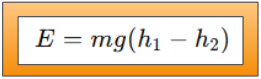
WHERE:
m = mass of the pendulum
g = gravitational acceleration
h₁ = starting height
h₂ = height after impact
This difference essentially shows how much energy the specimen absorbed during failure.
Conclusions
In conclusion, we can say that failure is the final phenomenon of material separation under load and is assessed through mechanical testing, while impact strength is the energy absorbed by a material before impact failure and is assessed using the Charpy test.
Question
Did you know that the French metallurgist Georges Charpy (1865-1945) developed his Charpy impact test in 1901?
Did you know that it remains the world standard for measuring impact strength?
Did you know that this test is still standardized by UNI-ISO-EN and used throughout the metallurgical industries?
Did you know that his test is still used today for the design of oil pipelines, bridges, and naval components?

ITALIAN

19-12-2025-Tecnologie dei materiali - rottura e resilienza [EN]-[IT]
Con questo post vorrei dare una breve istruzione a riguardo dell’argomento citato in oggetto
(codice lezione/articolo: QE_28)
immagine creata con l’intelligenza artificiale, il software usato è Microsoft Copilot
Introduzione
La rottura dei materiali
immagine creata con l’intelligenza artificiale, il software usato è Microsoft Copilot
La rottura è quel fenomeno per cui un materiale non è più in grado di sopportare le sollecitazioni applicate. Quando avviene la rottura il materiale si spezza, ovvero si separa in due o più parti.
A livello meccanico, possiamo dire che la natura rappresenta il limite ultimo di resistenza del materiale. Quando parliamo di rottura dei materiali, possiamo classificare le tipologie di rottura in tre principali.
Abbiamo la rottura sottile, la rottura fragile e la rottura per fatica.
Resilienza
Quando parliamo di rottura dei materiali, dobbiamo parlare anche di resilienza. La resilienza è infatti la capacità di un materiale di assorbire energia prima di rompersi in seguito ad un urto. Sono infatti moltissimi i materiali a cui viene richiesto di resistere a impatti, a vibrazioni e a carichi improvvisi.
Tipologie di rotture e spiegazioni
Come abbiamo scritto qui sopra la rottura può essere di tre tipologie principali.
La rottura duttile avviene dopo una grande deformazione plastica. Questa tipologia di rottura è tipica degli acciai dolci, del rame o dell’alluminio.
La rottura fragile invece avviene improvvisamente, senza deformazioni apprezzabili e mostra una superficie granulare e cristallina. La rottura fragile è tipica dei vetri, delle ceramiche, delle ghise, e degli acciai a basse temperature.
La rottura per fatica invece avviene per carichi ciclici e presenta zone di propagazione lenta, come striature, e rottura finale fragile.
Qui di seguito, un’immagine di un provino che ha subito una rottura fragile.
immagine creata con l’intelligenza artificiale, il software usato è Microsoft Copilot
La valutazione della resilienza
immagine creata con l’intelligenza artificiale, il software usato è Microsoft Copilot
Abbiamo detto che la resilienza è la capacità di un materiale di assorbire energia prima della rottura quando avviene un urto.
Per misurare la resilienza si usa la prova d’urto Charpy o Izod
Questa prova determina l'energia in Joule necessaria per rompere un provino intagliato.
Formula della resilienza
La formula che identifica la prova di Charpy è la seguente:
Dove:
K = resilienza (J/cm² o kJ/m²)
E = energia assorbita nella rottura (Joule), letta sul pendolo
A = area della sezione resistente del provino (cm²)
L'energia assorbita
Sempre tramite Charpy, abbiamo compreso che l’energia si può ottenere dalla seguente formula matematica:
DOVE:
m = massa del pendolo
g = accelerazione di gravità
h₁ = altezza di partenza
h₂ = altezza dopo l’urto
Questa differenza in pratica mostra quanta energia ha assorbito il provino durante la rottura.
Conclusioni
Concludendo possiamo dire che la rottura è il fenomeno finale di separazione del materiale sotto carico e di valuta tramite prove meccaniche, mentre l resilienza è l'energia assorbita da un materiale prima della rottura per urto e si valuta con la prova di prova Charpy.
Domanda
Sapevate che l'ingegnere metallurgista francese, Georges Charpy (1865-1945) ideò la sua prova d’urto Charpy nel 1901?
Sapevate che ancora oggi è lo standard mondiale per la misura della resilienza?
Sapevate che questo test è ancora oggi normato UNI-ISO-EN e usato in tutte le industrie metallurgiche?
Sapevate che la sua prova oggi è usata per la progettazione di oleodotti, ponti e componenti navali?
THE END
https://x.com/i/status/2002021111484277009
#hive #posh
Technology is not really perfect but I strongly believe it is getting better and better actually if you should ask me
Hi Sammy, In this post I'm talking about sand casting, a production process in which molten metal is poured into molds made of refractory sand, suitably bound (clay, resins, water). That's why it's called sand casting. Its main feature is that the mold is disposable, meaning after the casting solidifies, it is broken to extract the piece.
!CTP
Quando penso alla metallurgia, mi vengono subito in mente le alte temperature; NON potrei lavorare in un posto troppo caldo.
Ciao Lu, credo che tu non sia l’unico ad associare le alte temperature alla metallurgia, anch’io quando penso alla metallurgia penso ai forni a 1500 gradi. In questo post parlo in particolare della rottura e della resilienza. Dove la Rottura è la perdita di continuità del materiale quando le sollecitazioni superano la sua capacità di resistenza; mentre la resilienza è la capacità di un materiale di assorbire energia prima di rompersi, soprattutto sotto urti.
!HBIT
stefano.massari, you mined 0.9 🟧 HBIT and the user you replied to (lupega) received 0.1 HBIT on your behalf as a tip. When you mine HBIT, you're also playing the Wusang: Isle of Blaq game. 🏴☠️
Sorry, but you didn't find a bonus treasure token today. Try again tomorrow...they're out there! Your random number was 0.521272485931868, also viewable in the Discord server, #hbit-wusang-log channel. | tools | wallet | discord | community | daily <>< Check for bonus treasure tokens by entering your username at a block explorer A, explorer B, or take a look at your wallet.There is a treasure chest of bitcoin sats hidden in Wusang: Isle of Blaq. Happy treasure hunting! 😃 Read about Hivebits (HBIT) or read the story of Wusang: Isle of Blaq.
Update: @stefano.massari, I paid out 0.177 HIVE and 0.015 HBD to reward 2 comments in this discussion thread.